

1652 - 1654
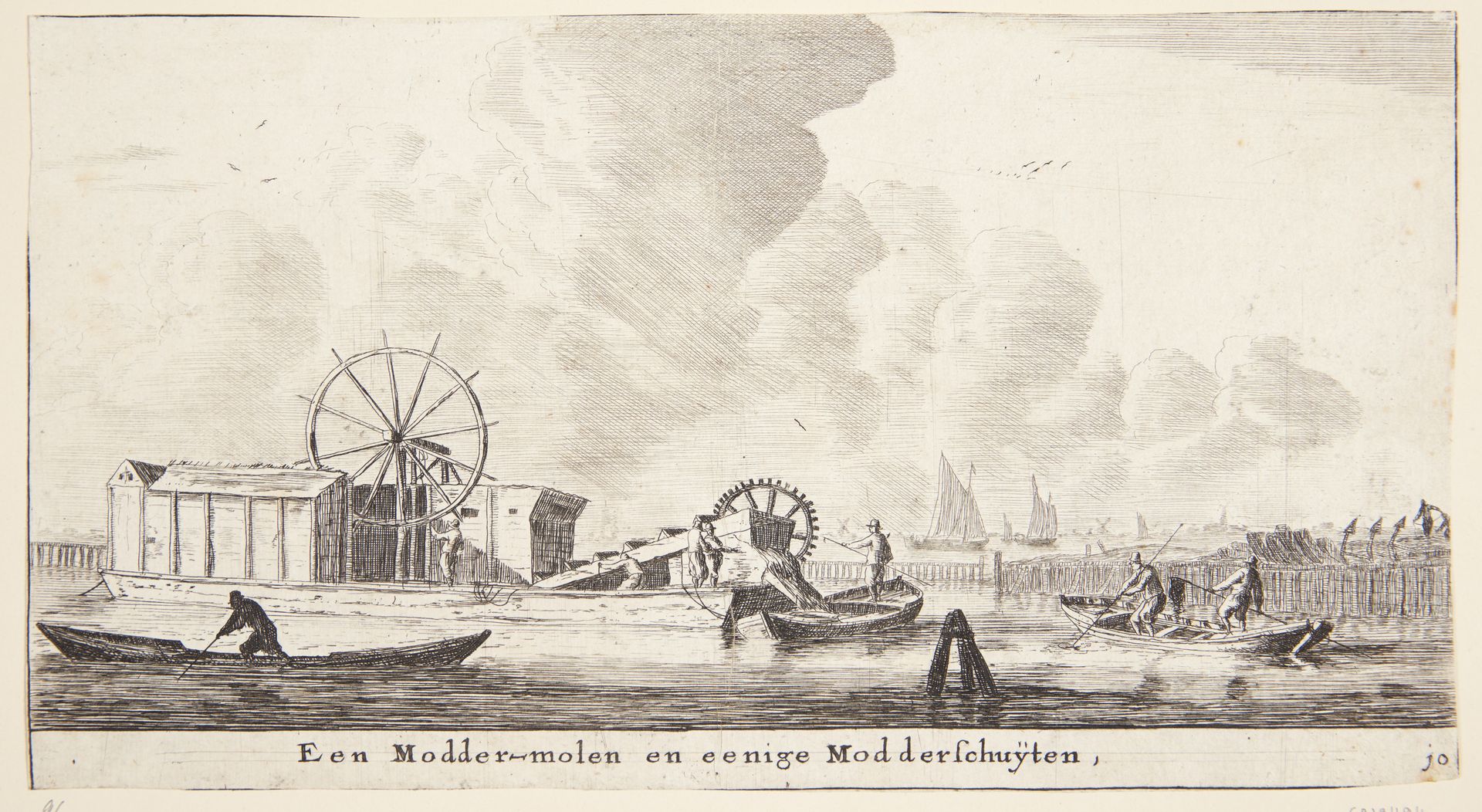
To opmudringsfartøjer. En moddermolen og en modderschuiten


Listen to curator's interpretation
Curatorial notes
Curator: This etching by Reinier Nooms, dating from between 1652 and 1654, is titled "To opmudringsfartøjer. En moddermolen og en modderschuiten," which translates roughly to "Two dredging vessels: A mud mill and mud flats." It provides a fascinating snapshot of 17th-century Dutch life. Editor: The immediate feeling I get is one of industry, almost laborious. The scene is busy, dominated by these unusual, almost steampunk-like machines. It’s striking how much detail Nooms manages to convey with simple lines. Curator: The etching is particularly interesting as it presents these 'mud mills' not merely as functional tools but as central to the Dutch landscape. Think about the context: The Dutch Republic was actively reclaiming land from the sea during this period, and these mills were vital. They represent a very real struggle and a collective aspiration. Editor: Absolutely. I'm drawn to the wheel as a recurring symbol. Waterwheels signify the ceaseless energy of the era. There's also the ladder and simple A-frame shapes in the image; triangles inherently speak to human stability and communal work—we are working hard, all together. It says a lot. Curator: I think the inclusion of several different vessels points towards a clear socio-economic narrative, highlighting an essential role in the development and the changing landscape of the Netherlands and creating accessibility and commerce that many benefited from. Consider this piece alongside discussions around labor rights and social responsibility. What duties are undertaken by a collective? Editor: It also speaks volumes about humanity's attempt to control and domesticate the natural world. The symbols are evident and layered with human effort and industry at the forefront. The windmills evoke this persistent drive to alter and shape the land itself. They are placed so centrally in the image that their role in the collective’s growth and industry could not be overstated. Curator: This perspective encourages us to analyze further: Who benefited? And who bore the burdens of these grand projects. Consider this image in tandem with literature or treatises from that era discussing environmental manipulation and the distribution of wealth. What conversations are missing from history if we don’t seek those out, as well? Editor: Ultimately, for me, the etching triggers thoughts of resourcefulness, with perhaps some unintended commentary about reshaping our place and natural history that the period may not have overtly understood. But, from where we sit now, feels all the more apparent. Curator: Exactly. Bringing a contemporary lens offers necessary critical engagement, illuminating under-explored societal implications during periods of transformation and providing insights to further a progressive dialogue for the present. Editor: Very well said. I appreciate gaining that deeper sense of perspective about the industry depicted, now, and in history.