About this artwork
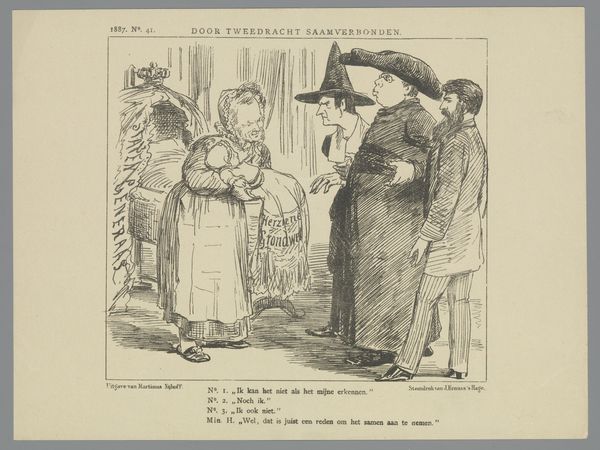
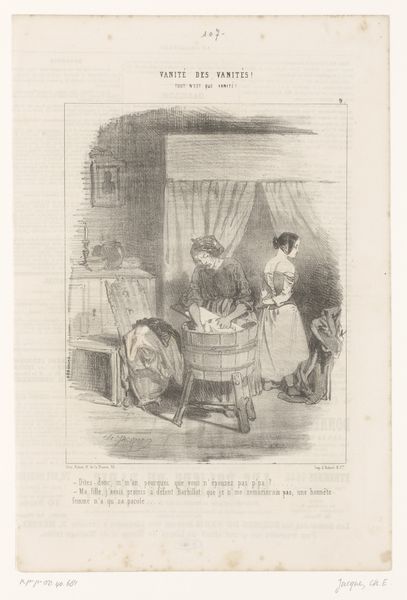
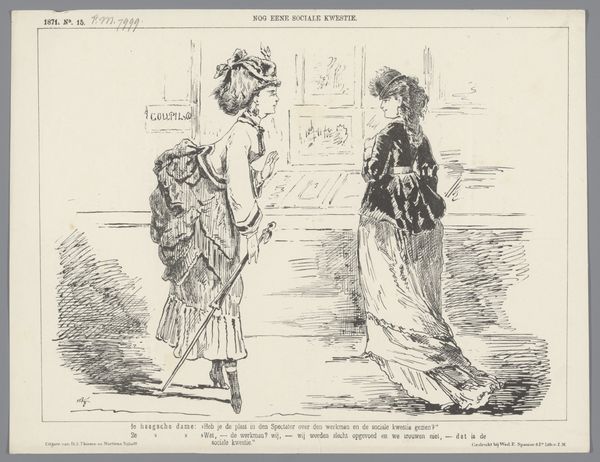
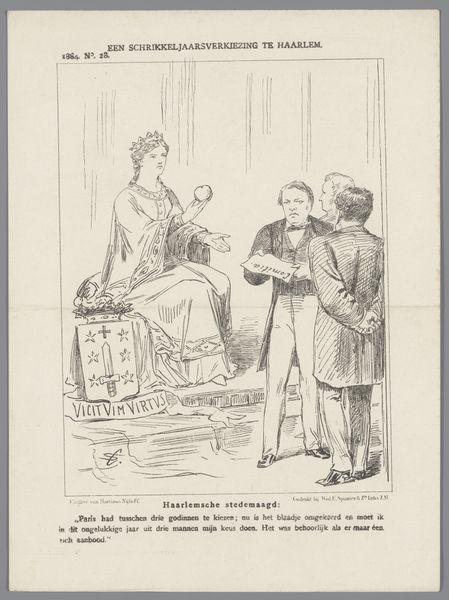
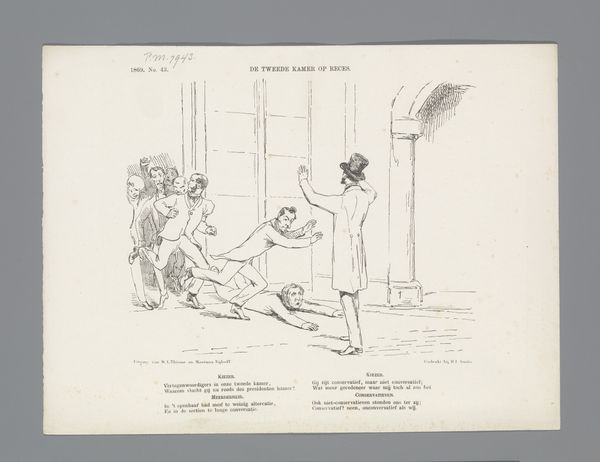
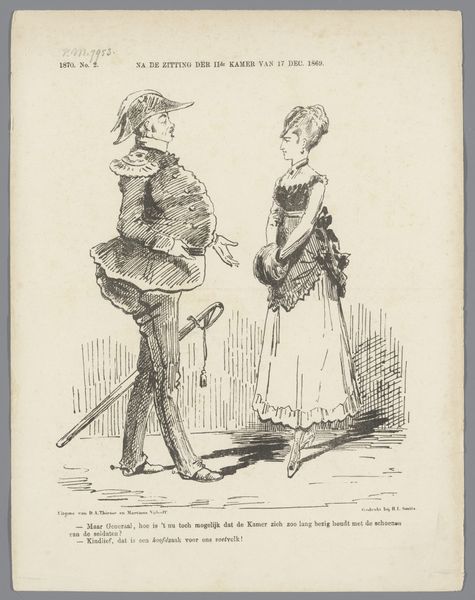
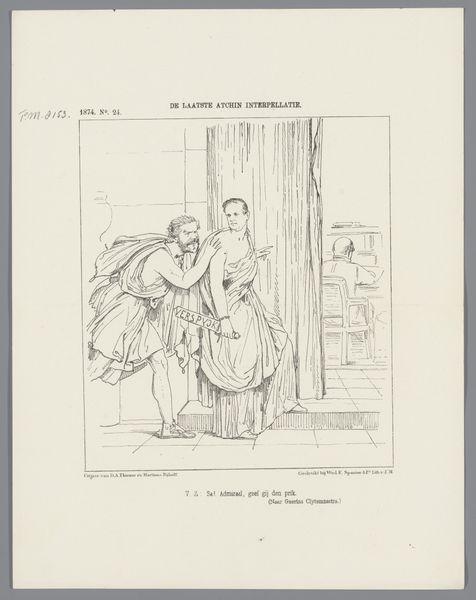
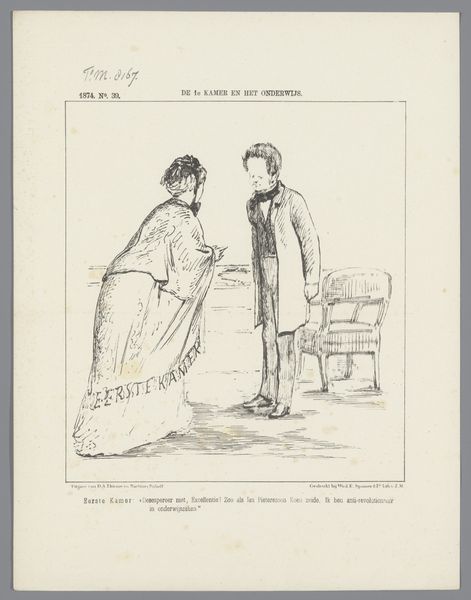
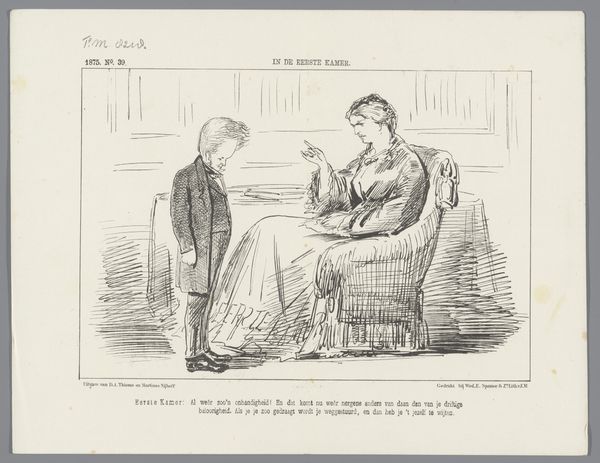
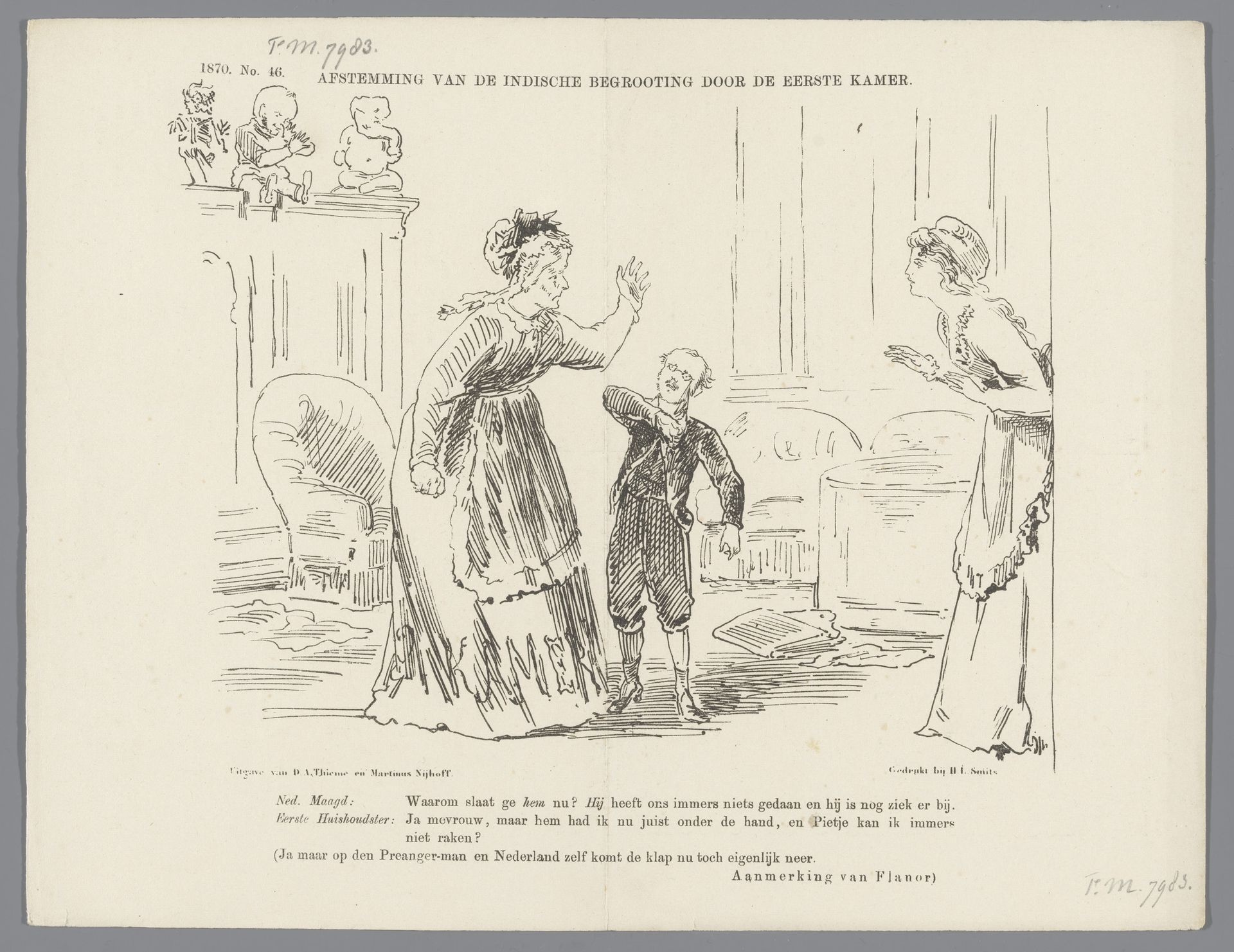
This print by Johan Michaël Schmidt Crans was made in 1870 and it's a commentary on the Dutch First Chamber's rejection of the budget for the Dutch East Indies. The cartoon depicts a tense domestic scene. A woman, representing the Dutch parliament, is scolding a young boy, symbolizing the Dutch East Indies, while another woman looks on. The text makes it clear that the boy has been punished despite being sick and innocent, implying that the colony is being unfairly treated. The rejection of the budget reflects a power struggle between the Dutch government and its colonial administration in the East Indies. To understand the print fully, we might delve into parliamentary records and period newspapers. This will shed light on the complex social conditions that shaped both Dutch politics and its colonial policies. The meaning of this artwork resides in its specific historical context.
Spotprent op de verwerping van de begroting voor Nederlands-Indië door de Eerste Kamer, 1870
1870

Artwork details
- Medium
- graphic-art, print, engraving
- Dimensions
- height 215 mm, width 275 mm
- Copyright
- Rijks Museum: Open Domain
Tags
Comments
Share your thoughts
About this artwork
This print by Johan Michaël Schmidt Crans was made in 1870 and it's a commentary on the Dutch First Chamber's rejection of the budget for the Dutch East Indies. The cartoon depicts a tense domestic scene. A woman, representing the Dutch parliament, is scolding a young boy, symbolizing the Dutch East Indies, while another woman looks on. The text makes it clear that the boy has been punished despite being sick and innocent, implying that the colony is being unfairly treated. The rejection of the budget reflects a power struggle between the Dutch government and its colonial administration in the East Indies. To understand the print fully, we might delve into parliamentary records and period newspapers. This will shed light on the complex social conditions that shaped both Dutch politics and its colonial policies. The meaning of this artwork resides in its specific historical context.
Comments
Share your thoughts