About this artwork
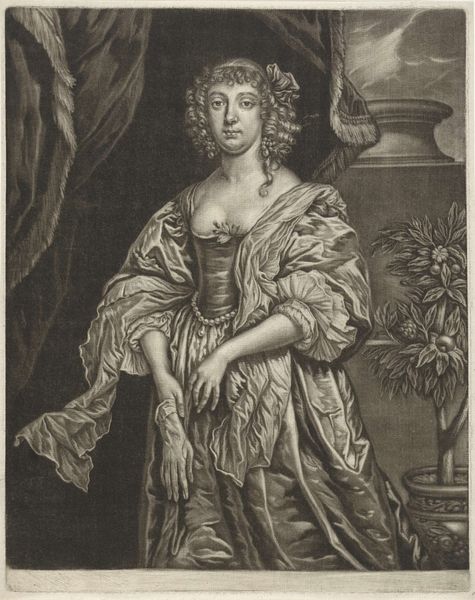
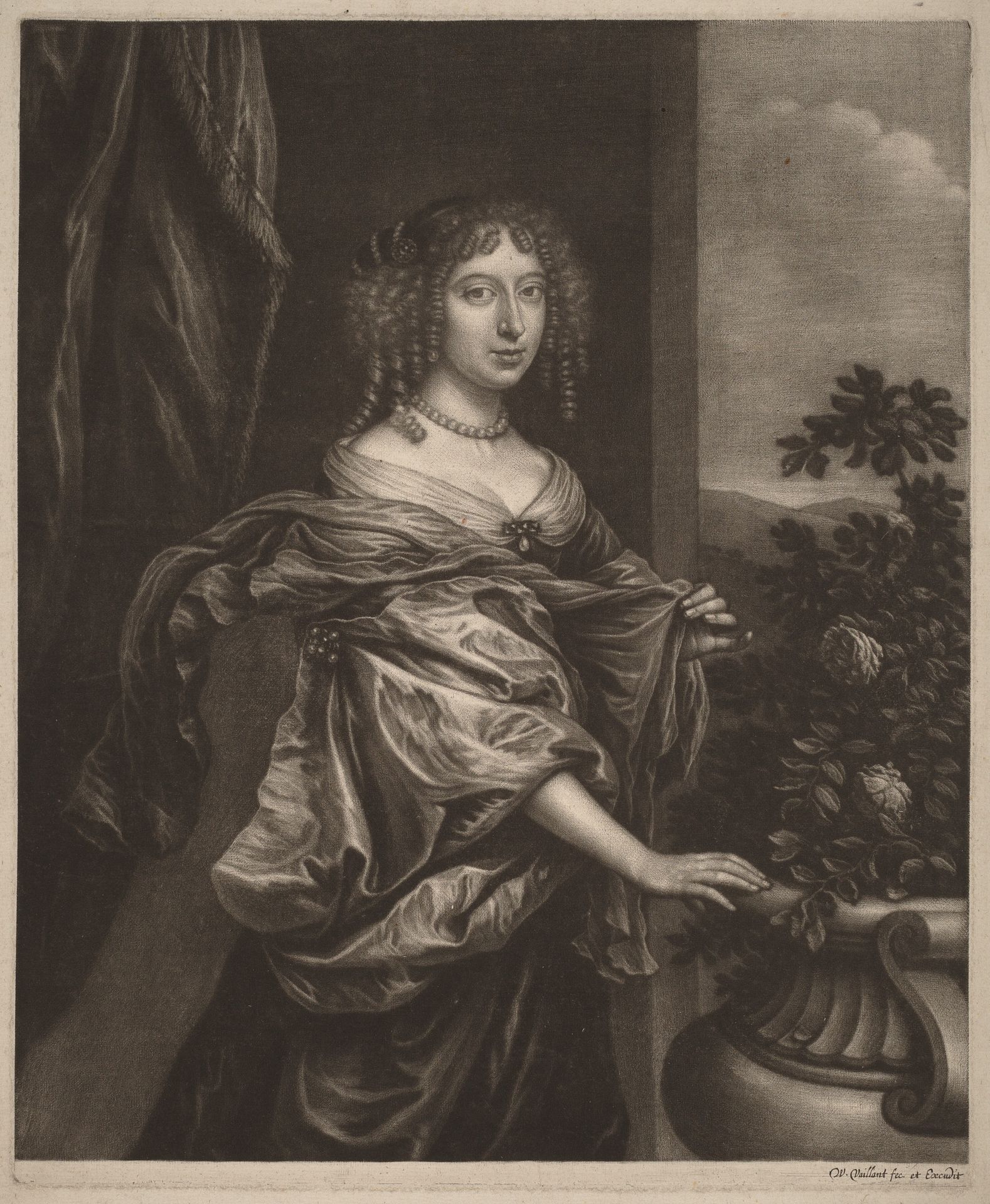
Editor: This is "Portrait of a Lady beside a Rose Bush," created around 1655 by Wallerant Vaillant. It's a print, so the lines are really fine and delicate, almost whisper-like. It feels very staged, but at the same time, deeply personal. What do you see in it? Curator: Ah, the elusive intimacy of Baroque portraiture! She’s staged, undeniably, a performance of status and beauty… but notice the hand. The slight curve of her fingers, as if she *just* touched that rose. Suddenly, it feels less posed, more…caught. Perhaps it is me romanticizing the moment! But look closer; the composition, that swathe of drapery mirroring the landscape outside, creates a sense of… longing, wouldn't you say? It's all so deliberate and calculated, but, ironically, ends up suggesting this very human sense of something just out of reach. Editor: Longing… yes! Like she’s about to step out of the frame, into that hazy distance. I hadn't quite put my finger on it, but that makes perfect sense. Is that a typical thing for portraits of this era? Curator: The tension between representation and feeling was central to the Baroque era! These artists wrestled with how to capture not just likeness, but also inner life... a life always tethered to an image, wouldn’t you say? Though whether they succeeded, or merely crafted ever more elaborate fictions, is part of the charm, I suppose! Editor: So, the “real” lady is less important than the “idea” of the lady? Fascinating. I’ll definitely look at these portraits differently now. Curator: Precisely! Each painting holds a universe of questions. Don’t ever let anyone tell you art has all the answers, dear one! Keep those questions churning!
Portrait of a Lady beside a Rose Bush
c. 1655


Artwork details
- Medium
- Dimensions
- plate: 33 x 27 cm (13 x 10 5/8 in.) sheet: 36.8 x 31 cm (14 1/2 x 12 3/16 in.)
- Copyright
- National Gallery of Art: CC0 1.0
Tags
Comments
Share your thoughts
About this artwork
Editor: This is "Portrait of a Lady beside a Rose Bush," created around 1655 by Wallerant Vaillant. It's a print, so the lines are really fine and delicate, almost whisper-like. It feels very staged, but at the same time, deeply personal. What do you see in it? Curator: Ah, the elusive intimacy of Baroque portraiture! She’s staged, undeniably, a performance of status and beauty… but notice the hand. The slight curve of her fingers, as if she *just* touched that rose. Suddenly, it feels less posed, more…caught. Perhaps it is me romanticizing the moment! But look closer; the composition, that swathe of drapery mirroring the landscape outside, creates a sense of… longing, wouldn't you say? It's all so deliberate and calculated, but, ironically, ends up suggesting this very human sense of something just out of reach. Editor: Longing… yes! Like she’s about to step out of the frame, into that hazy distance. I hadn't quite put my finger on it, but that makes perfect sense. Is that a typical thing for portraits of this era? Curator: The tension between representation and feeling was central to the Baroque era! These artists wrestled with how to capture not just likeness, but also inner life... a life always tethered to an image, wouldn’t you say? Though whether they succeeded, or merely crafted ever more elaborate fictions, is part of the charm, I suppose! Editor: So, the “real” lady is less important than the “idea” of the lady? Fascinating. I’ll definitely look at these portraits differently now. Curator: Precisely! Each painting holds a universe of questions. Don’t ever let anyone tell you art has all the answers, dear one! Keep those questions churning!
Comments
Share your thoughts