About this artwork
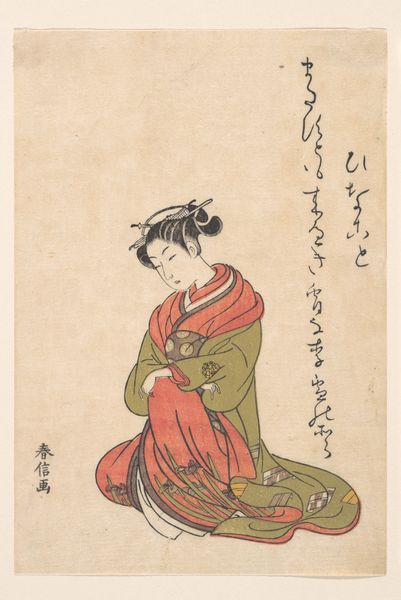
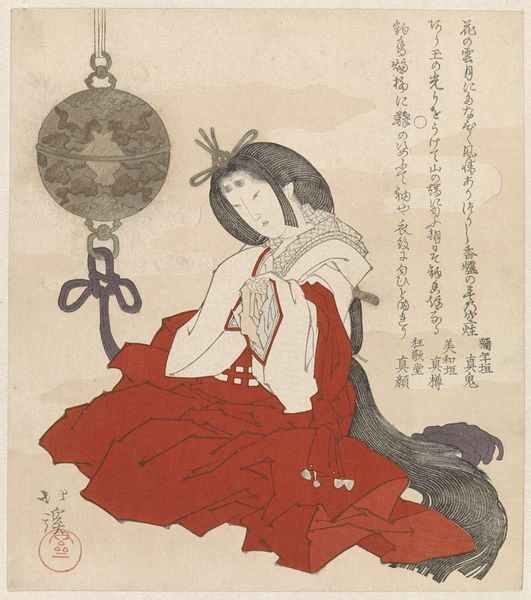
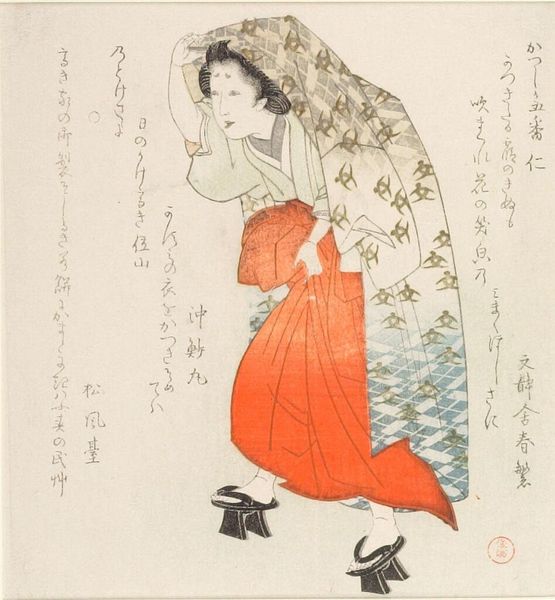
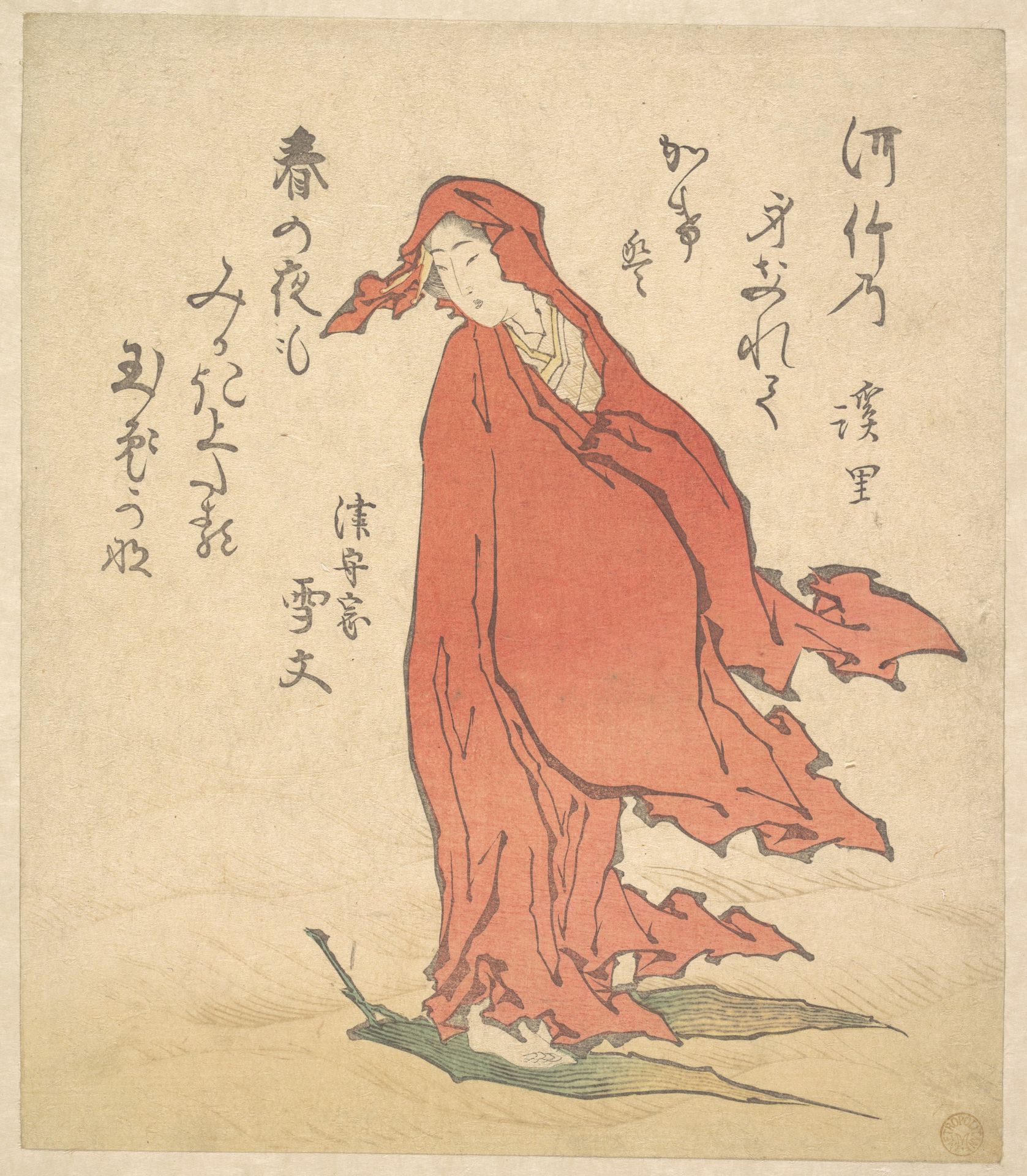
Curator: Let's discuss "Onna no Daruma," a woodblock print crafted around 1835 by an artist from Japan's ukiyo-e tradition. You can find this evocative piece at the Metropolitan Museum of Art. What are your first thoughts on encountering it? Editor: Initially, I am struck by the figure's serenity amidst what feels like symbolic restriction. The vibrant red fabric overwhelms, both defining and obscuring her form, suggesting themes of confinement and the negotiation of identity. There's an undeniable melancholy to her bowed head. Curator: The title itself is interesting. The Daruma doll is traditionally a symbol of perseverance and good luck in Japanese culture. But this print offers us a 'Woman Daruma,' which invites questions about gender roles. Daruma dolls are typically male figures. This contrast could imply a critique of societal expectations imposed on women. Editor: Exactly. Placing a woman in that iconic role disrupts the expected narrative. Are we to consider the obstacles she faces as different or more profound? How does this relate to social expectations and perhaps even artistic representations of women during that period? The red robe, almost consuming her, could signify passion or danger, or both simultaneously. It shrouds her in an inescapable destiny or societal construct. Curator: We should consider how printmaking, as a medium, allowed for the democratization of imagery. Ukiyo-e prints made art more accessible to a broader public, influencing popular culture. 'Onna no Daruma' becomes a fascinating point of entry for discussions around representation and access in 19th-century Japan. Also note how unusual is to portray a Daruma with the eyes already painted; this gives her vulnerability that one might not associate with the legendary, unyielding Bodhidharma. Editor: That's a keen point. The 'finished' eyes and bowed head subvert expectations further, and make the overall emotional tone of the print that much more potent. Is it about inner strength cultivated quietly? Is it about perseverance that happens internally when external factors become immovable? Curator: Food for thought. Thinking about it, seeing this ukiyo-e print reframed this story, gave a novel context I had not anticipated. Editor: And I agree: it definitely challenged my interpretation of strength and resilience and prompted considerations beyond just male archetypes of overcoming.
Onna no Daruma
1835


Artwork details
- Medium
- print, woodblock-print
- Dimensions
- 8 1/2 x 7 5/16 in. (21.6 x 18.6 cm)
- Location
- Metropolitan Museum of Art, New York, NY
- Copyright
- Public Domain
Tags
Comments
Share your thoughts
About this artwork
Curator: Let's discuss "Onna no Daruma," a woodblock print crafted around 1835 by an artist from Japan's ukiyo-e tradition. You can find this evocative piece at the Metropolitan Museum of Art. What are your first thoughts on encountering it? Editor: Initially, I am struck by the figure's serenity amidst what feels like symbolic restriction. The vibrant red fabric overwhelms, both defining and obscuring her form, suggesting themes of confinement and the negotiation of identity. There's an undeniable melancholy to her bowed head. Curator: The title itself is interesting. The Daruma doll is traditionally a symbol of perseverance and good luck in Japanese culture. But this print offers us a 'Woman Daruma,' which invites questions about gender roles. Daruma dolls are typically male figures. This contrast could imply a critique of societal expectations imposed on women. Editor: Exactly. Placing a woman in that iconic role disrupts the expected narrative. Are we to consider the obstacles she faces as different or more profound? How does this relate to social expectations and perhaps even artistic representations of women during that period? The red robe, almost consuming her, could signify passion or danger, or both simultaneously. It shrouds her in an inescapable destiny or societal construct. Curator: We should consider how printmaking, as a medium, allowed for the democratization of imagery. Ukiyo-e prints made art more accessible to a broader public, influencing popular culture. 'Onna no Daruma' becomes a fascinating point of entry for discussions around representation and access in 19th-century Japan. Also note how unusual is to portray a Daruma with the eyes already painted; this gives her vulnerability that one might not associate with the legendary, unyielding Bodhidharma. Editor: That's a keen point. The 'finished' eyes and bowed head subvert expectations further, and make the overall emotional tone of the print that much more potent. Is it about inner strength cultivated quietly? Is it about perseverance that happens internally when external factors become immovable? Curator: Food for thought. Thinking about it, seeing this ukiyo-e print reframed this story, gave a novel context I had not anticipated. Editor: And I agree: it definitely challenged my interpretation of strength and resilience and prompted considerations beyond just male archetypes of overcoming.
Comments
Share your thoughts