drawing, watercolor
#
drawing
#
charcoal drawing
#
oil painting
#
watercolor
#
watercolour illustration
#
watercolor
#
realism
Dimensions: overall: 28.3 x 22.7 cm (11 1/8 x 8 15/16 in.)
Copyright: National Gallery of Art: CC0 1.0
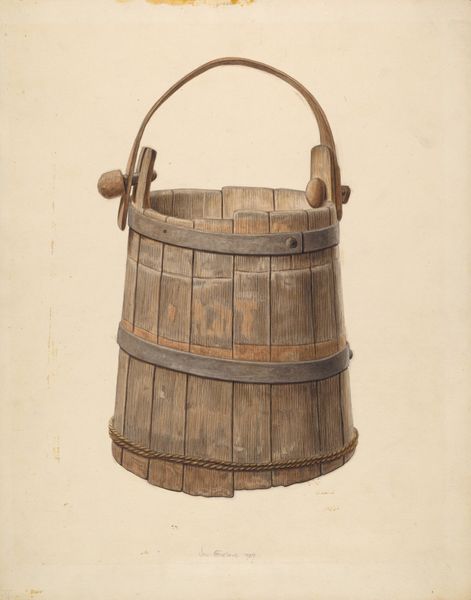
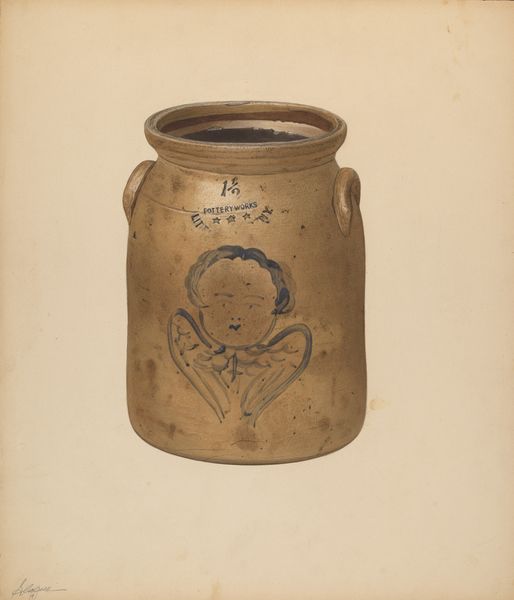
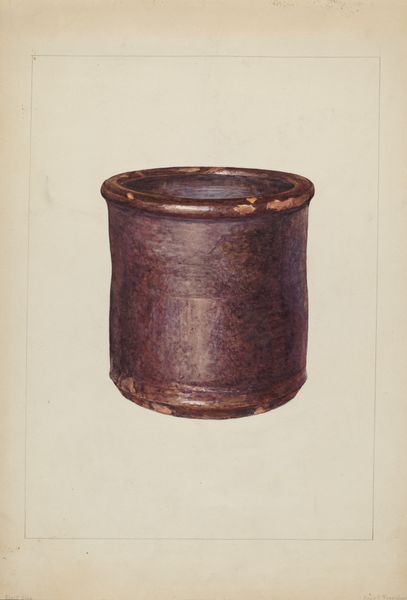
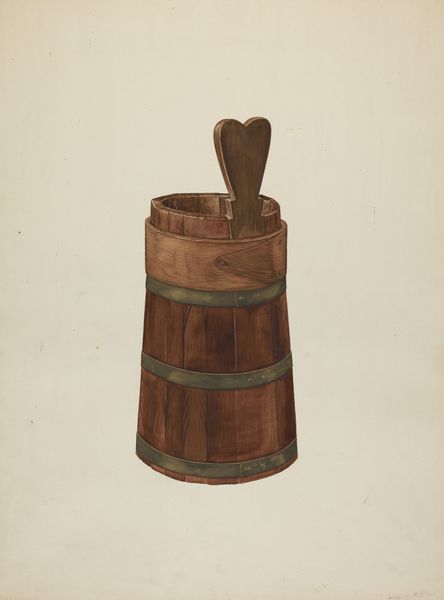
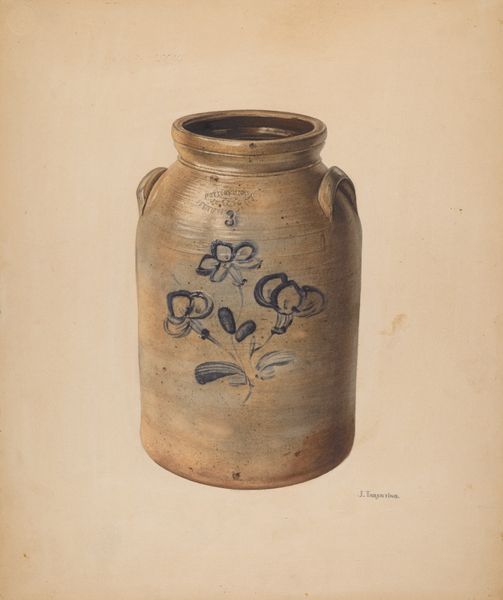
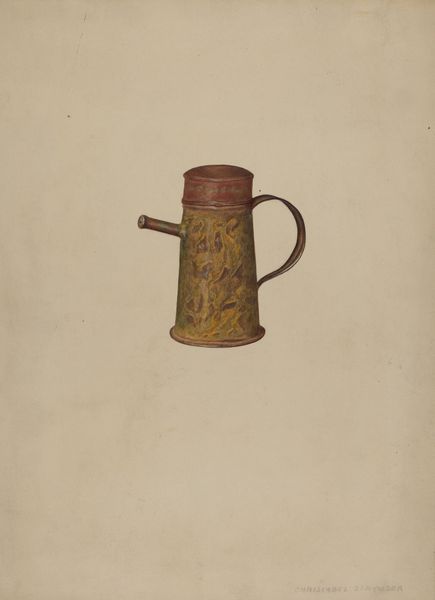
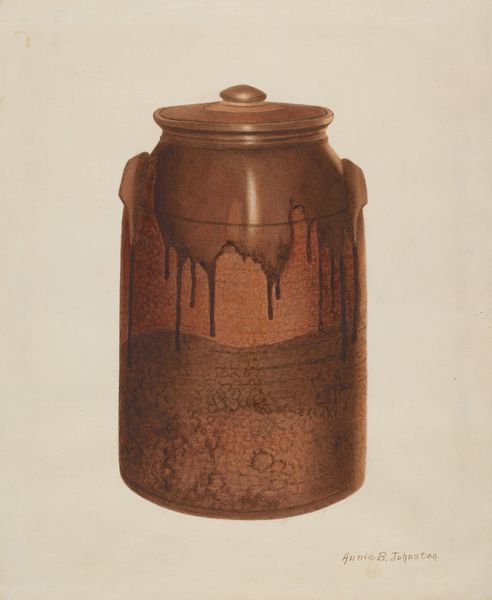
Curator: At first glance, I see a muted color palette. This gives it an antique quality. Is it old? Editor: It’s called "Leather Water Bucket," crafted around 1939 by Edward L. Loper. He employed watercolor, it seems, to capture the textures and details. Curator: I find the letters on the side of the bucket really compelling, partially obscured, it looks like it spells "BANK" over the number "3." Editor: That’s right! This work reminds me of WPA era art. Artists during that time were very interested in representing objects related to American industry. Depicting this bucket becomes a sort of visual shorthand for the dignity of labor during difficult times. Curator: The water bucket could represent self-sufficiency. What do you think it symbolizes? The lettering gives off very working class feel. Editor: Considering that buckets are quintessential for containing, protecting, or providing… perhaps Loper intends for this image to reference a community, coming together and sustaining itself from local resources during economic hardship. Curator: The style is certainly very realist. The focus is definitely on the depiction of form. Perhaps, Loper chose this very ordinary subject in order to elevate everyday experience through visual attention and artistry. Editor: Or maybe it reflects a certain cultural memory tied to resourcefulness in working-class communities. Curator: Perhaps he elevated the water bucket to function as an emblem, as a powerful symbol within this period, while offering dignity and pride during the struggles of this time. Editor: The use of watercolor helps contribute to that narrative, making it accessible to viewers during the Depression. It makes this feel like a record rather than a grand statement, somehow. Curator: Yes, and it allows him to achieve such detailed textures. Even now, it encourages viewers to examine overlooked ordinary objects. Editor: Definitely, this was more than just depicting reality, but endowing the object with shared experience. Curator: A somber reminder to see significance in simple objects!
Comments
No comments
Be the first to comment and join the conversation on the ultimate creative platform.
 Collect
 React
React Comment
More like this