print, engraving
#
portrait
#
pencil drawn
#
baroque
# print
#
old engraving style
#
pencil drawing
#
engraving
Dimensions: height 267 mm, width 178 mm
Copyright: Rijks Museum: Open Domain
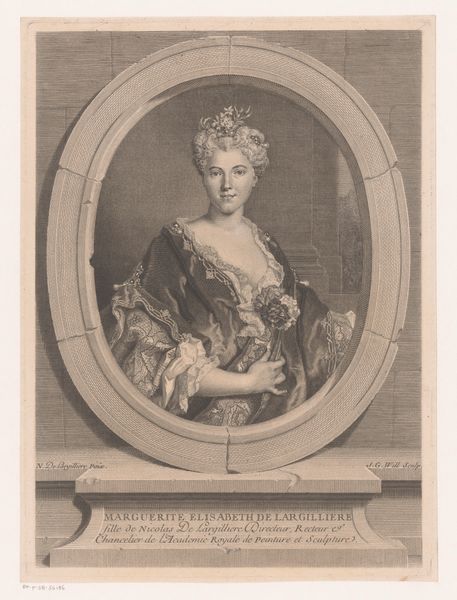
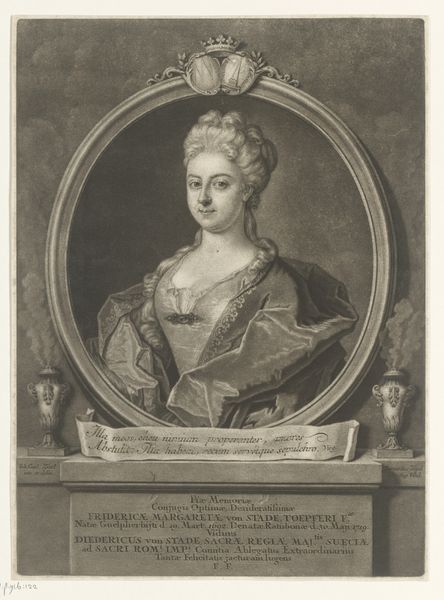
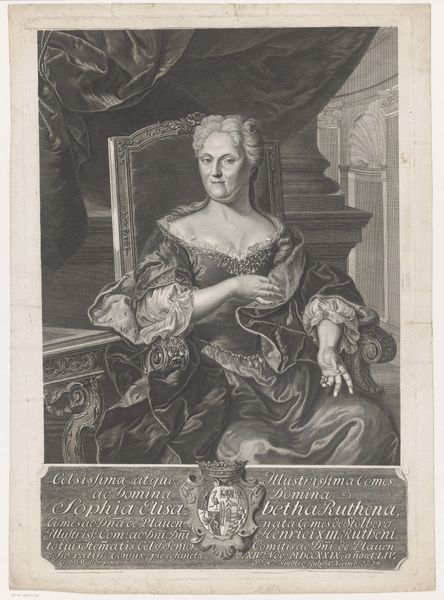
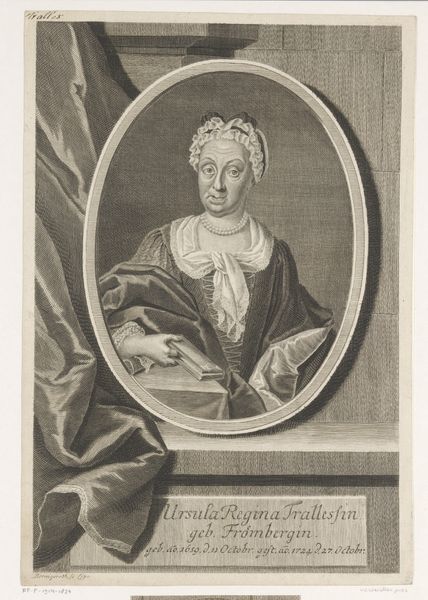
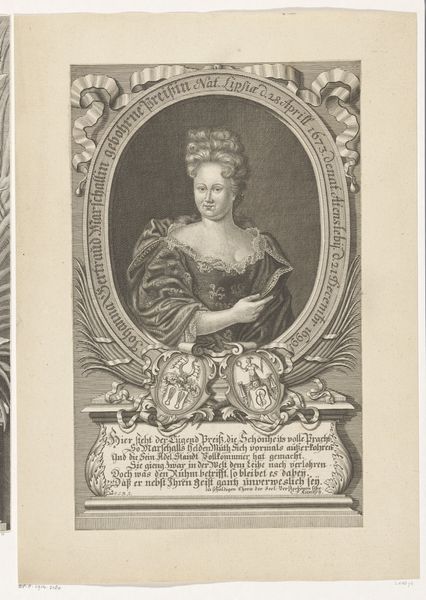
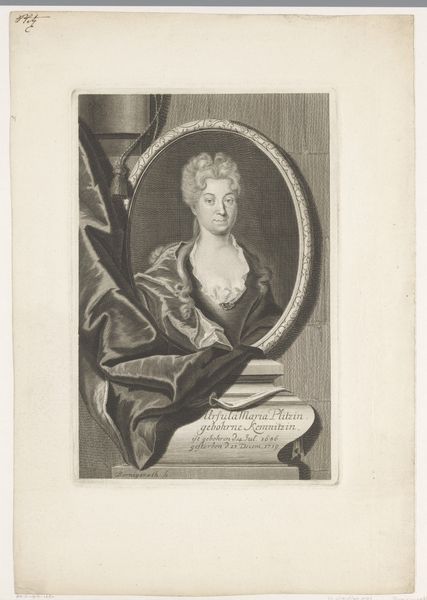
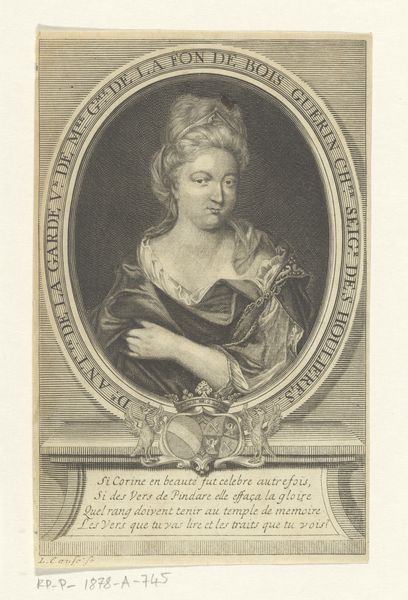
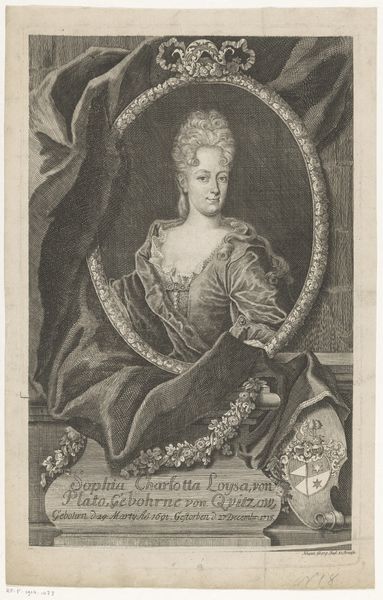
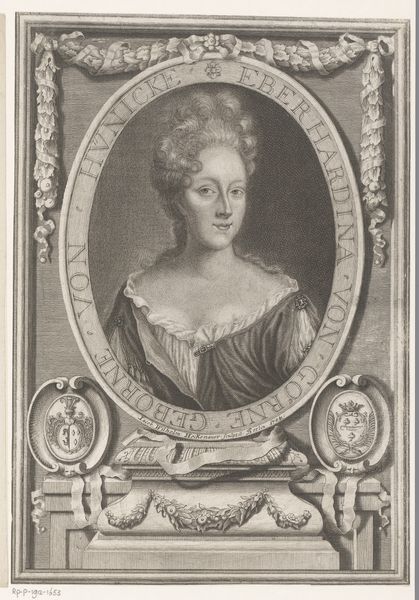
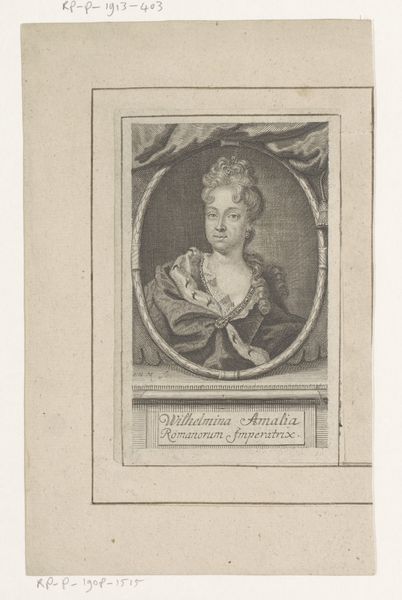
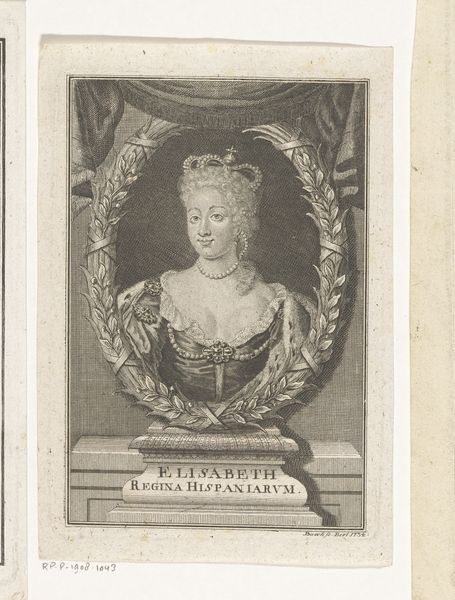
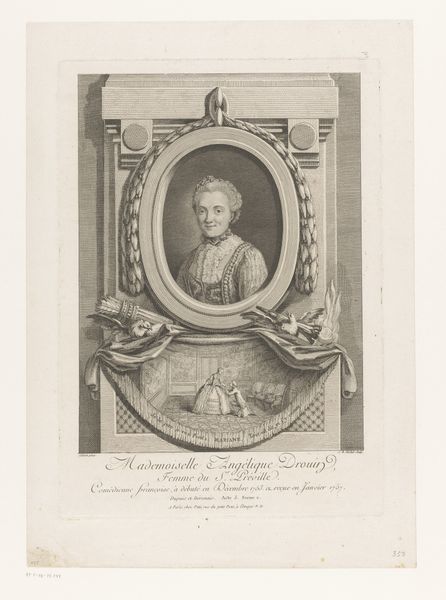
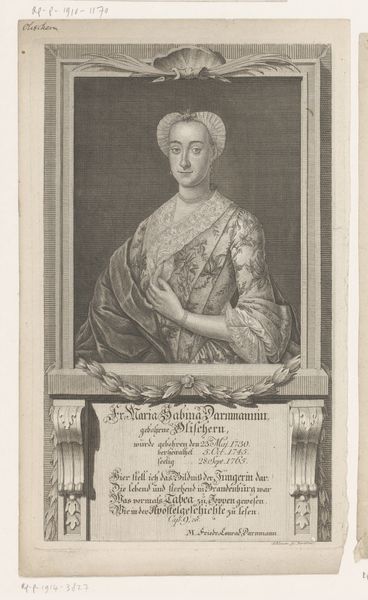
Curator: Here we have Moritz Bodenehr’s print, dating sometime between 1714 and 1748, titled "Portret van Anna Sabina Sched." Editor: It strikes me as somber, almost austere, despite the baroque details. The sitter’s gaze is direct, but there's a sense of resignation about her. Curator: What stands out to me is the process. Engraving involved skilled labor, meticulously transferring an image onto a metal plate, typically copper, then using ink to create multiples on paper. Think about the workshops and the collaboration involved! Editor: Absolutely. It's crucial to understand this within its historical context. Portraits like these weren't just aesthetic objects; they were markers of status, carefully constructed to project an image of power and respectability within a rigid social hierarchy. How did gender shape these commissions, for example? Curator: The lines used to build up shadows are very uniform, typical for the time. And notice the different densities; that’s achieved through variations in line thickness and proximity, influencing the tonality of the print. I find the way the cloth is done especially interesting because it is very fine detailed. Editor: I agree. This era grappled with ideas around female representation, societal expectations, and even women’s limited roles within public and artistic spheres. Anna Sabina Sched, captured in this "pencil drawing" as the tags suggest, represents a woman of means but also constrained perhaps by patriarchal structures. Curator: I wonder about the quality of the paper and ink used. Were they locally sourced? What determined their selection? Even the distribution networks would be a fascinating area to explore in understanding its broader social reach and value. Editor: Thinking about portraiture through today's lens, it forces questions about agency, representation, and how power dynamics have shifted. Though the media have changed, these struggles still resonate profoundly in contemporary discourse. Curator: Definitely food for thought, as always. Editor: Indeed. It's a privilege to unpack the rich tapestry of this work together.
Comments
No comments
Be the first to comment and join the conversation on the ultimate creative platform.
 Collect
 React
React Comment
More like this