c. 18th century
Windmill Landscape


Listen to curator's interpretation
Curatorial notes
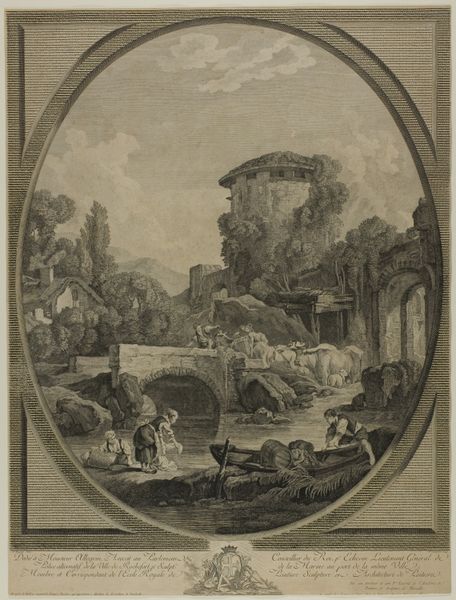
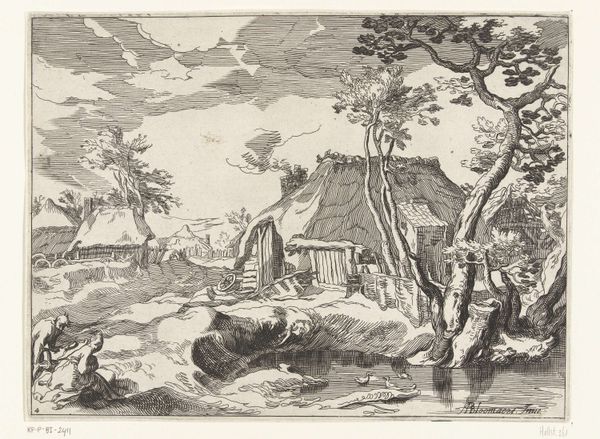
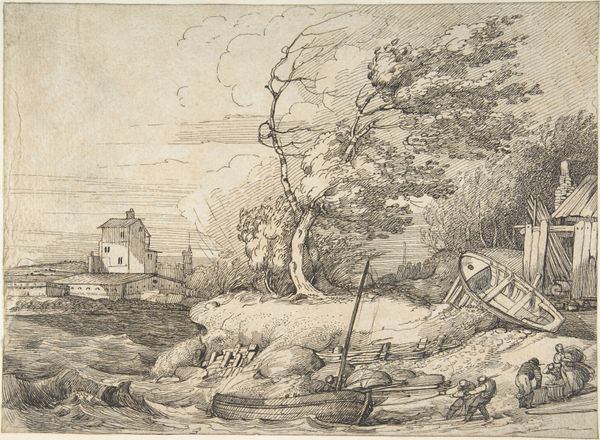
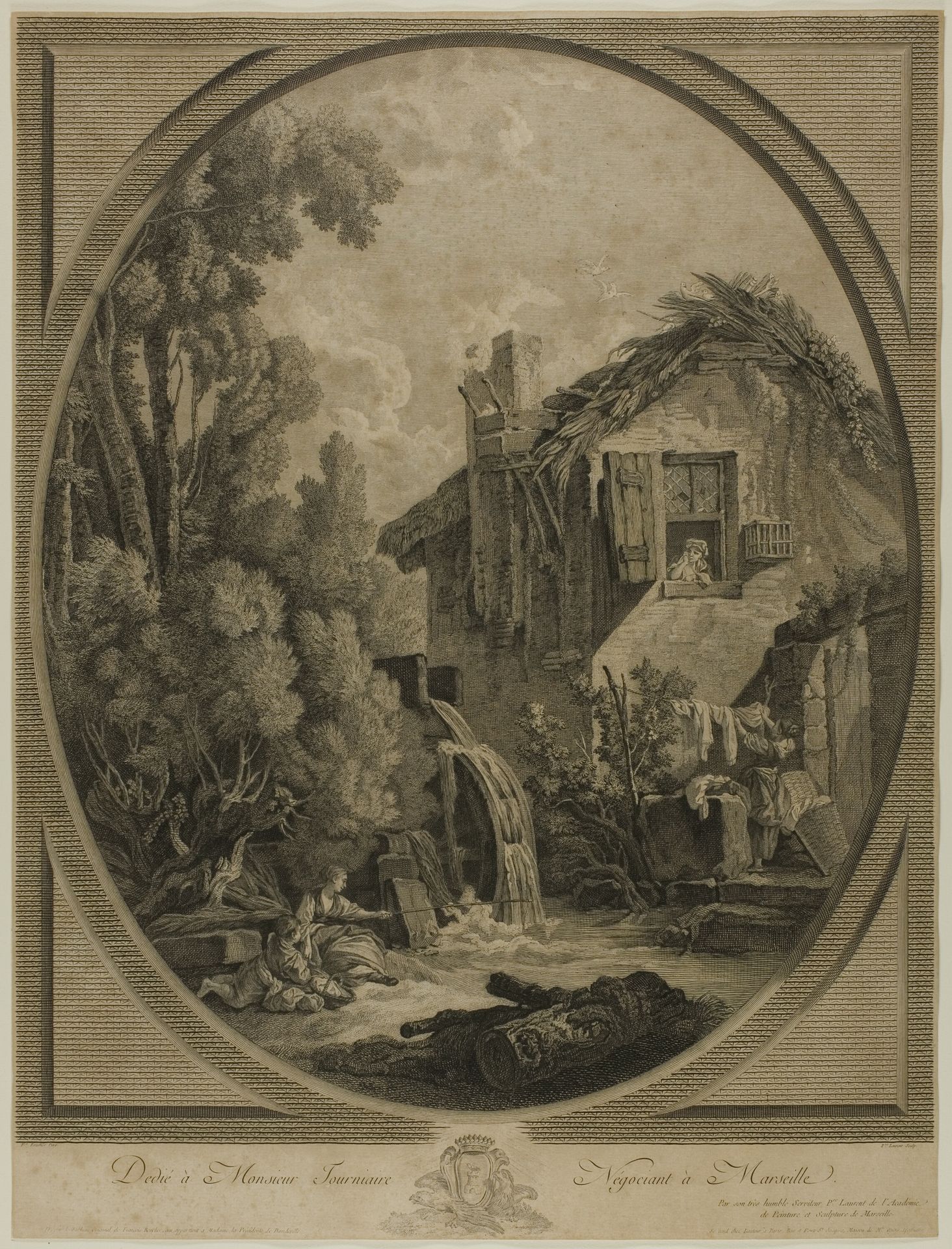
Curator: Ah, a bucolic vision! "Windmill Landscape," a print and engraving with charcoal from around the 18th century by Pierre François Laurent, currently residing at the Art Institute of Chicago. What catches your eye? Editor: Well, besides the somewhat dilapidated chic of that mill, there's something rather unsettling about this pastoral scene. It feels more like a stage set for a morality play than a cheerful landscape. Curator: I see it differently. The artist’s romantic vision really sings through for me; there is something really captivating and warm about this image, even with that tumble-down watermill house. Notice the figures and their gestures: they evoke emotions about simpler, almost primordial lifestyles. I would say there are some important visual connections here with some of Jean-Jacques Rousseau's philosophical views. Editor: That may be true. Though perhaps Laurent’s depiction is a little too rosy. Life wasn’t exactly a fairytale back then, you know. There are always people romanticizing their contemporary periods, or fantasizing a bygone age, ignoring that rural poverty during that century could be truly crushing. These scenes frequently sanitize real conditions. Curator: But isn’t that the very point of art, to allow a creative freedom to explore alternative realities, not as they objectively exist but as they might *feel* to the human heart? Take that dilapidated watermill itself; it shows the relentless push-and-pull between the industrial and natural world. There's a certain wistful acknowledgement in his style that really encapsulates that 18th-century mood. Editor: And the framing? Notice the elaborate oval border: it feels like a peep-show into an idealized past, carefully constructed for an elite audience. It gives off very powerful "Marie Antoinette playing shepherdess" vibes. Curator: I appreciate that point. Laurent masterfully interweaves themes here to be certain, touching on nature, labor, and perhaps even the inevitability of decay and change. Editor: Indeed. Laurent offers a captivating glimpse into 18th-century imagination, even if that imagination sometimes overlooks certain historical facts. Curator: Exactly. This artwork is a delightful exploration of art’s capacity to evoke emotion and meaning, prompting viewers like us to reflect on different world views.