print, engraving
# print
#
mannerism
#
figuration
#
history-painting
#
engraving
Dimensions: height 219 mm, width 285 mm
Copyright: Rijks Museum: Open Domain
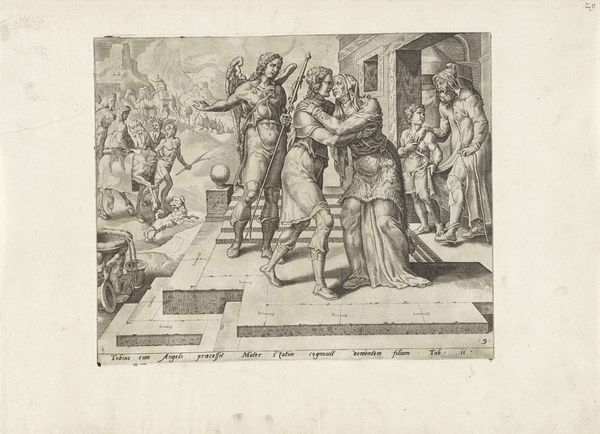
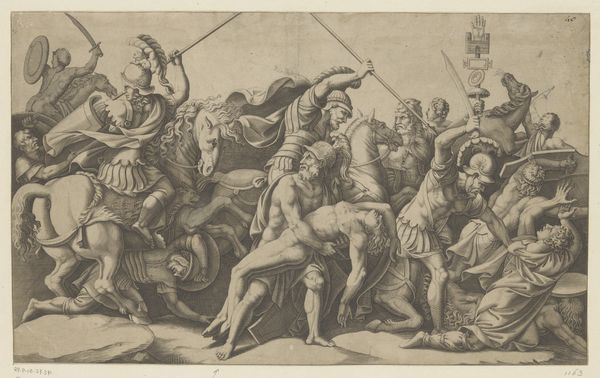
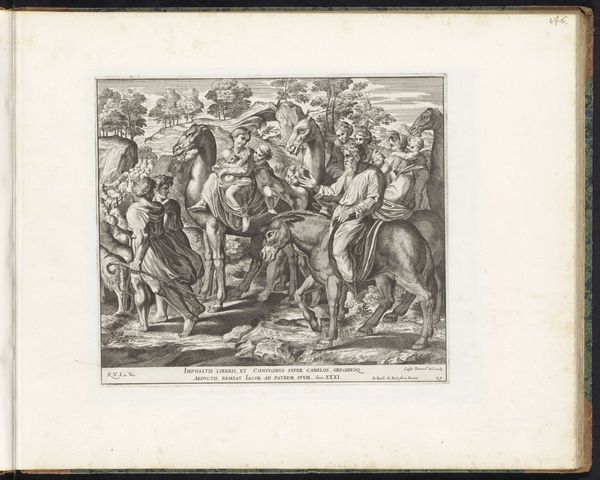
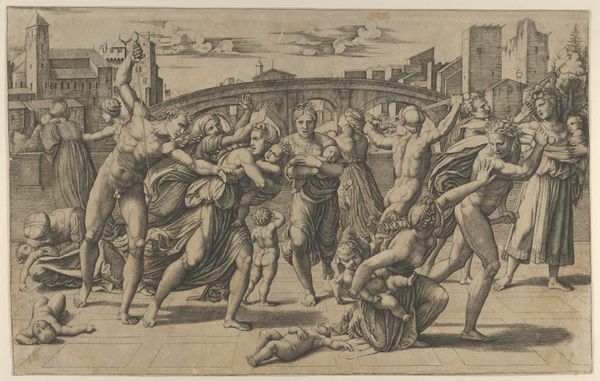
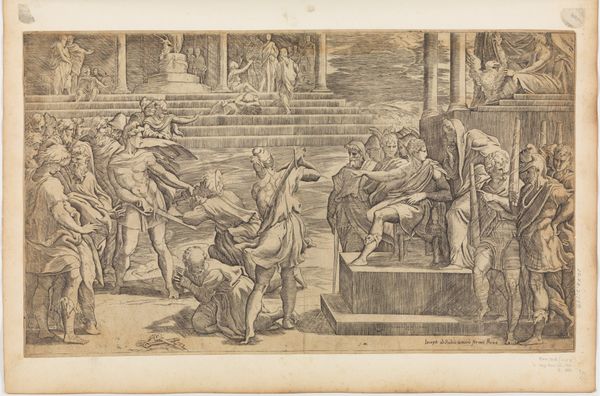
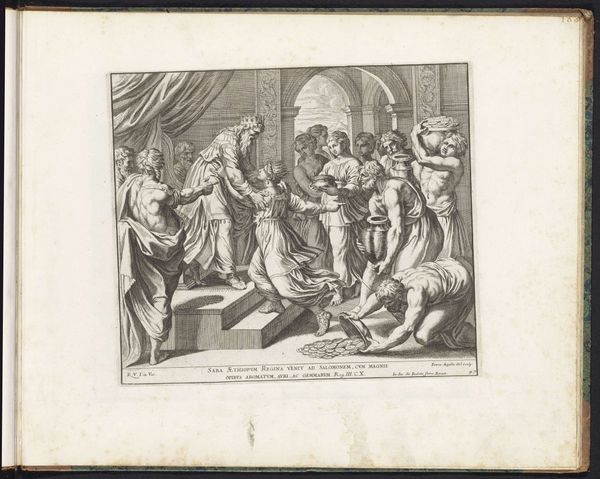
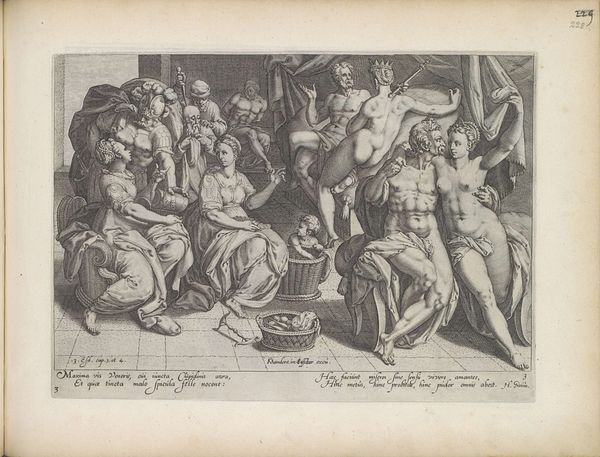
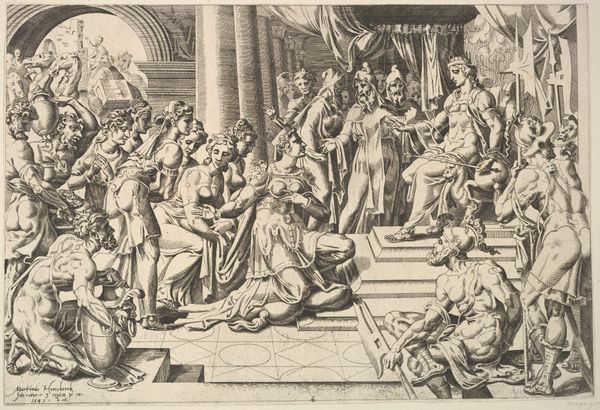
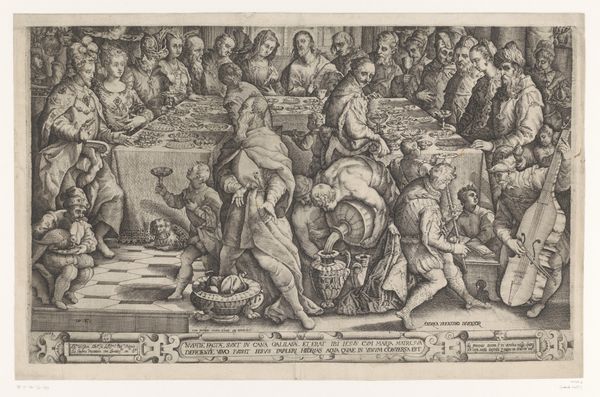
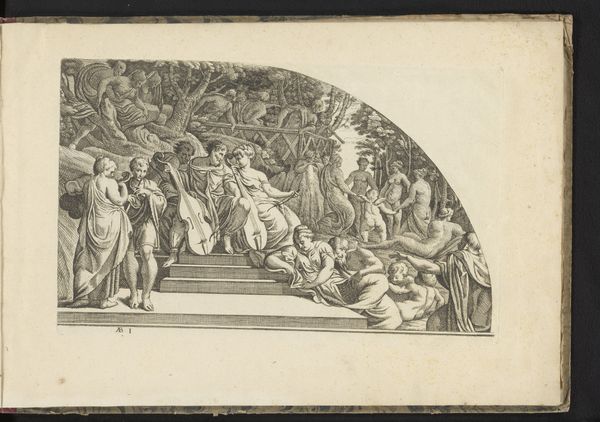
Editor: This is "Rebecca and Eliezer at the Well," an engraving from around 1558-1560 by Barbara van den Broeck. There's a real theatrical quality to it, a kind of staged drama in the way the figures are arranged. What stands out to you when you look at this print? Curator: Well, I see a convergence of religious narrative and social dynamics deeply entrenched in power structures. Notice how Rebecca is positioned: her act of providing water isn't merely about hospitality, but also about her potential to fulfill a patriarchal lineage. What does it mean to portray this scene within the context of 16th-century European society, where women's roles were so narrowly defined? Editor: So, it's not just a biblical story, but a commentary on gender roles? Curator: Exactly! Broeck, as a female artist, invites us to consider her own position within this power dynamic. Is she simply illustrating a well-known story, or is she subtly questioning the very foundations of the society that confines her, as well as Rebecca? Consider how the abundance of water could symbolize not just physical sustenance but also the potential for female agency within limited social structures. How does her medium, engraving, allow the widespread distribution of these ideals? Editor: It’s like she is embedding a subversive message within a familiar story. Seeing the artwork with those added layers of meaning offers a totally new insight. Thanks! Curator: Indeed. Art often functions as both a mirror and a hammer, reflecting societal norms while simultaneously challenging them.
Comments

rijksmuseum over 2 years ago
⋮
In the past only the most gifted daughters from artistic families were given the opportunity to make works under their own names. One of them was the talented Flemish engraver Barbara van den Broeck. Her delicate rendering of materials, and of people and animals show up to full advantage in this trial print. Until now, only one, much later, impression of the engraving was known.


Join the conversation
Join millions of artists and users on Artera today and experience the ultimate creative platform.
 Collect
More like this