print, intaglio, engraving
#
portrait
#
baroque
# print
#
intaglio
#
engraving
Dimensions: height 260 mm, width 179 mm
Copyright: Rijks Museum: Open Domain
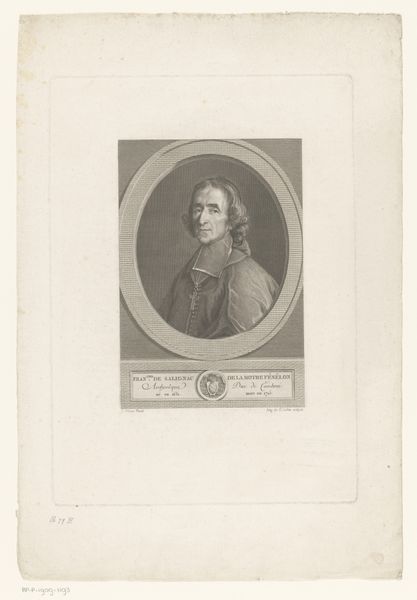
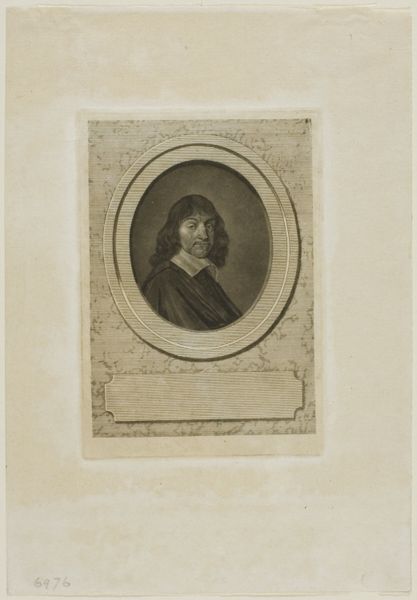
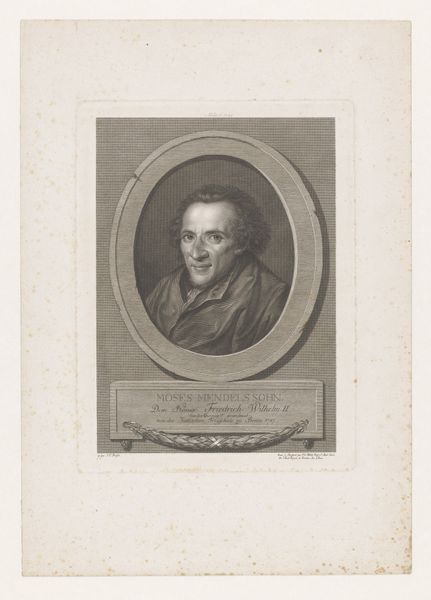
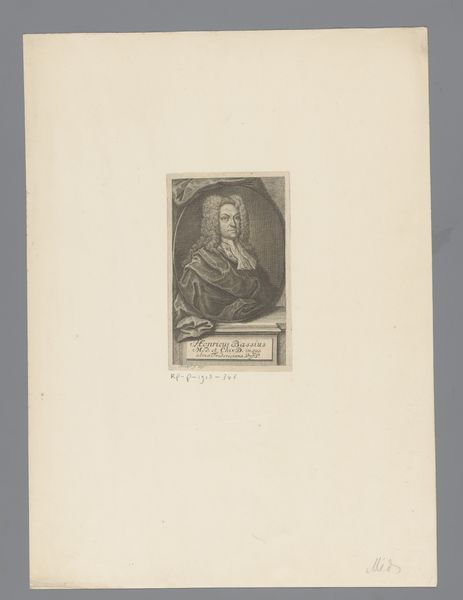
Curator: This is "Portret van kunstenaar Lieven Mehus," a print made between 1752 and 1762, now held at the Rijksmuseum. Antonio Pazzi is credited with its creation through engraving techniques. Editor: The striking use of light immediately captures my attention. The face emerges so strongly, highlighted against the oval backdrop that has been dimmed through shading. There’s something immediately arresting about it. Curator: Indeed, and within the visual language of the era, this portrayal connects to the ideals of the artist. Think of the drape—recalling classical statuary. It presents Mehus as both creator and a figure worthy of historical regard. The very act of creating a portrait elevates its subject beyond the everyday, assigning cultural weight and importance. Editor: It's all rendered in such precise detail, typical of engraving. You can almost feel the texture of the fabric. Look closely, and you will find a calculated simplicity and classical restraint. No extravagant adornments; just the artist's presence in muted grayscale tones. The lettering too is interesting, a visual statement claiming ‘Livio Mehus pittore’, artist. Curator: Note, too, the oval frame of the portrait itself. It’s a conventional choice of the time, but in terms of symbolism it recalls the tradition of the sculpted Roman emperor, bringing immediate associations of achievement, skill and even power. Think about what Pazzi is doing here, placing Mehus within a larger continuum of cultural memory, linking his artistic legacy to enduring images of leadership and genius. Editor: So Pazzi uses established forms, literally sets them into the matrix, and gives the forms presence by deploying light, shade, composition. But isn’t this also how the artist achieves lasting recognition? By working carefully within artistic paradigms, an artist gains attention within the canons of artistic merit of their era. Curator: Perhaps… the enduring power of symbols lies in their ability to resonate across time, forging connections between past, present, and future meanings. And certainly, Pazzi ensures this, using portraiture to bestow this resonance. Editor: Thinking about its technical mastery of tone and its ability to articulate texture, I'm left struck by its quiet but insistent elegance. Curator: It reminds us that artistic legacies are often built through the visual dialogues across the centuries.
Comments
No comments
Be the first to comment and join the conversation on the ultimate creative platform.
 Collect
 React
React Comment
More like this