painting, oil-paint
#
portrait
#
painting
#
oil-paint
#
figuration
#
oil painting
#
modernism
Copyright: Vicente Manansala,Fair Use
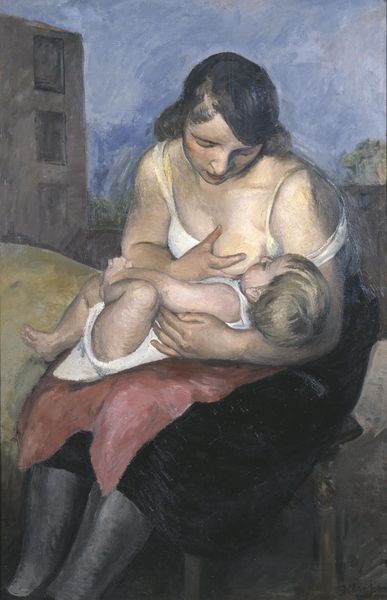
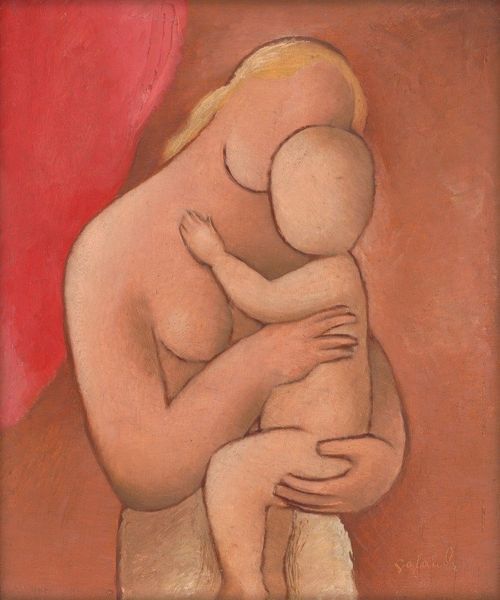
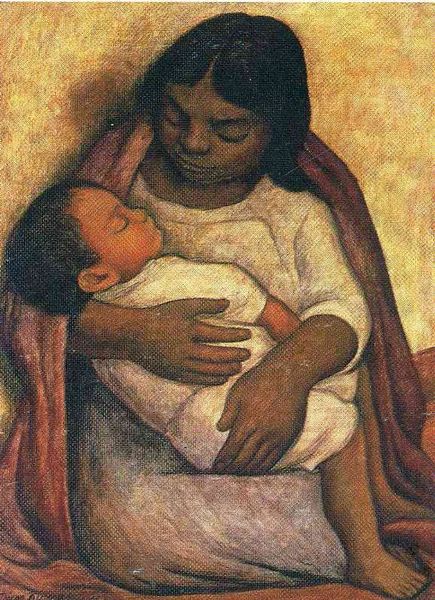
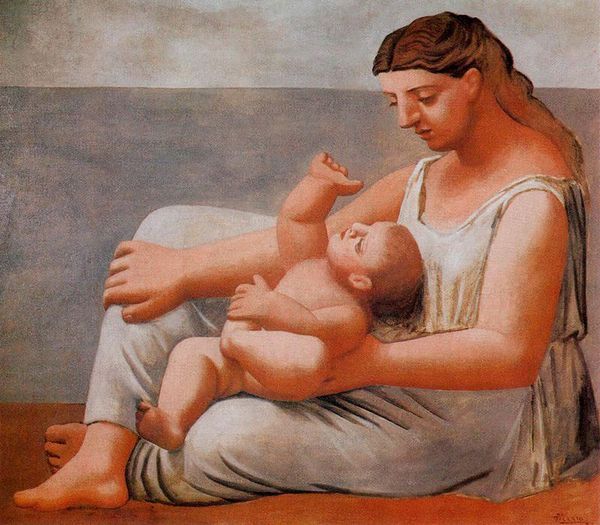
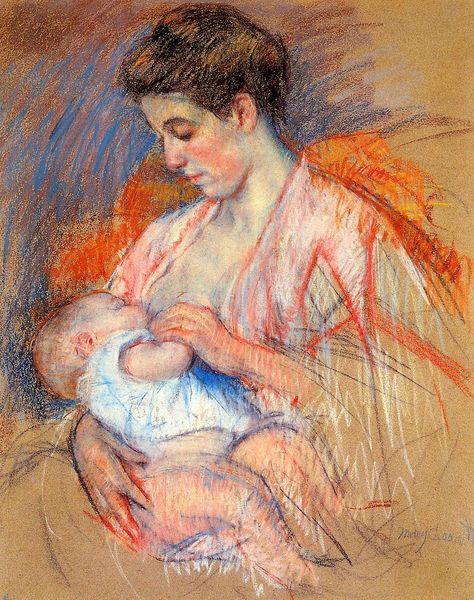
Editor: Vicente Manansala’s 1981 oil painting, "Mother and Child," has a real tenderness to it. The colours are muted, almost ethereal, and there's this very clear, loving connection between the two figures. What strikes you about this piece? Curator: The enduring image of mother and child, particularly rendered by a Filipino artist like Manansala, invites us to consider the multifaceted narratives of womanhood, care, and societal expectation. How do we unpack the colonial influences on representations of motherhood, versus the realities of Filipino women in the late 20th century, when this was painted? Does this intimate portrait push back against, or reinforce, traditional views of women's roles in post-colonial Philippines? Editor: That’s interesting, I hadn't considered it in a post-colonial context. I suppose I saw it as more universal, about that basic bond. Curator: The universality is there, of course. But Manansala lived through enormous social upheaval. He’s not painting in a vacuum. Who has access to that kind of maternal ideal, and who is excluded? Are the mother's desires and needs present? The gentle colours you observed, might that also point to a desire for peace during social unrest? Editor: I guess I was reading the colours more as sentimental, but thinking of them as a yearning for peace makes sense given the political climate at the time. I'm curious, do you see the abstraction in the background contributing to this reading? Curator: Precisely. The abstracted background isn’t just a stylistic choice. It asks: what are the societal structures ‘backing’ this image of mother and child, and who benefits? By disrupting the setting, Manansala makes us aware of the social forces at play. Editor: This gives me so much to think about. It is much more layered than I initially understood. Curator: Exactly. A tender image, certainly. But also, potentially, a radical one.
Comments
No comments
Be the first to comment and join the conversation on the ultimate creative platform.
 Collect
 React
React Comment
More like this