1645 - 1709
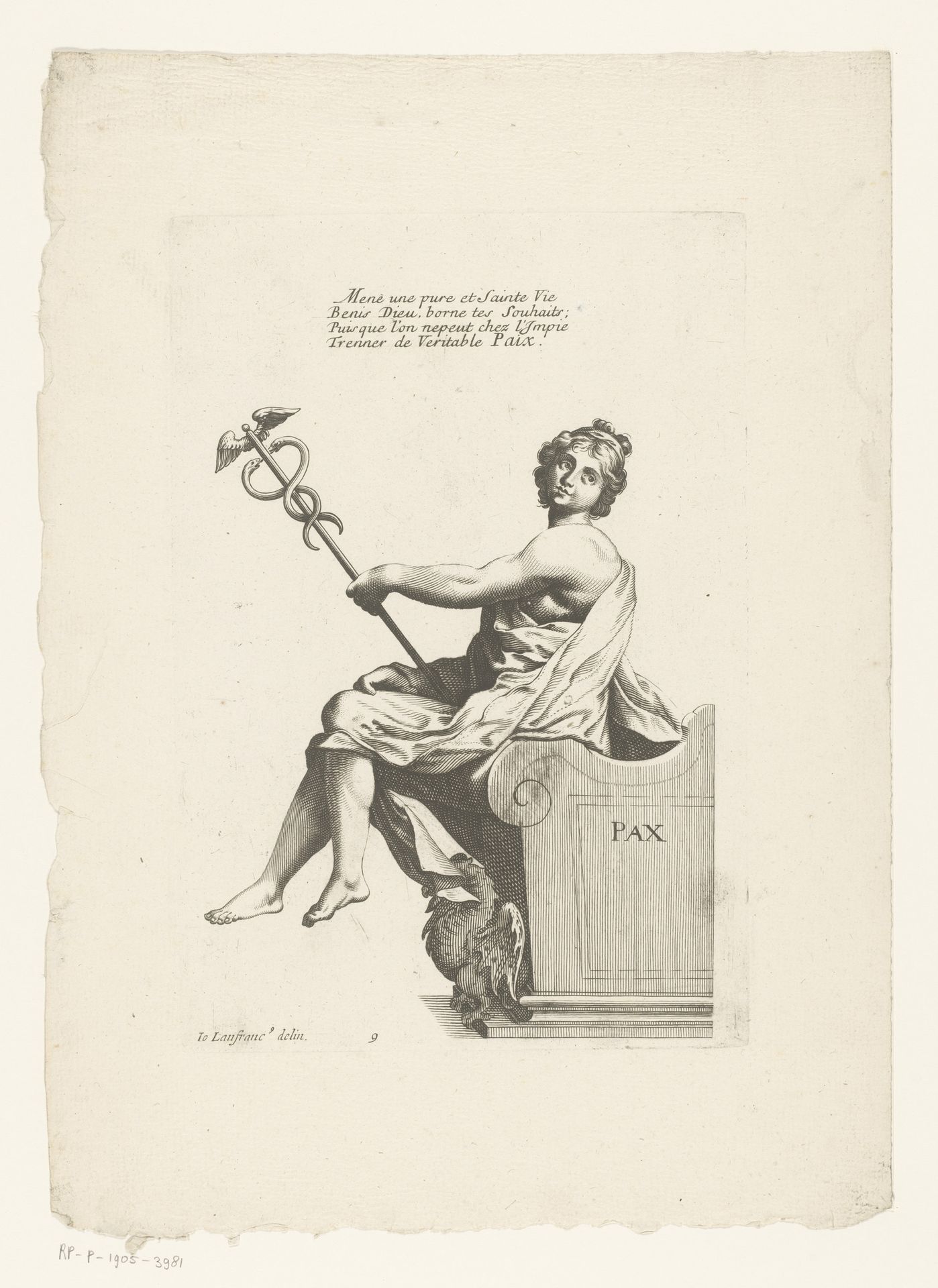
Personificatie van Vrede (Pax)

Anonymous
@anonymousLocation
RijksmuseumListen to curator's interpretation
Curatorial notes
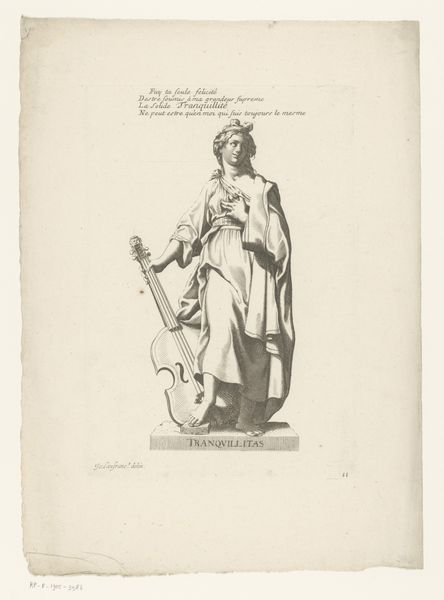
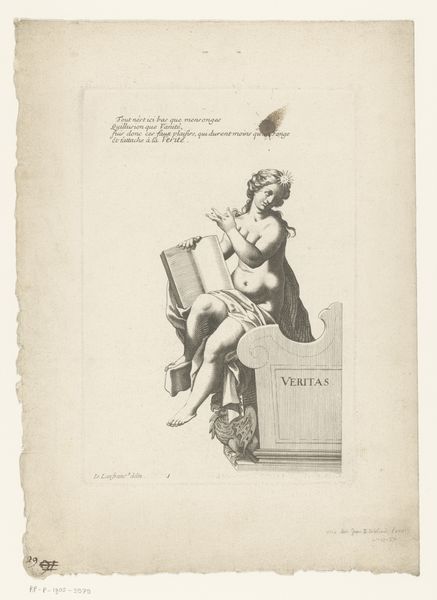
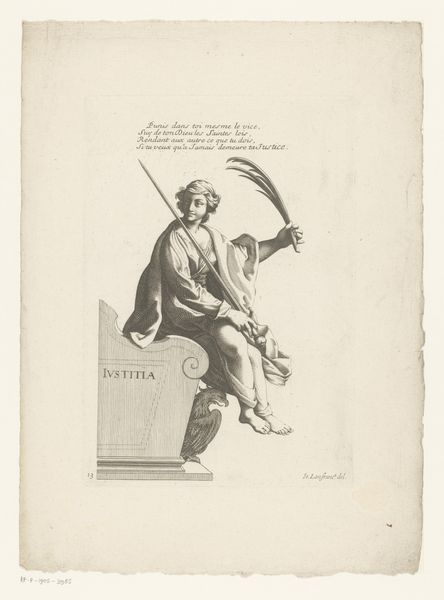
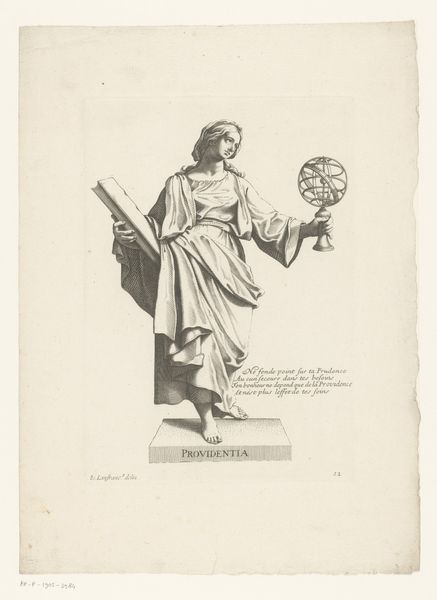
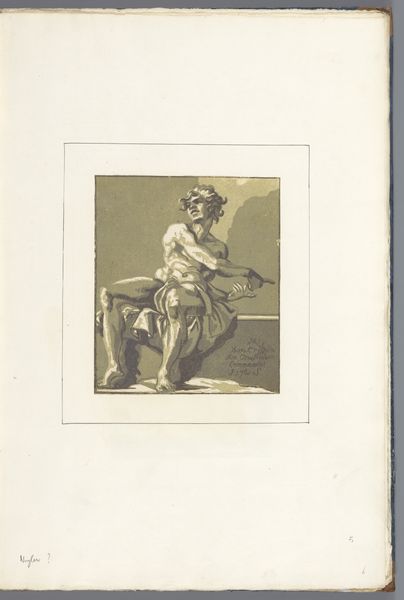
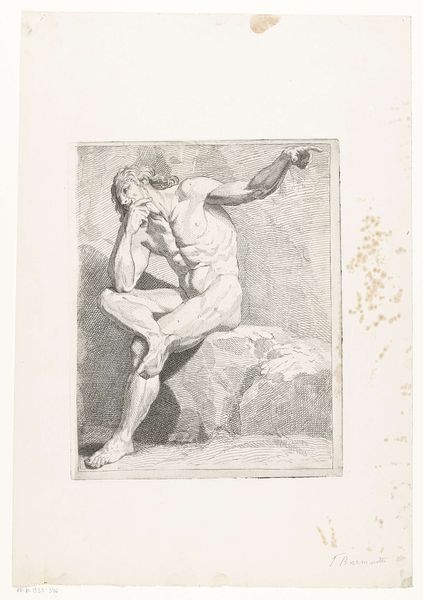
Curator: This engraving, dating roughly between 1645 and 1709, is titled "Personification of Peace" – or "Pax," as it’s labeled here. Editor: The first thing that strikes me is this figure's pose. She's got this amazing swagger, perched on what looks like a throne. There is confidence and defiance here! Curator: Yes, it is a baroque allegory – quite typical for the era, actually. Note the caduceus, a symbol associated with peace, as well as commerce and negotiation. Editor: She's seriously buff, which I don’t necessarily associate with “peace." Is that a visual contradiction? I'm thinking it's a reminder that peace has to be defended? Curator: Precisely. These allegorical prints often reflect complex socio-political contexts. The Dutch Republic, for example, was very much involved in near-constant negotiations and required robust diplomacy backed by martial ability to maintain any semblence of "peace". Editor: The texture of the engraving itself adds to the gravitas. It’s not just an image; it’s got weight, literally and metaphorically. The sharp lines give it such clarity and punch, you can imagine this "Pax" holding her ground. Curator: Furthermore, prints like this served to disseminate and propagate ideals of governance during periods of conflict in Europe. The question is: did those ideals work in reality? Editor: Or does the artwork simply remind us of the complex history and messy human struggle required to attempt bringing inner or outer peace? Curator: Indeed, it raises questions about how power is portrayed, especially in times of strife. Editor: This visit has really turned my understanding of peace inside out! What looks simple becomes, through art, an introspective journey!