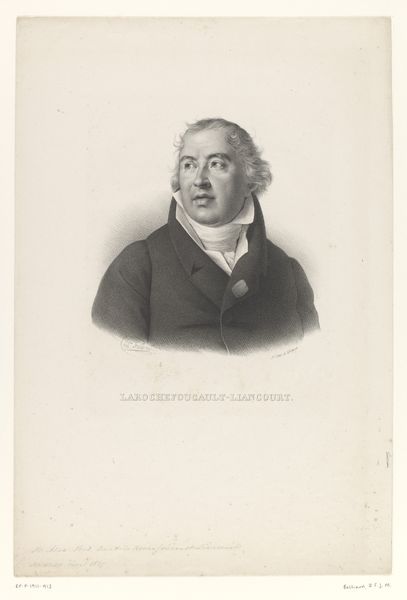
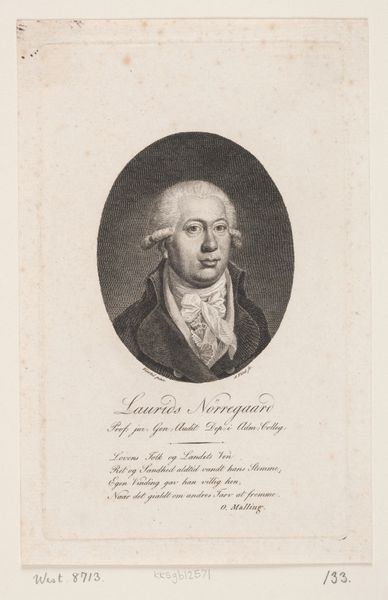
drawing, pencil, engraving
#
portrait
#
pencil drawn
#
drawing
#
neoclacissism
#
pencil sketch
#
old engraving style
#
pencil drawing
#
pencil
#
15_18th-century
#
pencil work
#
engraving
Dimensions: height 126 mm, width 84 mm
Copyright: Rijks Museum: Open Domain
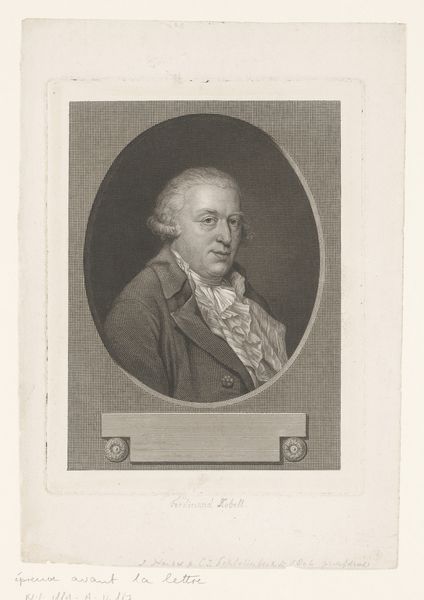
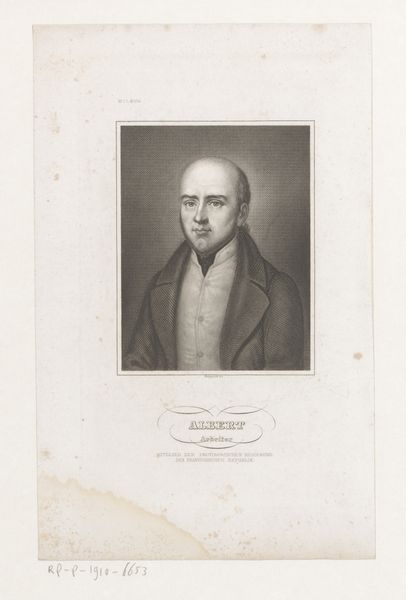
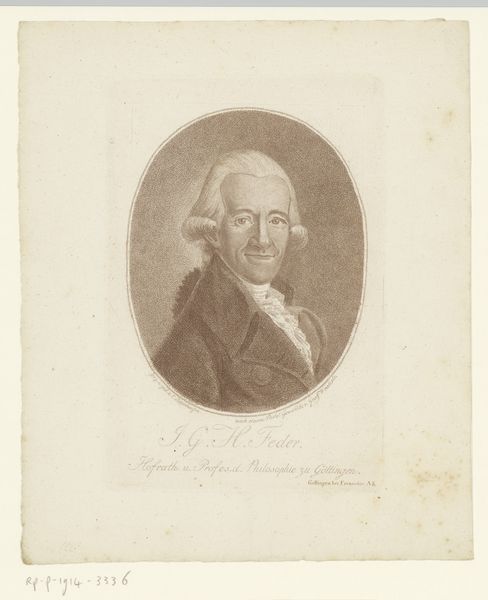
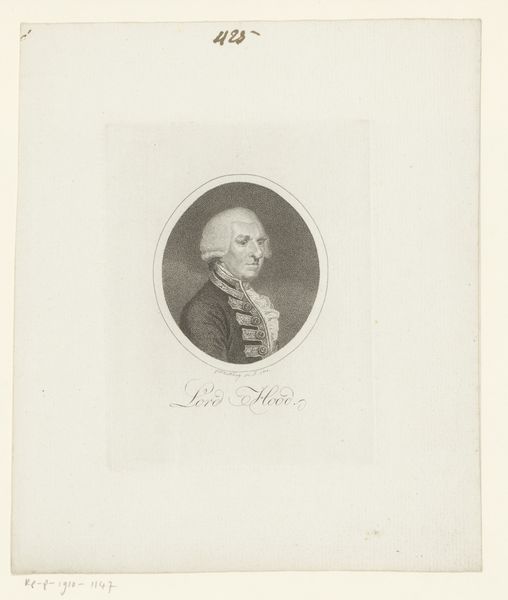
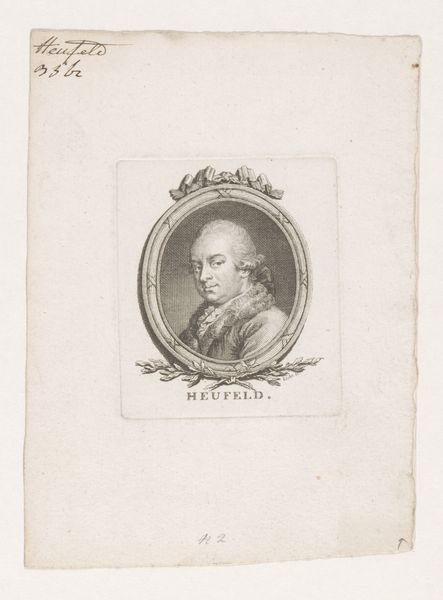
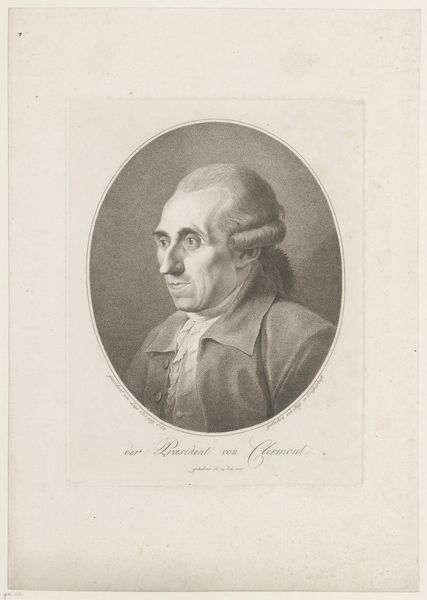
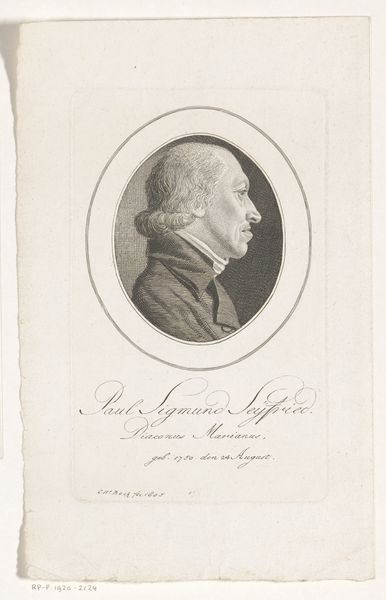
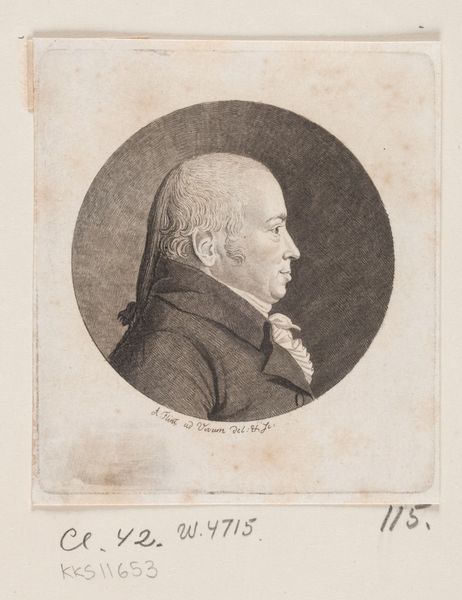
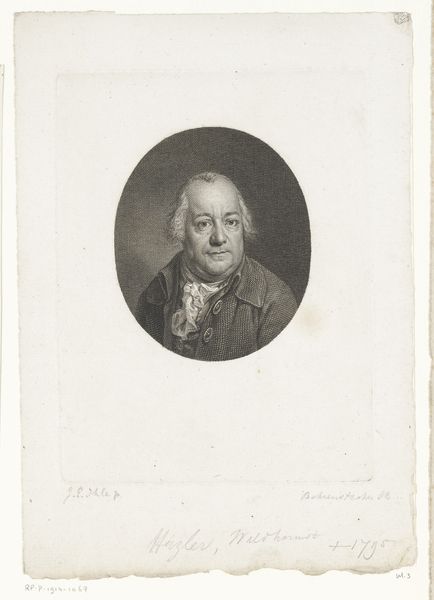
Curator: Looking at this drawing, "Portret van Lonhard Usteri," made by Heinrich Pfenninger sometime between 1759 and 1815, you can almost feel the crispness of the pencil on paper. What are your first impressions? Editor: Well, immediately, I feel a strange sort of detached empathy, if that makes any sense. It's almost like a faded memory. He's present but slightly ghostly. I wonder, what was he thinking? Curator: It’s fascinating how the medium – pencil and engraving – contributes to that feeling. The texture and fine lines certainly lend it that almost ethereal quality. Considering the social context, these kinds of portraits were becoming increasingly accessible to the middle class. Editor: So it's not just about wealthy patrons anymore? It becomes less about celebrating divine right and more about documenting everyday lives. This Lonhard, whoever he was, seems quietly confident, like a merchant perhaps. Not the flamboyance of aristocracy, just grounded respectability. Curator: Precisely! Pfenninger was producing portraits, capturing the burgeoning merchant class, signaling a shift in artistic patronage. Engraving allowed for replication. We can imagine these circulating. How does this relate to artistic merit in our eyes today? Editor: I suppose it democratizes image-making, challenging what we traditionally think of as "art" made by the master's hand. We have to think about what such images are doing in the culture; not what rarefied collectors make of it, necessarily, right? Though the touch of the artist in the original drawing – before engraving – I find especially poignant. Curator: Indeed, the material reality shapes the portrait's meaning and dissemination, shifting perceptions of artistic value itself. This allows a material analysis, thinking about production, distribution and labor as integral to the image. Editor: In the end, regardless of how many prints were made, I keep coming back to those first delicate lines of the artist capturing something unique about Lonhard Usteri. Even now, centuries later. A ghost of a man brought back by a simple piece of graphite and paper. Curator: Yes, and when we consider the historical processes, and material factors involved we gain a richer, more informed view of the portrait as well.
Comments
No comments
Be the first to comment and join the conversation on the ultimate creative platform.
 Collect
 React
React Comment
More like this