About this artwork
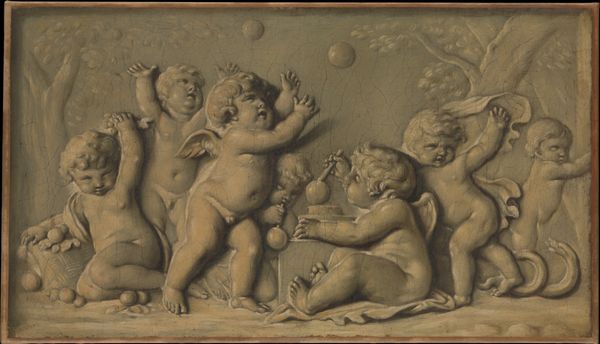
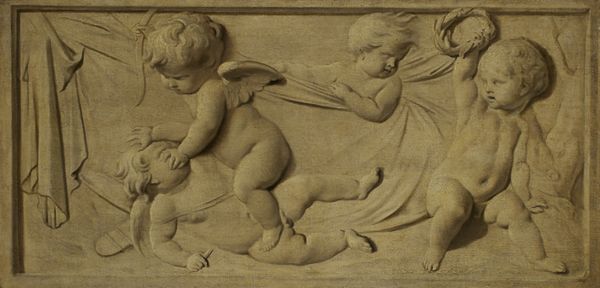
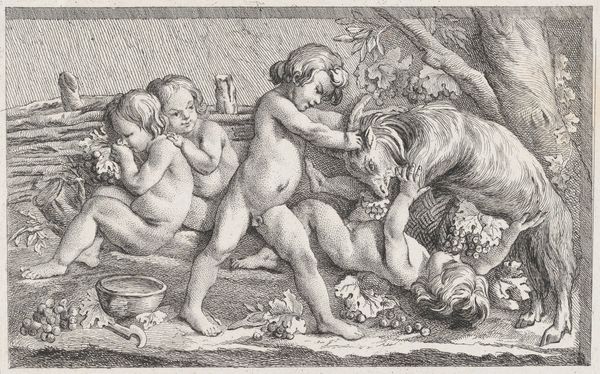
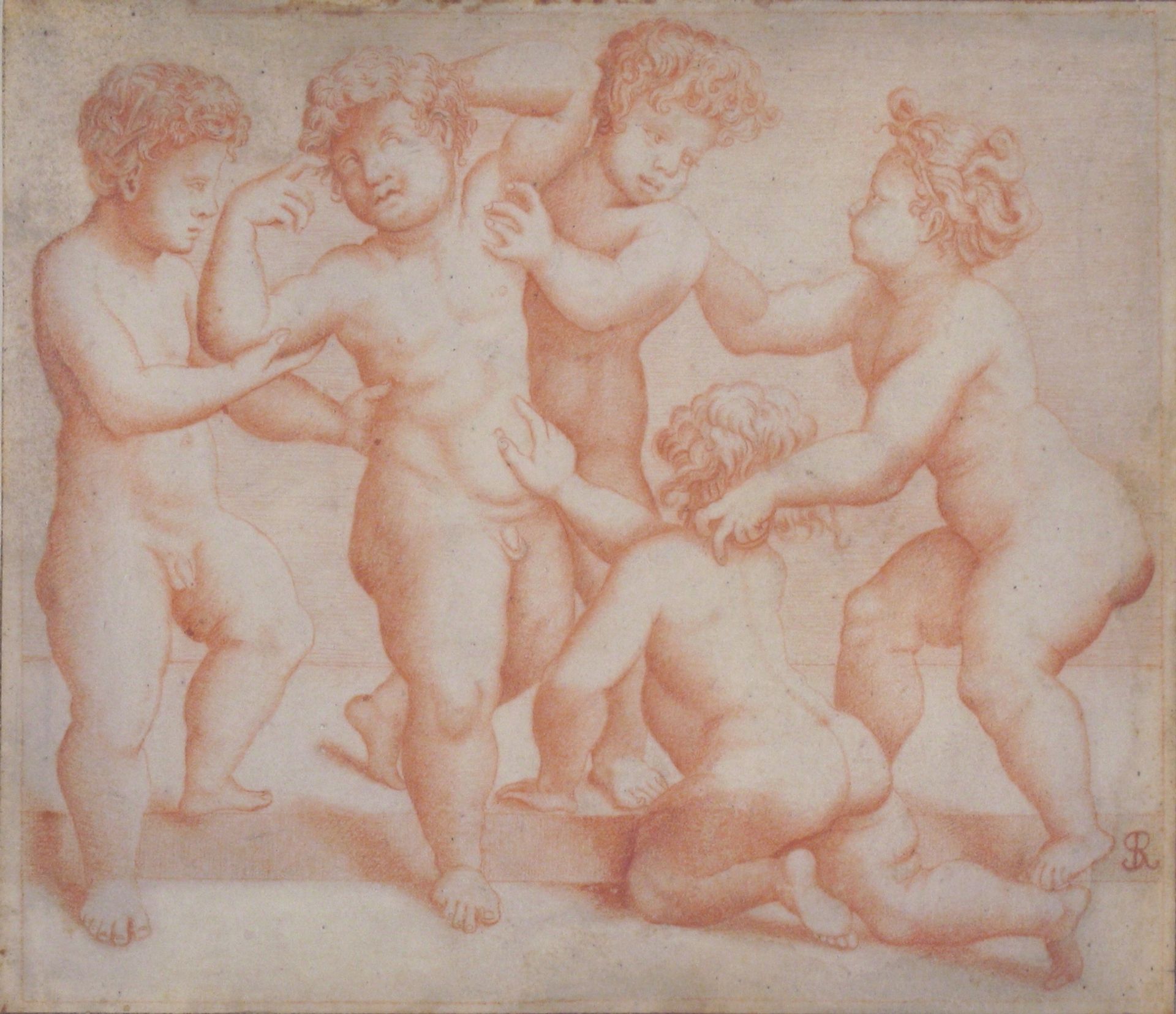
Marco Dente created this red chalk drawing, "Frieze of Five Putti," sometime in the early 16th century. During the Renaissance, classical antiquity was revisited and reinterpreted, so the putti, which are the chubby male children, were a popular subject for artists. These figures are modeled after ancient Roman depictions of the god Cupid, or Eros in Greek, who represents love and desire. They are a celebration of idealized male youth; their soft, round bodies are closely packed together and rendered with precise detail. While the putti are depicted in a playful manner, we have to consider what it meant for the artist to portray the male form in this way. The Renaissance’s obsession with youthful male bodies, and its role in shaping gender and sexuality norms, raise important questions about power, desire, and the gaze.
Frieze of Five Putti
1515 - 1527


Artwork details
- Medium
- drawing, print
- Dimensions
- 5 3/8 x 6 5/16in. (13.7 x 16cm)
- Location
- Metropolitan Museum of Art, New York, NY
- Copyright
- Public Domain
Tags
Comments
Share your thoughts
About this artwork
Marco Dente created this red chalk drawing, "Frieze of Five Putti," sometime in the early 16th century. During the Renaissance, classical antiquity was revisited and reinterpreted, so the putti, which are the chubby male children, were a popular subject for artists. These figures are modeled after ancient Roman depictions of the god Cupid, or Eros in Greek, who represents love and desire. They are a celebration of idealized male youth; their soft, round bodies are closely packed together and rendered with precise detail. While the putti are depicted in a playful manner, we have to consider what it meant for the artist to portray the male form in this way. The Renaissance’s obsession with youthful male bodies, and its role in shaping gender and sexuality norms, raise important questions about power, desire, and the gaze.
Comments
Share your thoughts