1895
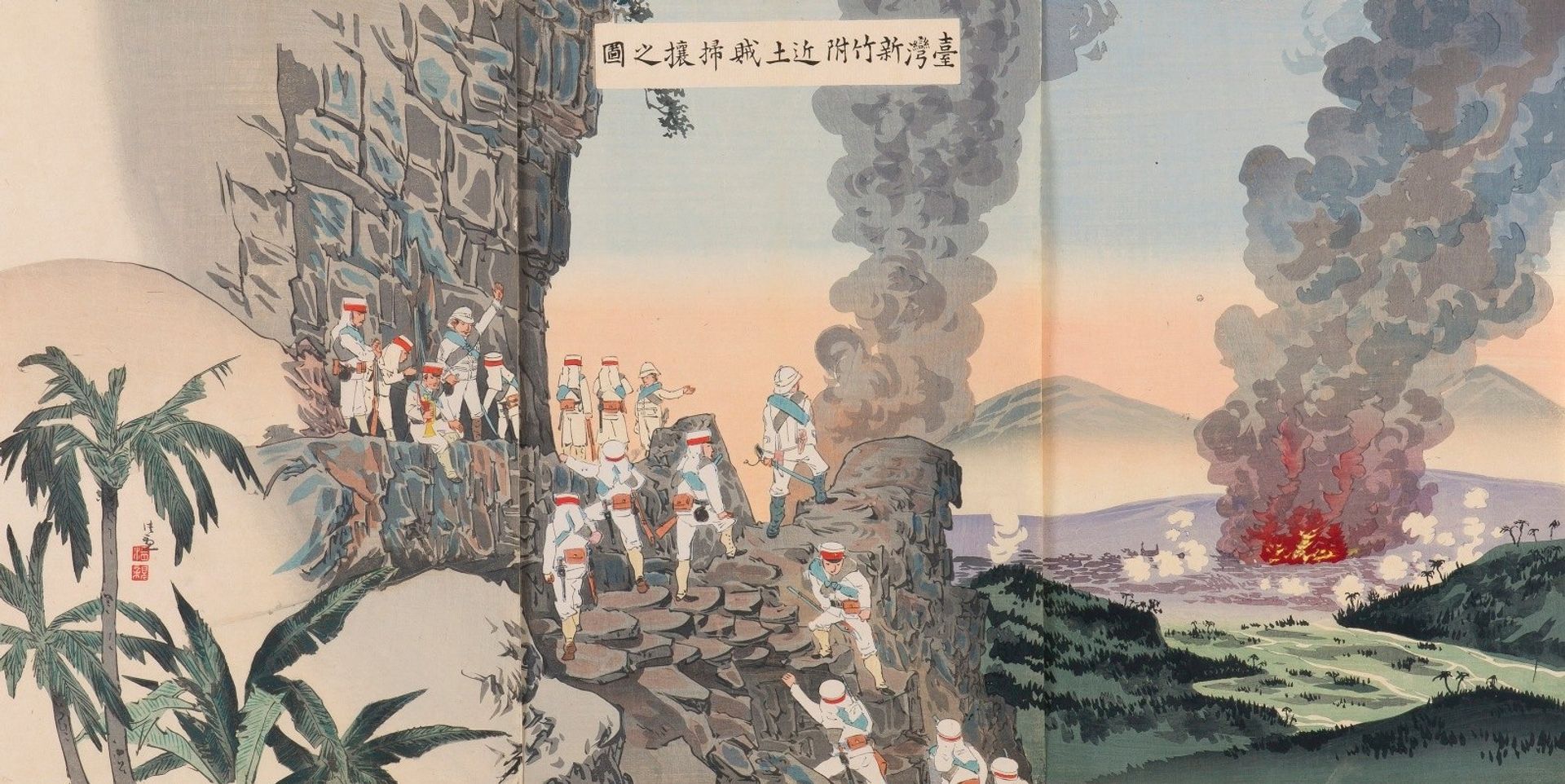
Native Bandits Being Swept up in the Vicinity of Xinzhu in Taiwan

Listen to curator's interpretation
Curatorial notes
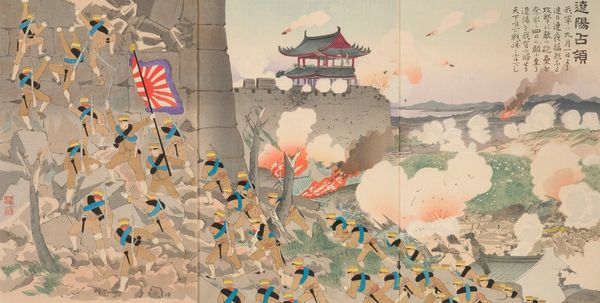
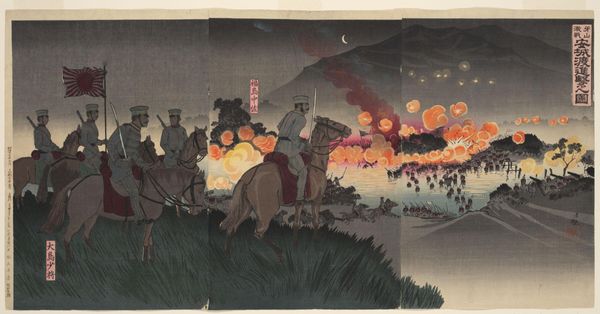
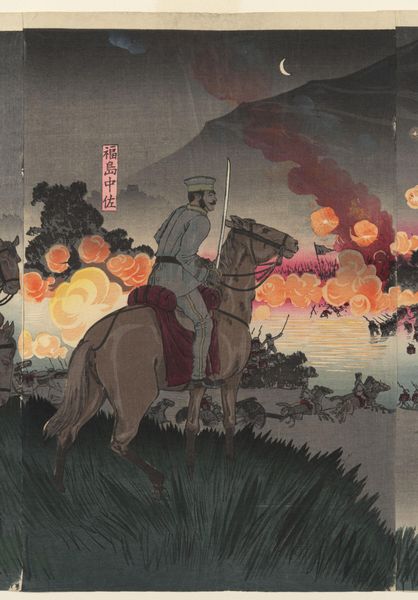
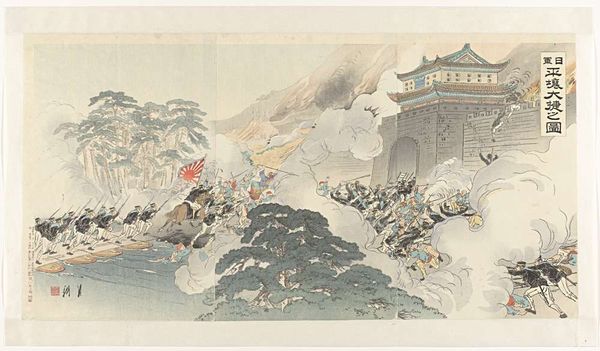
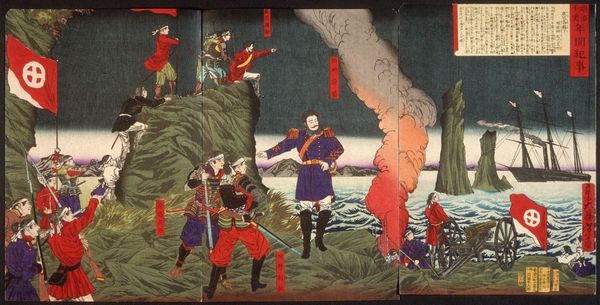
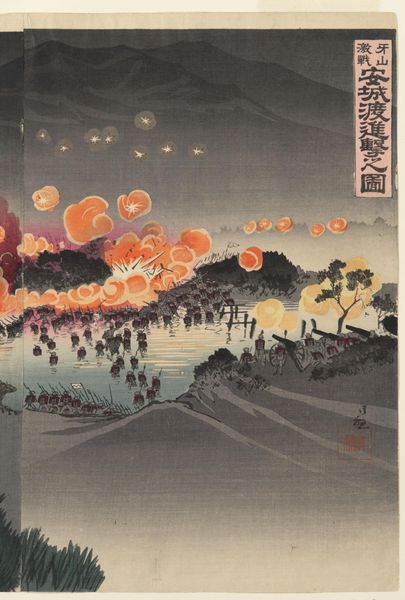
Curator: This print, created in 1895 by Kobayashi Kiyochika, is entitled "Native Bandits Being Swept up in the Vicinity of Xinzhu in Taiwan." It appears to be rendered in watercolors, reflecting a style akin to traditional ukiyo-e with landscape elements. Editor: My immediate response is one of stark contrast. The tranquil blues and pinks of the sky clash horribly with the scene of utter destruction in the distance, almost a cognitive dissonance in the artwork. Curator: Indeed, that disjunction is striking. The artist captures the historical moment of conflict during the Japanese invasion of Taiwan. I think the plumes of smoke and fire might represent destruction, yet the composition almost aestheticizes the violence, doesn't it? There is a strange beauty at play. Editor: Precisely. Consider the narrative being presented here: Japanese soldiers, clean and orderly, ascending this rocky precipice while met by billowing smoke as an entire town is engulfed in flames. What does this "sweeping up" of so-called bandits represent in the grander scheme of colonial violence and narratives? Curator: It makes me think of propaganda, framing it through a distinct cultural lens. Bandits, here, aren't necessarily "evil" but a symbolic resistance. The cultural weight embedded within such imagery hints at deep-seated anxieties surrounding cultural identity and sovereignty. It's about more than just history; it's about cultural memory and continuity too. Editor: Agreed. Note the clean lines of the invading forces juxtaposed with the hazily drawn, chaotic landscape in the backdrop. This creates a dichotomy reinforcing the idea of civilized control over untamed barbarity, so commonly found in colonial visual rhetoric. But, the title also serves as a tool to dehumanize an entire population, dismissing their struggle as mere banditry. Curator: It serves as a strong reminder of art’s ability to embody historical context, yet its symbols persist in evolving social discourses. This picture isn't just a record of events, it's an ongoing signifier in how cultural memory and conflict interweave. Editor: Absolutely, viewing it through contemporary lenses highlights the complex power dynamics at play. It underscores how images become implicated in the perpetuation—and perhaps the disruption—of colonial ideologies and violent power structures.