About this artwork
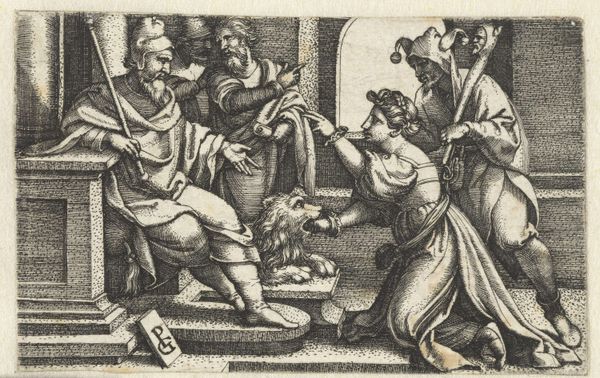
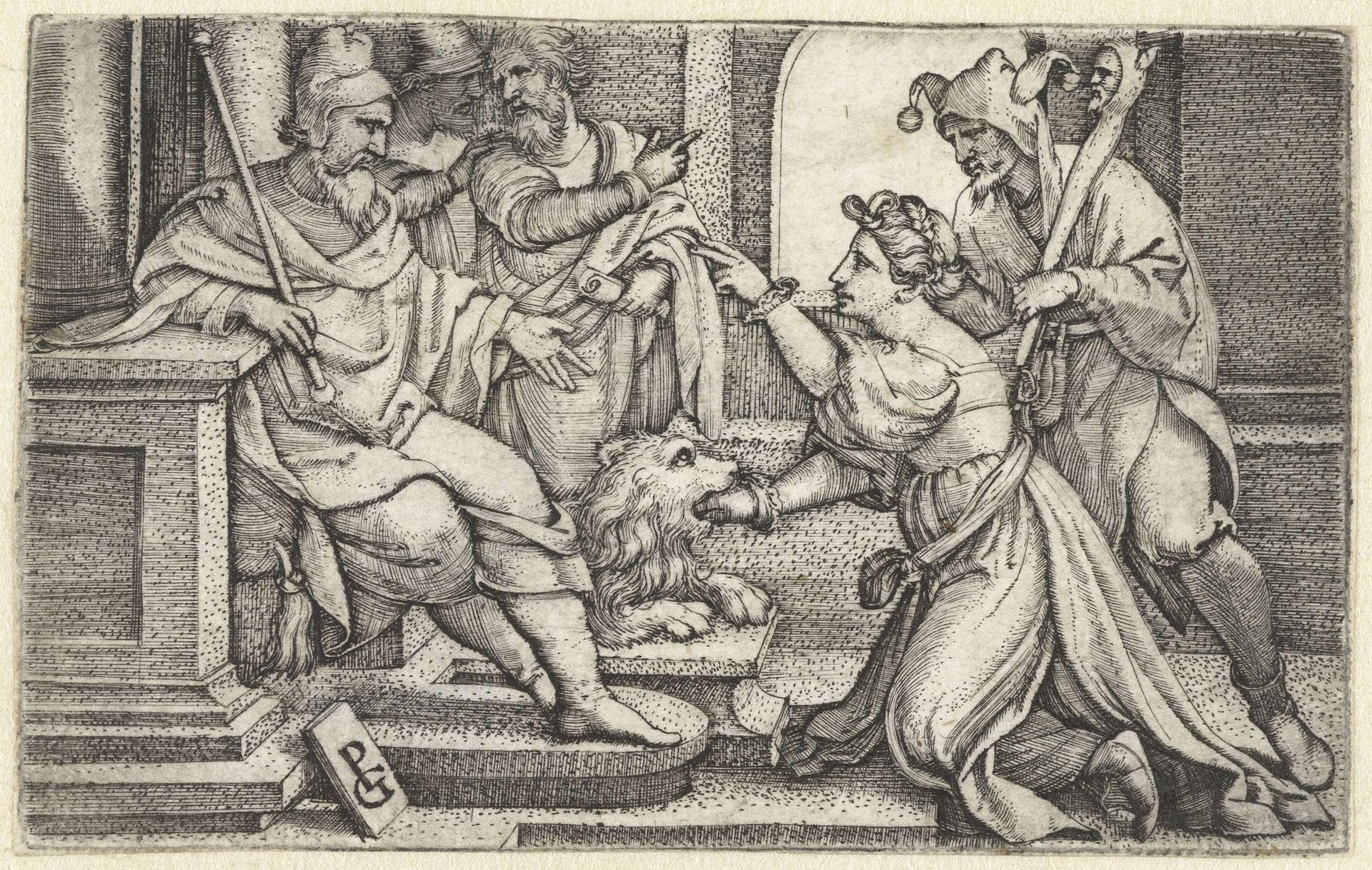
Georg Pencz created this small engraving, "Vrouw verklaart onder ede haar onschuld," or, "Woman declares under oath her innocence," in the 16th century. Pencz lived during a time of significant religious and social upheaval, including the Protestant Reformation, which challenged traditional views on morality and justice. Here, we see a woman kneeling before a king, while a lion bites her hand, seemingly acting as a test of her innocence. This scene is striking for the way it stages the vulnerabilities of women within systems of power. The woman’s body is exposed and her fate is determined by symbolic acts of faith. The jester, a conventional figure in such scenarios, stands as a witness. He reminds us that the spectacle of judgement often involves an element of performance. Consider how Pencz uses the printmaking medium to disseminate narratives about gender, morality, and power during the Reformation. This artwork provides a glimpse into the era’s struggle with evolving notions of justice, public performance, and the place of women in society.

Artwork details
- Dimensions
- height 49 mm, width 78 mm
- Location
- Rijksmuseum
- Copyright
- Rijks Museum: Open Domain
Tags
Comments
Share your thoughts
About this artwork
Georg Pencz created this small engraving, "Vrouw verklaart onder ede haar onschuld," or, "Woman declares under oath her innocence," in the 16th century. Pencz lived during a time of significant religious and social upheaval, including the Protestant Reformation, which challenged traditional views on morality and justice. Here, we see a woman kneeling before a king, while a lion bites her hand, seemingly acting as a test of her innocence. This scene is striking for the way it stages the vulnerabilities of women within systems of power. The woman’s body is exposed and her fate is determined by symbolic acts of faith. The jester, a conventional figure in such scenarios, stands as a witness. He reminds us that the spectacle of judgement often involves an element of performance. Consider how Pencz uses the printmaking medium to disseminate narratives about gender, morality, and power during the Reformation. This artwork provides a glimpse into the era’s struggle with evolving notions of justice, public performance, and the place of women in society.
Comments
Share your thoughts