About this artwork
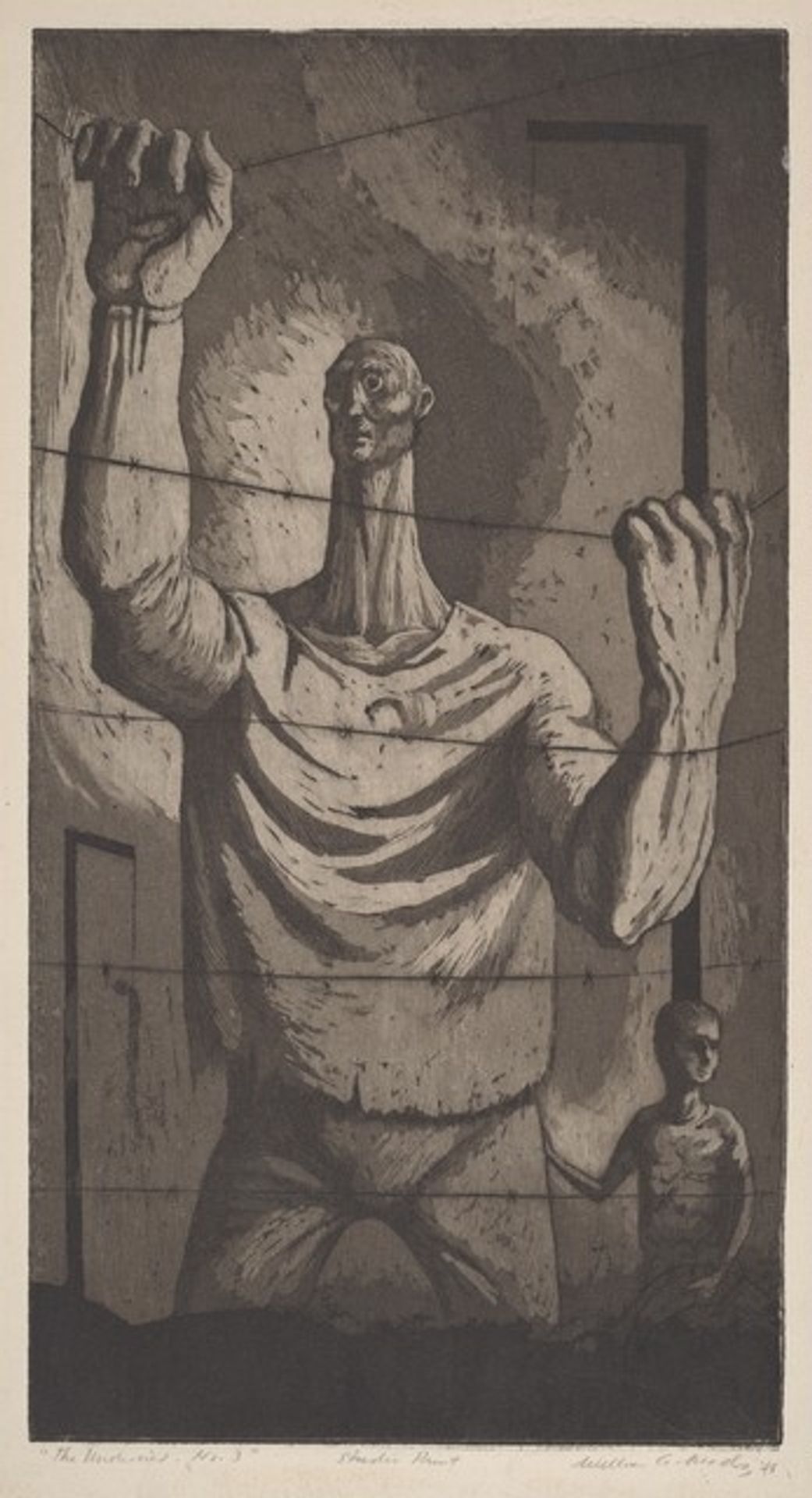
William Ashby McCloy created this print, The Undesired, No. 3, using an intaglio process, where the image is incised into a plate. The way the tones shift from light to dark feels both careful and intuitive, like a dance between control and letting go. The stark contrast between the light figure and the shadowy background creates a sense of drama, maybe even dread. I find my eye drawn to the barbed wire; it cuts across the figure, visually dissecting his form and trapping him in the picture plane. It’s hard to know exactly what tools he used, but you can almost feel the scratch of the tool as it carves into the metal. The texture becomes a kind of language, speaking to themes of entrapment, maybe even protest. This print reminds me a bit of Käthe Kollwitz’s emotionally charged etchings, particularly in its raw, unflinching portrayal of human suffering. It’s like these artists are in a conversation across time, wrestling with how to make images that matter, that stick with you. It invites us to contemplate the layers of meaning embedded within its shadowy depths.
The Undesired, No. 3 1948


Artwork details
- Medium
- Dimensions
- plate: 328 x 125 mm sheet: 399 x 240 mm
- Copyright
- National Gallery of Art: CC0 1.0
Tags
portrait
caricature
figuration
social-realism
history-painting
realism
Comments
No comments
About this artwork
William Ashby McCloy created this print, The Undesired, No. 3, using an intaglio process, where the image is incised into a plate. The way the tones shift from light to dark feels both careful and intuitive, like a dance between control and letting go. The stark contrast between the light figure and the shadowy background creates a sense of drama, maybe even dread. I find my eye drawn to the barbed wire; it cuts across the figure, visually dissecting his form and trapping him in the picture plane. It’s hard to know exactly what tools he used, but you can almost feel the scratch of the tool as it carves into the metal. The texture becomes a kind of language, speaking to themes of entrapment, maybe even protest. This print reminds me a bit of Käthe Kollwitz’s emotionally charged etchings, particularly in its raw, unflinching portrayal of human suffering. It’s like these artists are in a conversation across time, wrestling with how to make images that matter, that stick with you. It invites us to contemplate the layers of meaning embedded within its shadowy depths.
Comments
No comments