About this artwork
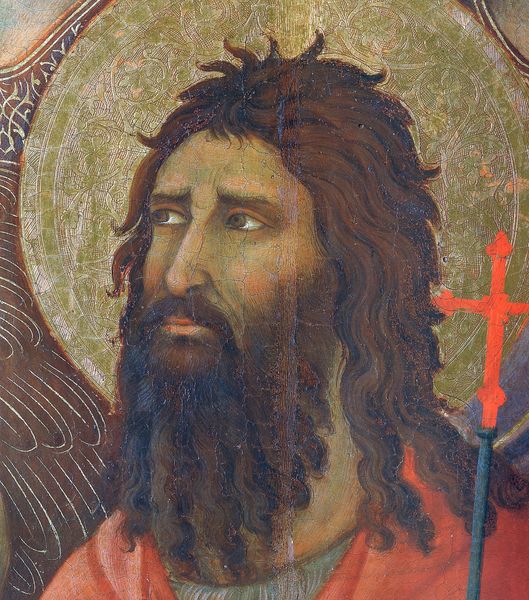
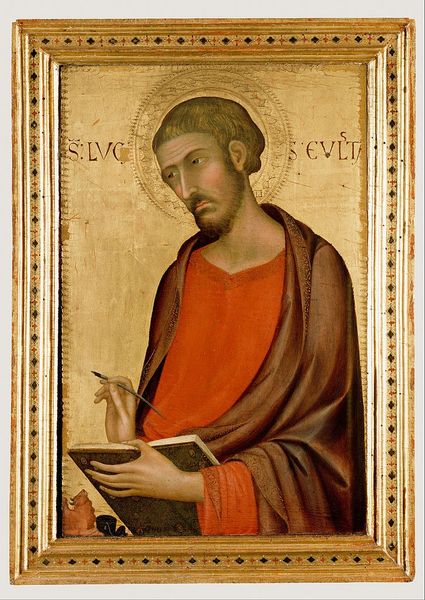
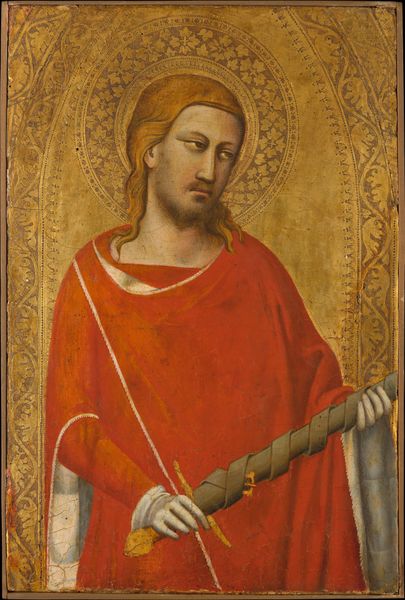
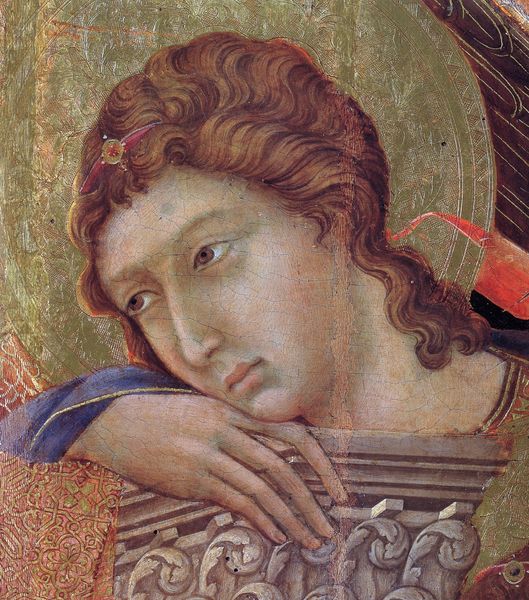
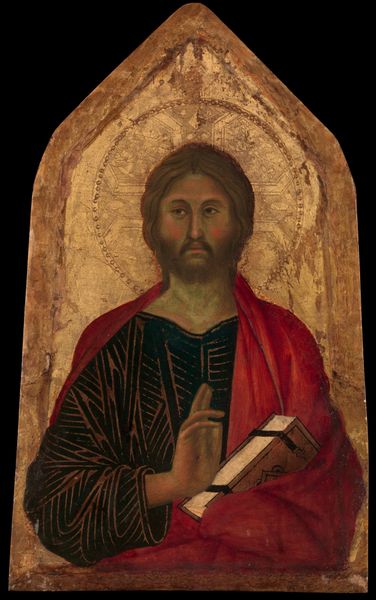
This fragment of Duccio's "Madonna and Child on a Throne" was painted using tempera on a wooden panel, a common practice in the late medieval period. But don't let the traditional materials fool you – there's much more to this work than meets the eye. The painting's jewel-like quality comes from the careful layering of egg tempera, a technique demanding precision and patience. Notice the gold leaf halo. Gilding was a specialized craft, often involving apprentices, reflecting the collaborative nature of artistic production at the time. Duccio would have used brushes made from animal hair to apply the paint and burnishing tools to work the gold leaf. The vibrant colors, likely derived from minerals and plants, speak to a global network of trade. This piece is a testament to skilled labor and a reminder that even seemingly simple materials carry a rich social history. In considering all of this, we can look beyond the image and appreciate the complex tapestry of making that is woven into the artwork.

Artwork details
- Medium
- tempera, painting
- Copyright
- Public domain
Tags
portrait
byzantine-art
medieval
tempera
painting
sienese-school
christianity
history-painting
italian-renaissance
portrait art
christ
Comments
No comments
About this artwork
This fragment of Duccio's "Madonna and Child on a Throne" was painted using tempera on a wooden panel, a common practice in the late medieval period. But don't let the traditional materials fool you – there's much more to this work than meets the eye. The painting's jewel-like quality comes from the careful layering of egg tempera, a technique demanding precision and patience. Notice the gold leaf halo. Gilding was a specialized craft, often involving apprentices, reflecting the collaborative nature of artistic production at the time. Duccio would have used brushes made from animal hair to apply the paint and burnishing tools to work the gold leaf. The vibrant colors, likely derived from minerals and plants, speak to a global network of trade. This piece is a testament to skilled labor and a reminder that even seemingly simple materials carry a rich social history. In considering all of this, we can look beyond the image and appreciate the complex tapestry of making that is woven into the artwork.
Comments
No comments