About this artwork
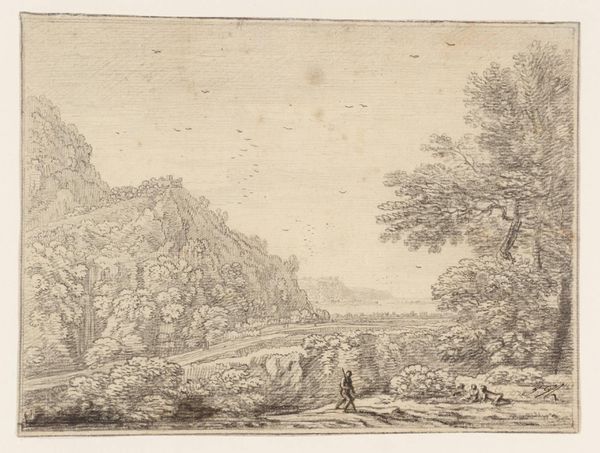
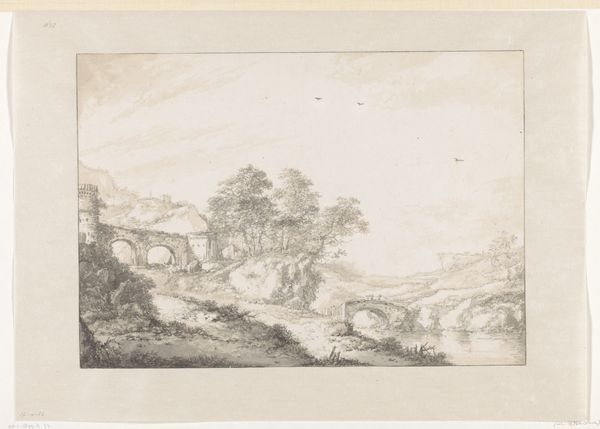
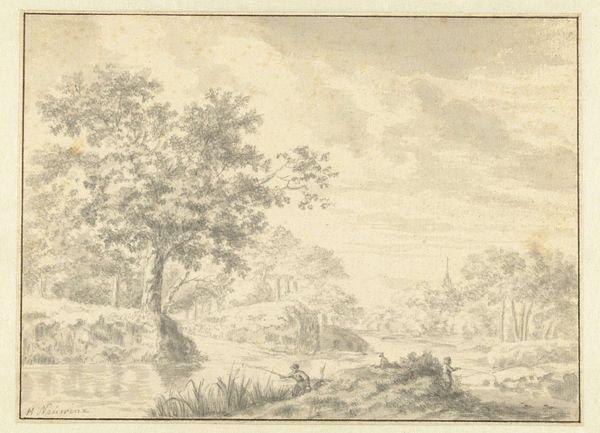
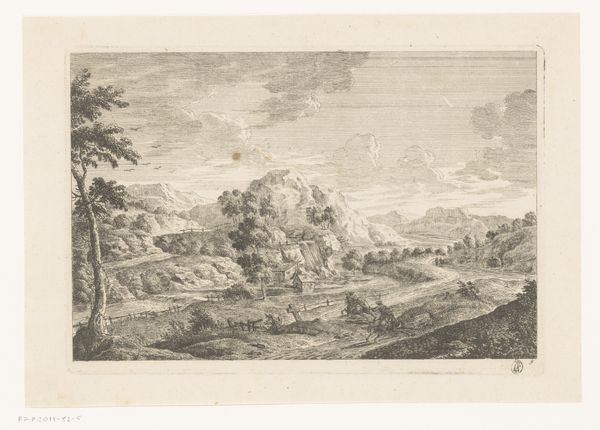
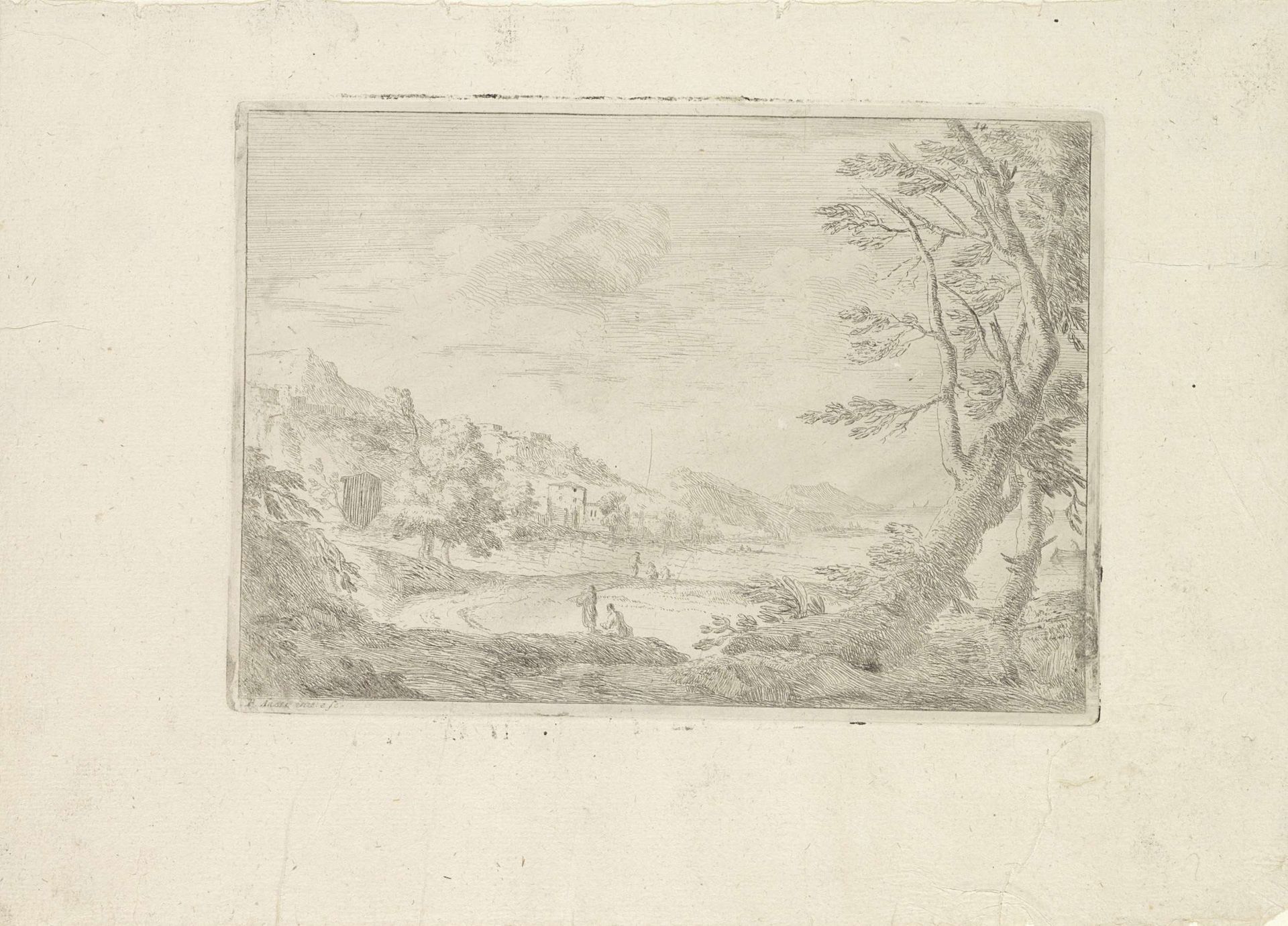
Editor: So, this is "Landschap bij Rome," or "Landscape near Rome" by Paolo Anesi, created around 1725. It looks like it’s made with light pencil work on aged paper. I find the overall effect very dreamlike, almost as if looking at a memory. What do you see in this piece, especially with the Roman influence? Curator: The most prominent aspect here is how Anesi invokes a certain *atmosphere* through these very subtle and delicate lines. It suggests a lingering Roman ideal. Observe how the trees, almost reaching and twisting, frame this view. Doesn’t it remind you of classical allegories where nature itself bears witness to human history? Editor: I can see that, a little! It's almost like they're figures in a play. Are those figures near the middle of the drawing? What role do they play? Curator: Precisely! See those small figures amidst the vast landscape? They're staffage – added figures – but notice *where* they are placed, dwarfed by the land and its memories. Rome wasn't just a physical location but also an idea, a narrative. The artist uses landscape as both background and a kind of symbolic stage. It makes you consider your place in the bigger narrative of cultural memory. Don't you think? Editor: Yes, it's a humbling perspective! The drawing now seems less like a simple landscape and more like a reflection on time and legacy. Curator: Exactly! Each stroke tells a story; each carefully placed element becomes a keeper of memories. Now I see Rome as a repository for human achievements viewed across time. Editor: Well, I’ll definitely remember this piece. Thank you! Curator: And thank you. Considering landscapes this way will shape your understanding of the history imbued within all works of art.

Artwork details
- Dimensions
- height 134 mm, width 190 mm
- Location
- Rijksmuseum
- Copyright
- Rijks Museum: Open Domain
Tags
Comments
Share your thoughts
About this artwork
Editor: So, this is "Landschap bij Rome," or "Landscape near Rome" by Paolo Anesi, created around 1725. It looks like it’s made with light pencil work on aged paper. I find the overall effect very dreamlike, almost as if looking at a memory. What do you see in this piece, especially with the Roman influence? Curator: The most prominent aspect here is how Anesi invokes a certain *atmosphere* through these very subtle and delicate lines. It suggests a lingering Roman ideal. Observe how the trees, almost reaching and twisting, frame this view. Doesn’t it remind you of classical allegories where nature itself bears witness to human history? Editor: I can see that, a little! It's almost like they're figures in a play. Are those figures near the middle of the drawing? What role do they play? Curator: Precisely! See those small figures amidst the vast landscape? They're staffage – added figures – but notice *where* they are placed, dwarfed by the land and its memories. Rome wasn't just a physical location but also an idea, a narrative. The artist uses landscape as both background and a kind of symbolic stage. It makes you consider your place in the bigger narrative of cultural memory. Don't you think? Editor: Yes, it's a humbling perspective! The drawing now seems less like a simple landscape and more like a reflection on time and legacy. Curator: Exactly! Each stroke tells a story; each carefully placed element becomes a keeper of memories. Now I see Rome as a repository for human achievements viewed across time. Editor: Well, I’ll definitely remember this piece. Thank you! Curator: And thank you. Considering landscapes this way will shape your understanding of the history imbued within all works of art.
Comments
Share your thoughts