About this artwork
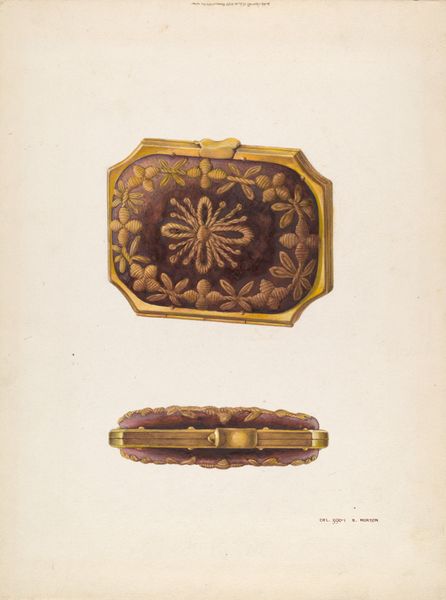
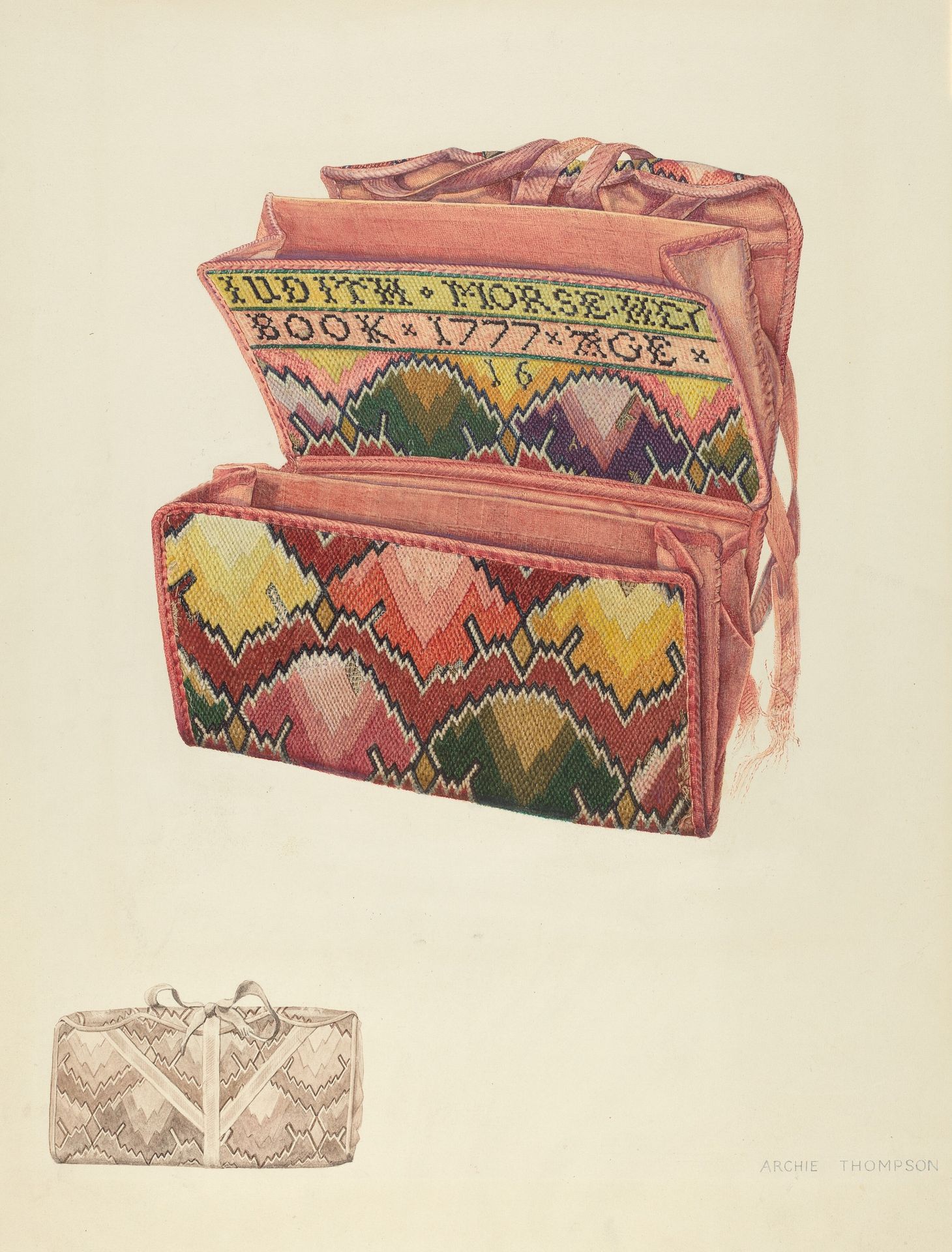
Archie Thompson made this watercolor and graphite rendition of "John Hancock's Wallet" sometime in the 20th century. But the wallet itself dates back to 1777. The inscription reads: "Judith Morse, Her Book, 1777, Age 16." During the 18th century, needlework, like that on the wallet, was considered an important skill for young women to learn. It was seen as a way to demonstrate their patience, skill, and attention to detail—qualities that were highly valued in women at the time. Moreover, the wallet's connection to John Hancock, a prominent figure in the American Revolution, adds another layer of meaning, linking domestic craft with national identity. To truly understand this work, one would want to delve into the social history of needlework and consider the role of women in the American Revolution. Researching primary sources such as letters and diaries from the period could provide additional insight, revealing how these objects reflect broader social and political contexts.
John Hancock's Wallet c. 1938


Artwork details
- Medium
- drawing, coloured-pencil, paper
- Dimensions
- overall: 52.4 x 37.4 cm (20 5/8 x 14 3/4 in.) Original IAD Object: 8 1/4" wide; 4" high
- Copyright
- National Gallery of Art: CC0 1.0
Tags
drawing
coloured-pencil
paper
pencil drawing
coloured pencil
Comments
No comments
About this artwork
Archie Thompson made this watercolor and graphite rendition of "John Hancock's Wallet" sometime in the 20th century. But the wallet itself dates back to 1777. The inscription reads: "Judith Morse, Her Book, 1777, Age 16." During the 18th century, needlework, like that on the wallet, was considered an important skill for young women to learn. It was seen as a way to demonstrate their patience, skill, and attention to detail—qualities that were highly valued in women at the time. Moreover, the wallet's connection to John Hancock, a prominent figure in the American Revolution, adds another layer of meaning, linking domestic craft with national identity. To truly understand this work, one would want to delve into the social history of needlework and consider the role of women in the American Revolution. Researching primary sources such as letters and diaries from the period could provide additional insight, revealing how these objects reflect broader social and political contexts.
Comments
No comments