About this artwork
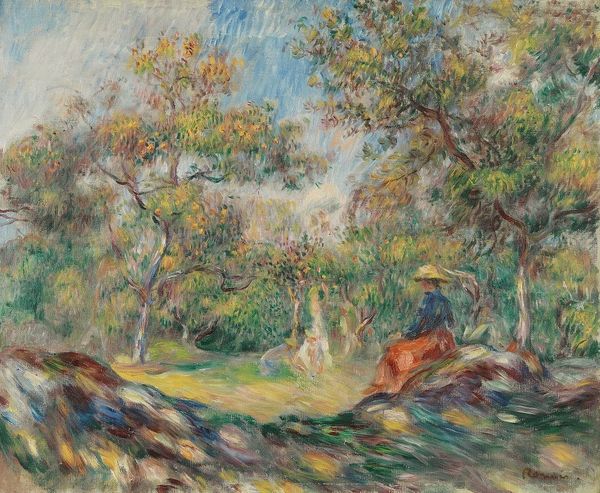
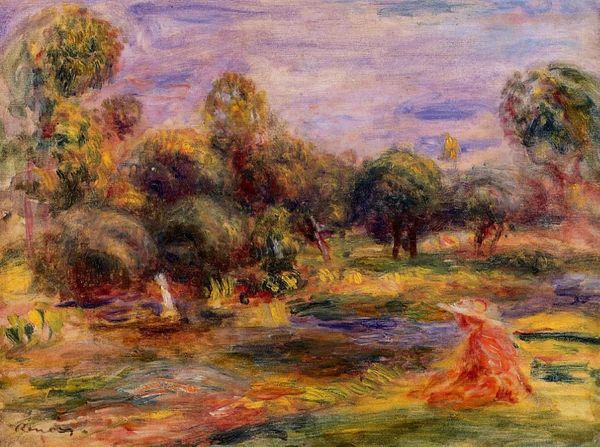
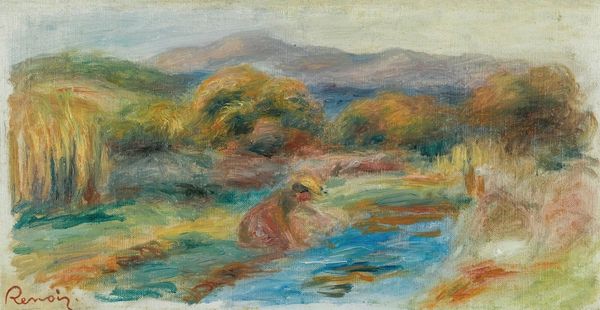
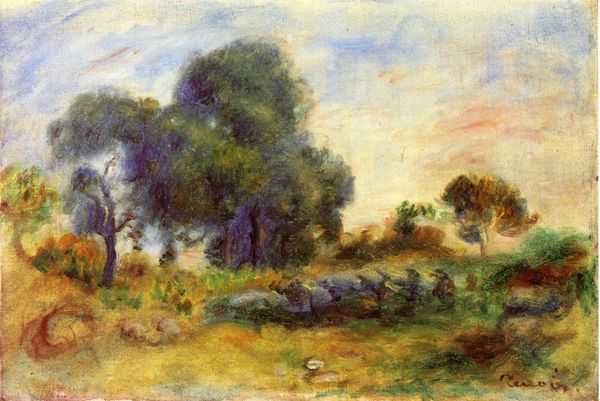
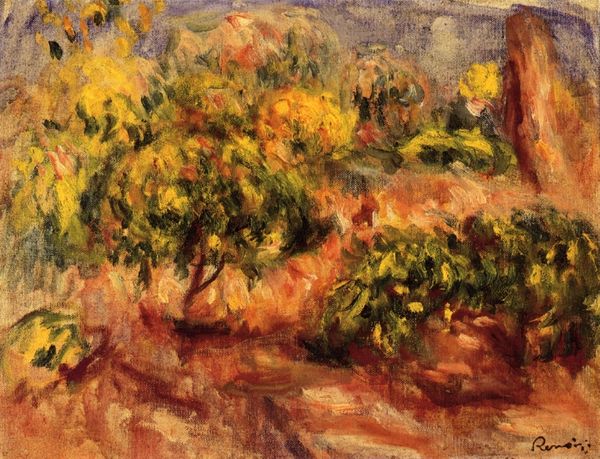
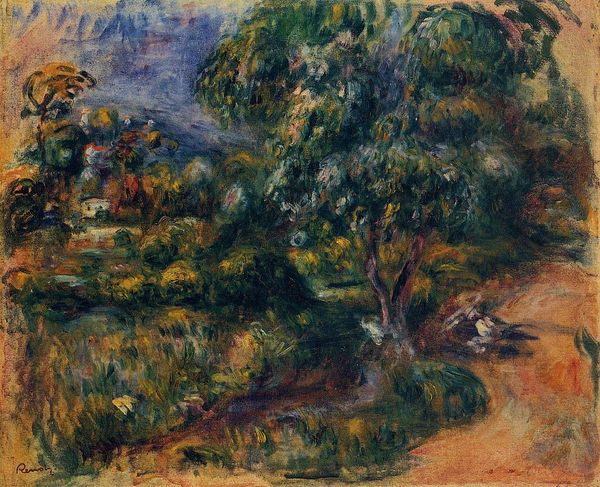
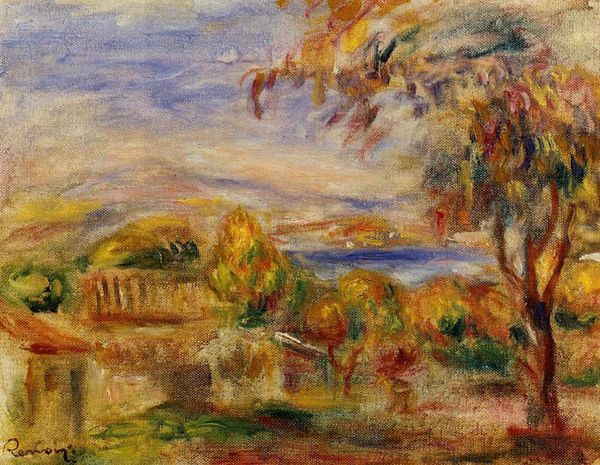
Editor: Here we have Renoir's "In the Garden at Collettes in Cagnes," an oil painting likely completed en plein air. The light feels almost dreamlike. What’s your take on this piece? Curator: Look closely at the materiality of the canvas itself, and consider the setting of this piece, in Cagnes. Renoir relocated here, seeking a climate beneficial for his health and purchasing an estate where he could live and paint. To what extent did Renoir's later painting practices become materially dependent on hired help and assistants due to his failing health, blurring conventional conceptions of authorship? Editor: That's fascinating. I never considered his late work in relation to the means of artistic production with hired assistants. Curator: And observe Renoir's repetitive, almost casual, brushstrokes. These actions themselves constitute a kind of labor, but are they entirely his? How much does the 'impression' here arise from the material conditions and social network of production? Consider that this seemingly effortless image results from the often obscured and intensive labor process and support structures required for its making. Does this influence your appreciation of it? Editor: It makes me question the value we place on individual genius when the reality might be a collaborative effort, shaped by both ability and access. The painting’s charm now feels a little… complicated. Curator: Exactly. And how that perceived ‘complication’ reveals a far richer truth about art-making, consumption and the art world. We might start to see a critical discourse, reflecting changes in societal attitudes toward labour and industrial progress. Editor: This makes me see the work as a document of its own making, not just a pretty landscape. Curator: Indeed. And the layers beneath what we normally accept as beauty within Impressionism itself.
In the Garden at Collettes in Cagnes

Pierre-Auguste Renoir
1841 - 1919Location
Private CollectionArtwork details
- Medium
- painting, plein-air, oil-paint
- Location
- Private Collection
- Copyright
- Public domain
Tags
Comments
Share your thoughts
About this artwork
Editor: Here we have Renoir's "In the Garden at Collettes in Cagnes," an oil painting likely completed en plein air. The light feels almost dreamlike. What’s your take on this piece? Curator: Look closely at the materiality of the canvas itself, and consider the setting of this piece, in Cagnes. Renoir relocated here, seeking a climate beneficial for his health and purchasing an estate where he could live and paint. To what extent did Renoir's later painting practices become materially dependent on hired help and assistants due to his failing health, blurring conventional conceptions of authorship? Editor: That's fascinating. I never considered his late work in relation to the means of artistic production with hired assistants. Curator: And observe Renoir's repetitive, almost casual, brushstrokes. These actions themselves constitute a kind of labor, but are they entirely his? How much does the 'impression' here arise from the material conditions and social network of production? Consider that this seemingly effortless image results from the often obscured and intensive labor process and support structures required for its making. Does this influence your appreciation of it? Editor: It makes me question the value we place on individual genius when the reality might be a collaborative effort, shaped by both ability and access. The painting’s charm now feels a little… complicated. Curator: Exactly. And how that perceived ‘complication’ reveals a far richer truth about art-making, consumption and the art world. We might start to see a critical discourse, reflecting changes in societal attitudes toward labour and industrial progress. Editor: This makes me see the work as a document of its own making, not just a pretty landscape. Curator: Indeed. And the layers beneath what we normally accept as beauty within Impressionism itself.
Comments
Share your thoughts