About this artwork
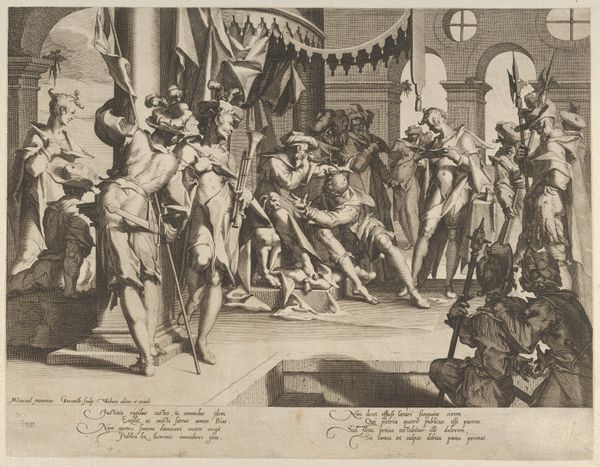
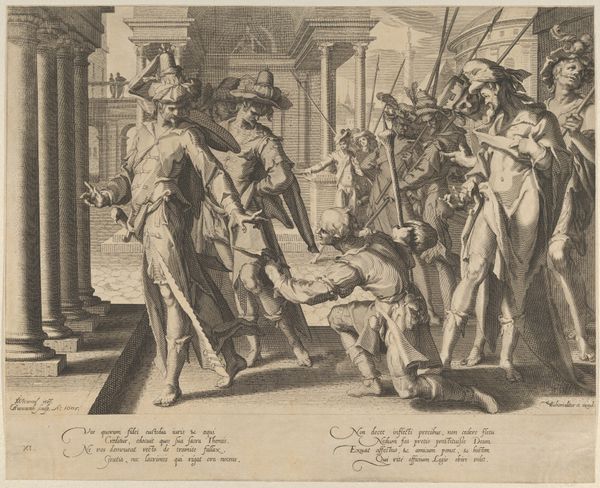
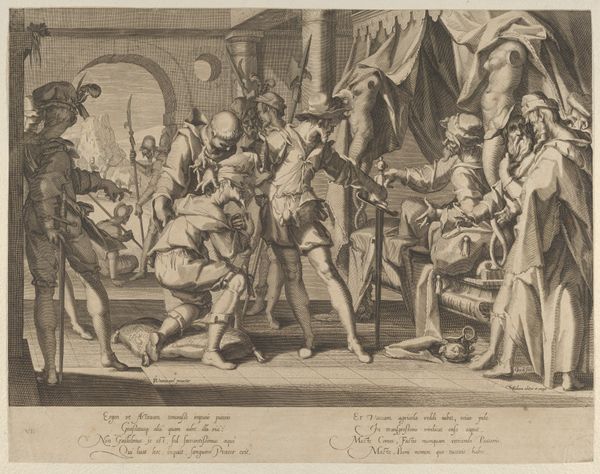
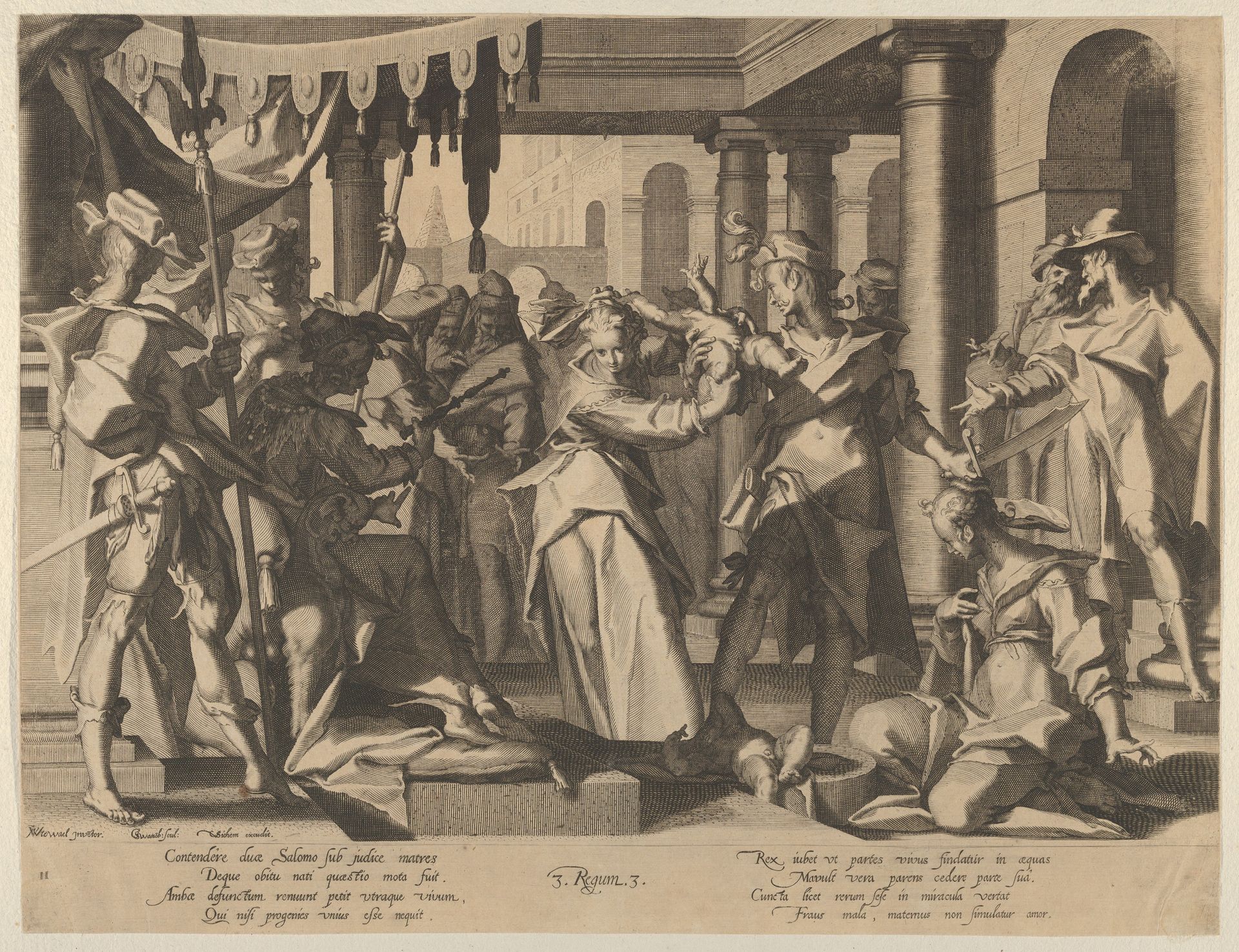
This print, "Judgment of Solomon", was made by Willem van Swanenburg, using engraving. It’s a fine example of how the material qualities of a print can underscore its social meaning. The dramatic scene from the Bible is rendered entirely through the precise, controlled labor of the engraver’s hand. Look closely, and you can see how the composition is built up line by line. Each mark is a testament to Swanenburg’s skill. The linear precision allows for the sharp, clear depiction of details, which in turn allows the artist to emphasize the wealth and power of King Solomon. The controlled, meticulous nature of the engraving mirrors the king’s wisdom and judiciousness. Prints like these circulated widely, making images and ideas accessible to a broad audience. The labor-intensive process of engraving, paradoxically, enabled mass production, bringing the stories of the Bible to a wider public and underscoring the important role of craft in disseminating cultural values.
Judgment of Solomon, from Thronus Justitiae, tredecim pulcherrimus tabulis..., plate 2
1605 - 1606

Willem van Swanenburg
1581 - 1612
The Metropolitan Museum of Art
Metropolitan Museum of Art, New York, NYArtwork details
- Medium
- drawing, print, engraving
- Dimensions
- Sheet: 11 9/16 × 15 1/4 in. (29.4 × 38.7 cm)
- Location
- Metropolitan Museum of Art, New York, NY
- Copyright
- Public Domain
Tags
Comments
Share your thoughts
About this artwork
This print, "Judgment of Solomon", was made by Willem van Swanenburg, using engraving. It’s a fine example of how the material qualities of a print can underscore its social meaning. The dramatic scene from the Bible is rendered entirely through the precise, controlled labor of the engraver’s hand. Look closely, and you can see how the composition is built up line by line. Each mark is a testament to Swanenburg’s skill. The linear precision allows for the sharp, clear depiction of details, which in turn allows the artist to emphasize the wealth and power of King Solomon. The controlled, meticulous nature of the engraving mirrors the king’s wisdom and judiciousness. Prints like these circulated widely, making images and ideas accessible to a broad audience. The labor-intensive process of engraving, paradoxically, enabled mass production, bringing the stories of the Bible to a wider public and underscoring the important role of craft in disseminating cultural values.
Comments
Share your thoughts