About this artwork
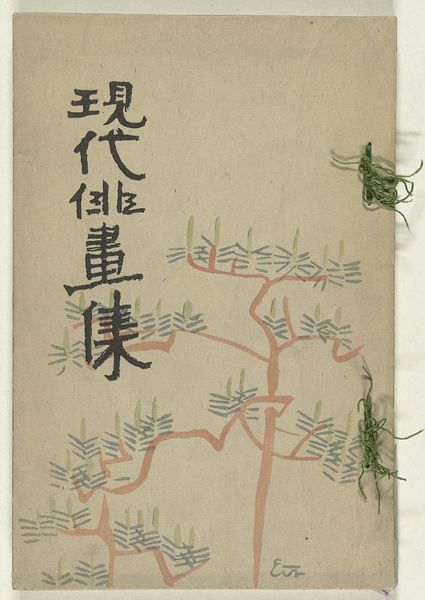
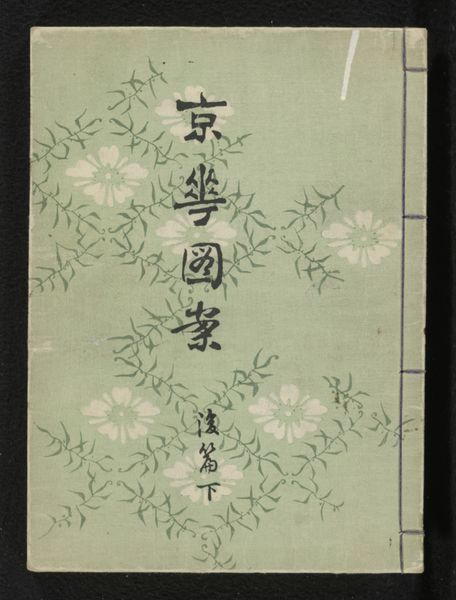
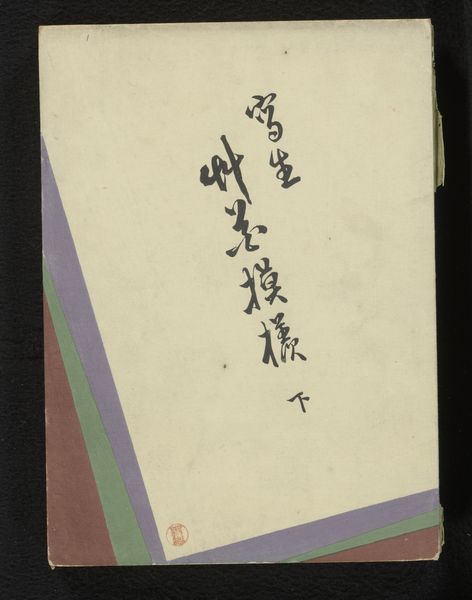
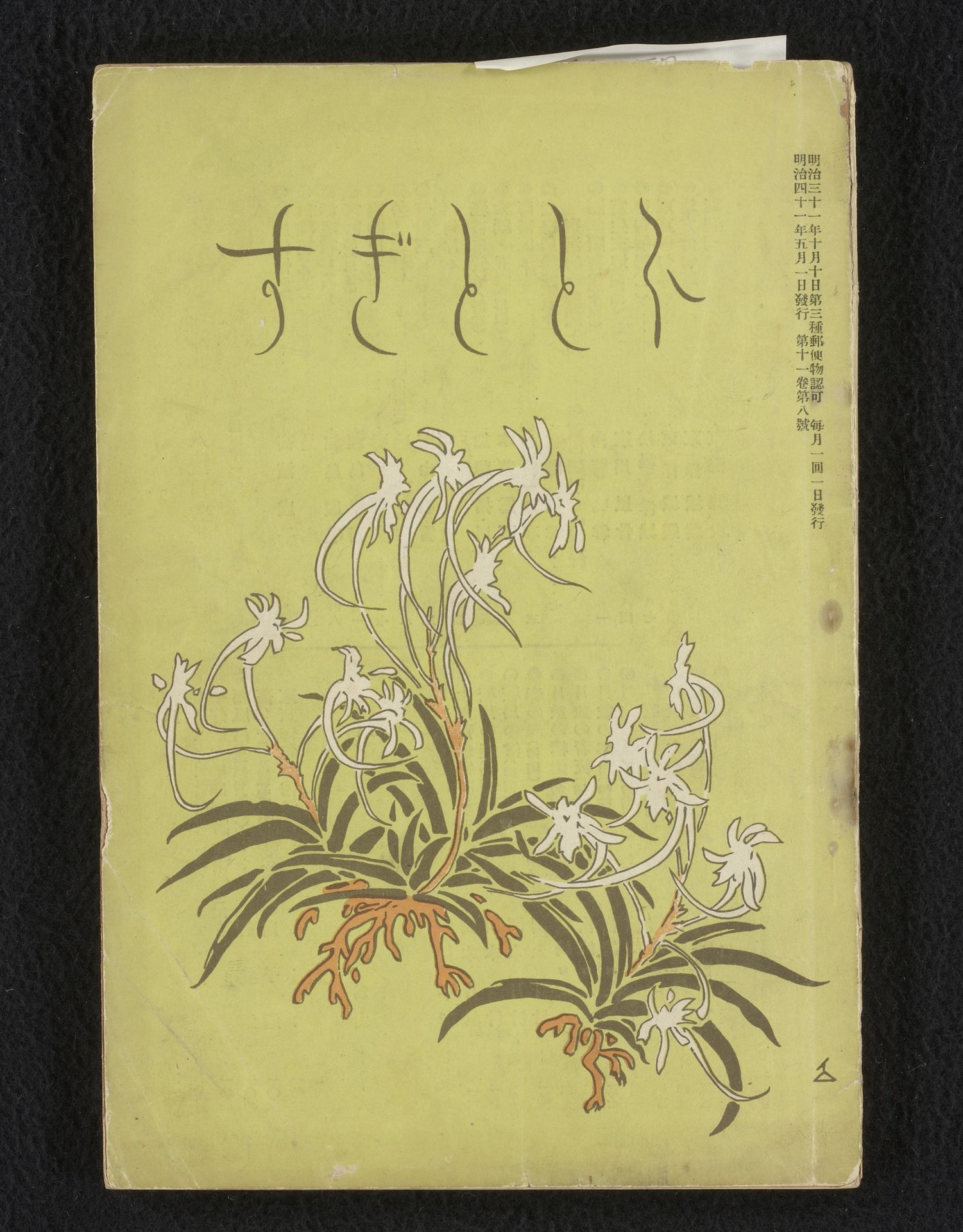
Nakamura Fusetsu made this small book cover in May 1908 with graphic clarity and a muted palette of green and brown. The process here is all about refinement, simplifying the natural world into elegant lines. Look at how the green, almost olive-yellow background creates a calming space, a foundation for the plant to spring from. The dark green foliage and the delicate white flowers are balanced, their forms echoing each other in a dance of positive and negative space. Notice the roots, rendered in a pale orange, adding an earthy counterpoint to the ethereal blossoms. Each line is deliberate, like calligraphy, and it reminds me of the graphic work of someone like Alfred Jarry. This cover encapsulates Fusetsu’s ability to blend naturalism with stylized design, a conversation between observation and imagination. Like a good poem, it lingers in the mind long after you’ve turned the page.

Artwork details
- Medium
- drawing, paper, ink
- Dimensions
- height 220 mm, width 149
- Location
- Rijksmuseum
- Copyright
- Rijks Museum: Open Domain
Tags
drawing
aged paper
book binding
organic
art-nouveau
asian-art
sketch book
personal journal design
paper
personal sketchbook
ink
coloured pencil
sketchbook drawing
storyboard and sketchbook work
decorative-art
sketchbook art
doodle art
Comments
No comments
About this artwork
Nakamura Fusetsu made this small book cover in May 1908 with graphic clarity and a muted palette of green and brown. The process here is all about refinement, simplifying the natural world into elegant lines. Look at how the green, almost olive-yellow background creates a calming space, a foundation for the plant to spring from. The dark green foliage and the delicate white flowers are balanced, their forms echoing each other in a dance of positive and negative space. Notice the roots, rendered in a pale orange, adding an earthy counterpoint to the ethereal blossoms. Each line is deliberate, like calligraphy, and it reminds me of the graphic work of someone like Alfred Jarry. This cover encapsulates Fusetsu’s ability to blend naturalism with stylized design, a conversation between observation and imagination. Like a good poem, it lingers in the mind long after you’ve turned the page.
Comments
No comments