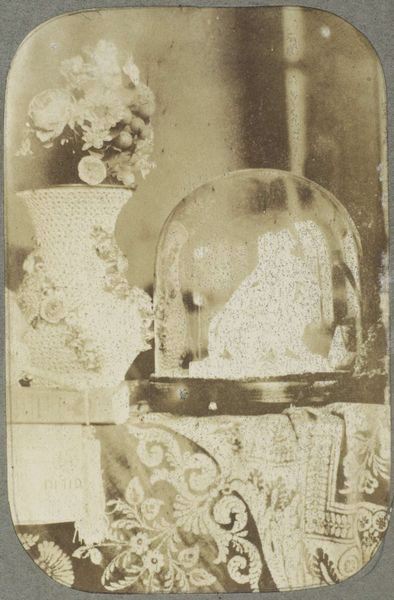
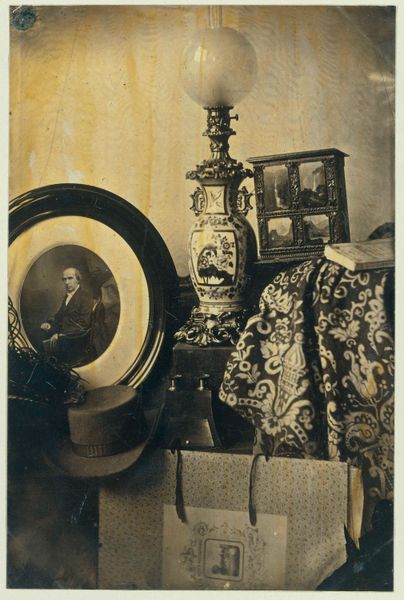
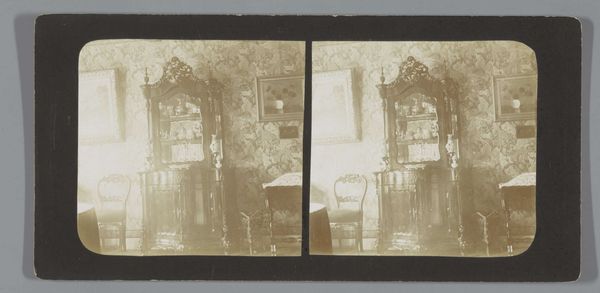
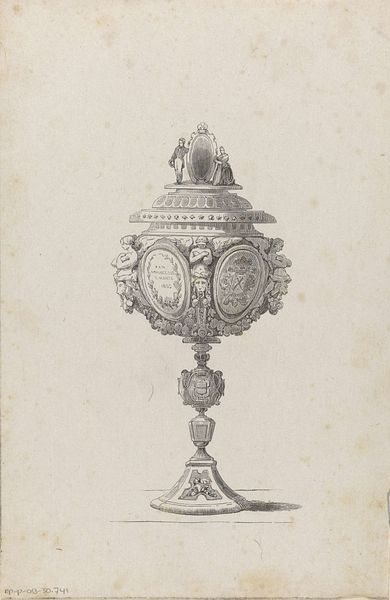
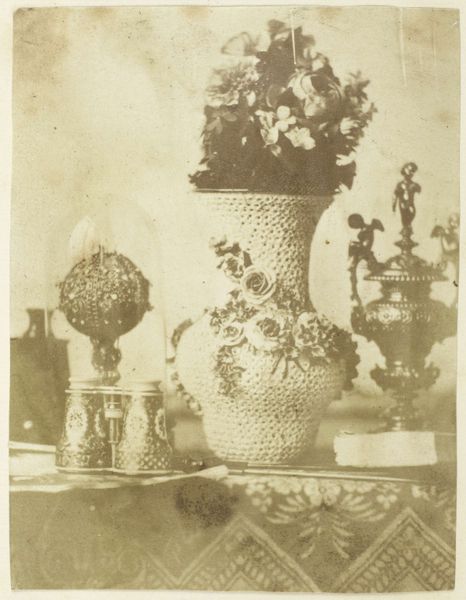
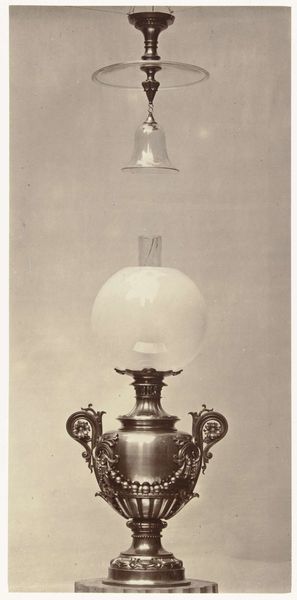
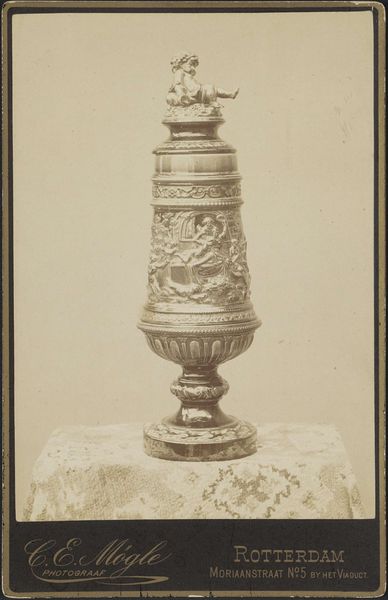
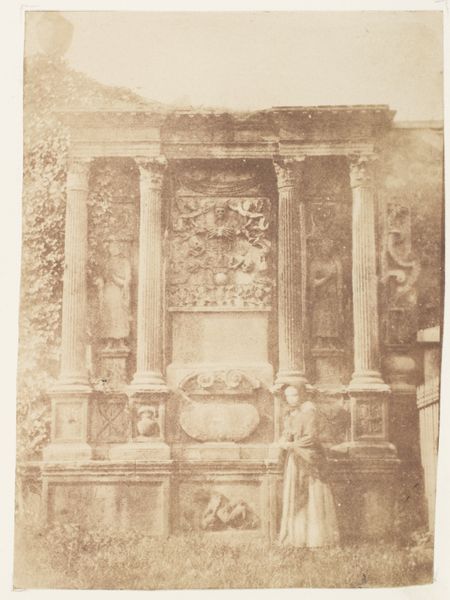
Stilleven met stereoscoop, hoed, Chinese vaas, zilveren pronkbokaal en degen c. 1855
0:00
0:00

eduardisaacasser
Rijksmuseum
photography, gelatin-silver-print
#
still-life-photography
#
charcoal drawing
#
photography
#
gelatin-silver-print
#
charcoal
#
watercolor
#
realism
Dimensions: height 170 mm, width 114 mm
Copyright: Rijks Museum: Open Domain
Eduard Isaac Asser made this still life photograph using the wet collodion process. This early photographic technique involved coating a glass plate with chemicals, exposing it in a camera, and then developing it immediately. It was a labor-intensive, time-sensitive process, demanding skill and precision. The resulting image has a soft, almost ethereal quality, with fine details rendered in shades of sepia. The choice of objects is equally revealing: a stereoscope, a Chinese vase, a silver goblet, a sword – all symbols of wealth, culture, and exploration. In this tableau, photography itself becomes a symbol of modernity, capturing and preserving these artifacts of a rapidly changing world. It prompts us to consider the social and economic forces that shaped both the creation of the objects and the making of the image. By examining the materials and processes involved, we gain a deeper appreciation of photography as both a technical achievement and a cultural artifact.
Comments
No comments
Be the first to comment and join the conversation on the ultimate creative platform.
 Collect
 React
React Comment
More like this