#
amateur sketch
#
light pencil work
#
pencil sketch
#
personal sketchbook
#
idea generation sketch
#
ink drawing experimentation
#
pen-ink sketch
#
sketchbook drawing
#
sketchbook art
#
initial sketch
Copyright: Rijks Museum: Open Domain
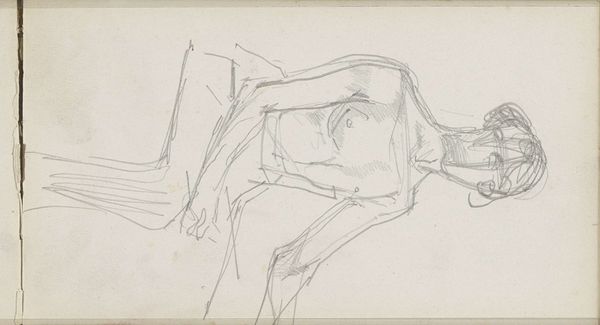
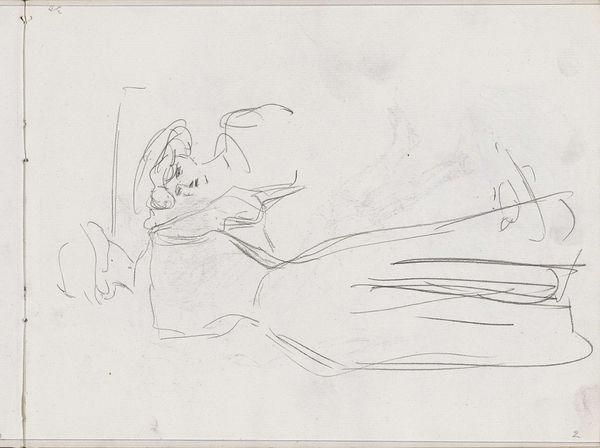
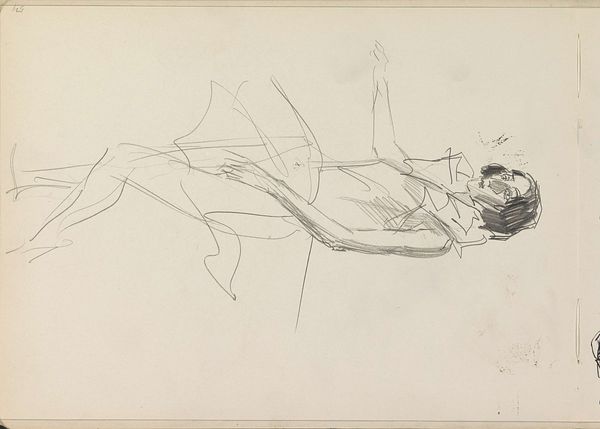
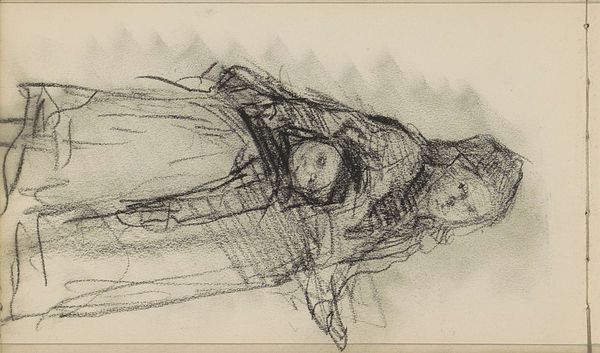
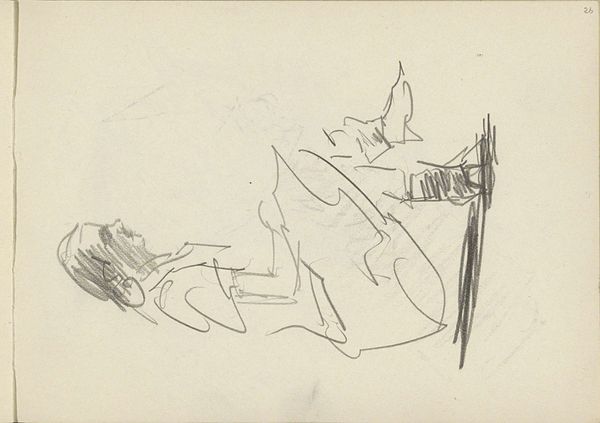
Editor: Here we have Isaac Israels’ “Leunende vrouw, op de rug gezien,” made sometime between 1875 and 1934. It's a delicate pencil sketch housed at the Rijksmuseum. The casual nature makes it feel so intimate, like a peek into the artist’s private thoughts. What story do you think this sketch tells? Curator: It's a wonderful observation, this sense of intimacy. I see it less as a fully formed narrative, though, and more as a glimpse into the evolving role of the artist within a changing society. Israels, working during a time of growing artistic independence, seems to be using this sketch – and others like it – as a space for experimentation. The sketch, precisely because of its informal nature, becomes a kind of laboratory for observing human form. Do you think there’s something subversive in depicting this everyday pose of a woman, removed from the grand narratives of history painting, given the academic expectations of the time? Editor: Subversive… I hadn’t thought of it that way, but I see what you mean! Focusing on an intimate and private moment versus some grand historical narrative could be quite a bold statement. Curator: Exactly! It pushes back against the expectations of whose lives, and what moments, are worthy of artistic representation. The fact that it’s a sketch – something that might have remained unseen in the artist's studio – further complicates its public role when displayed in a museum like the Rijksmuseum. We, as viewers, participate in altering the art's cultural impact. Editor: That makes me see how even the choice of subject matter becomes a commentary in itself, shaping our perception of the artwork within a broader context. Thank you! Curator: And thank you, thinking about sketches as artifacts displaying societal and historical elements can certainly shift one's understanding.
Comments
No comments
Be the first to comment and join the conversation on the ultimate creative platform.
 Collect
 React
React Comment
More like this