

1876 - 1924
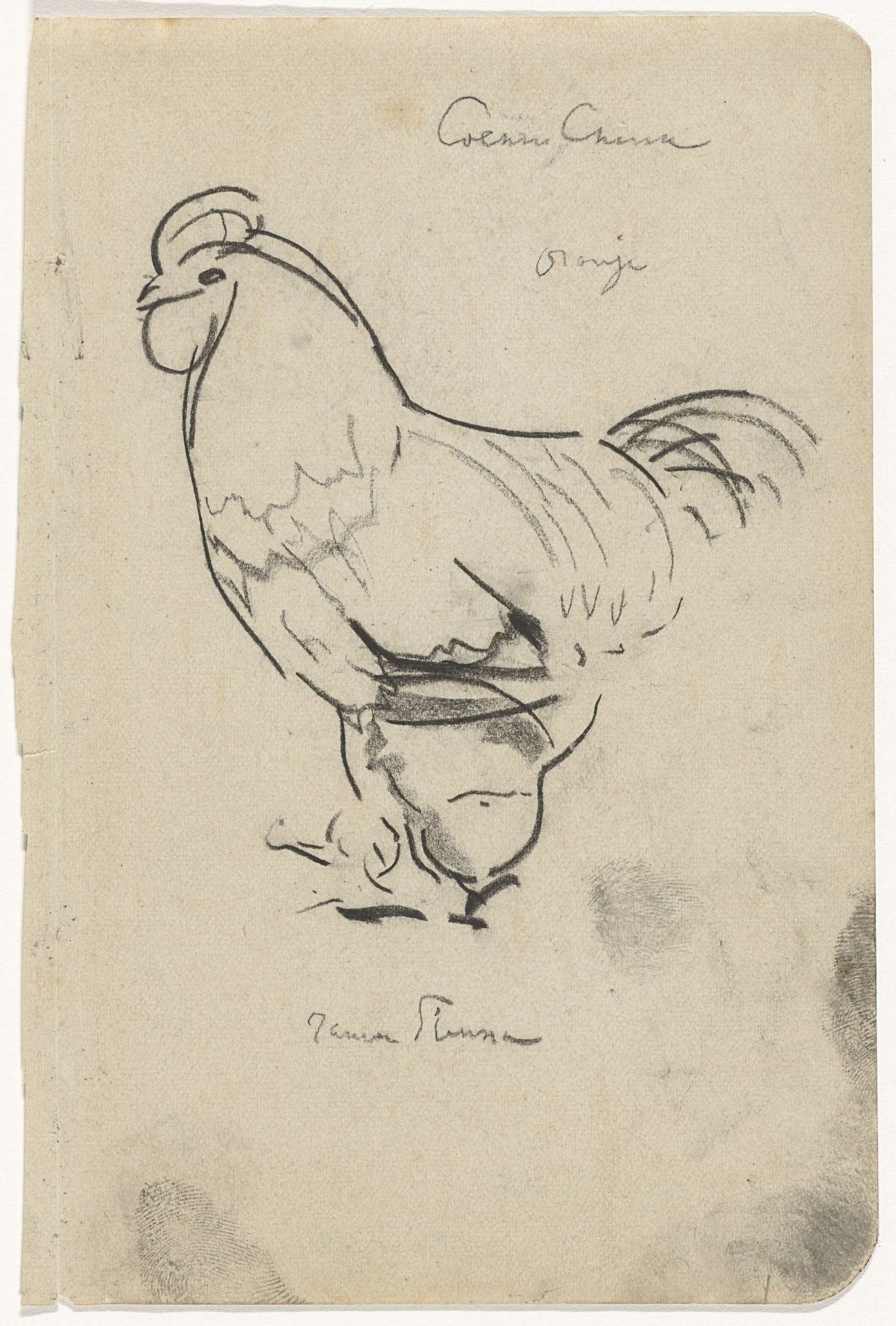
Chinese kip

Gerrit Willem Dijsselhof
1866 - 1924Location
RijksmuseumListen to curator's interpretation
Curatorial notes
Curator: Welcome! We’re standing before Gerrit Willem Dijsselhof’s "Chinese Kip," created sometime between 1876 and 1924. It's a quick study done with pen and ink, now residing here at the Rijksmuseum. What’s your first take? Editor: The swiftness of the lines gives it a wonderful, almost playful energy. It’s far from a formal portrait; I imagine the artist captured this creature in a moment of casual observation. It projects a grounded feeling of an existing subject. Curator: Dijsselhof’s placement within the Dutch art scene places him amid discussions of decorative arts and the influence of Eastern aesthetics. Animal studies were quite common, offering artists the opportunity to hone their skills in rendering form and texture. Editor: Precisely. Seeing this ‘Chinese Kip’, prompts one to consider how animal studies intersected with colonialism. Was this chicken seen as an exotic ‘other’? How might the Dutch colonial gaze influenced Dijsselhof’s understanding and representation? The fact that there are notes "Coesan China" may show exactly this context. Curator: It’s tempting to interpret too much intention from what is ostensibly a sketch. Dijsselhof was influenced by a broad range of artistic styles, notably Javanese craftsmanship, as he incorporated non-Western patterns into furniture designs. We can view it, then, as an exploration of form influenced by a larger engagement with non-European cultures through colonial infrastructures. Editor: Even a quick sketch participates in these broader conversations whether consciously or unconsciously. It’s also a testament to the ways artists adapt methods – consider the quick, almost calligraphic lines used here, similar to those in Eastern art. Are they respectful appropriations, superficial copies, or something in between? These are essential questions when grappling with art from this period. Curator: Yes, exactly, we also see some handwriting in the sketch in at least two places: 'Coesan China or Oranje' and 'Tjim Tan Toen'. The context that surrounds those notes need further digging. It is also a great exercise in mark-making, offering insights into Dijsselhof's artistic process. The looseness speaks of the moment and of experimentation, that also later shaped the broader cultural moment in Europe. Editor: Precisely. This deceptively simple drawing brings a bunch of topics. Looking closely we see threads of historical dynamics still influencing us today. Thank you for illuminating the context behind it. Curator: Indeed, it gives us much to reflect. It's always fascinating how even simple drawing gives new perspectives.