1891
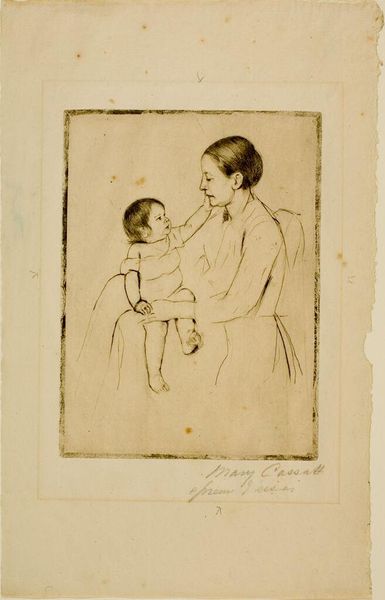
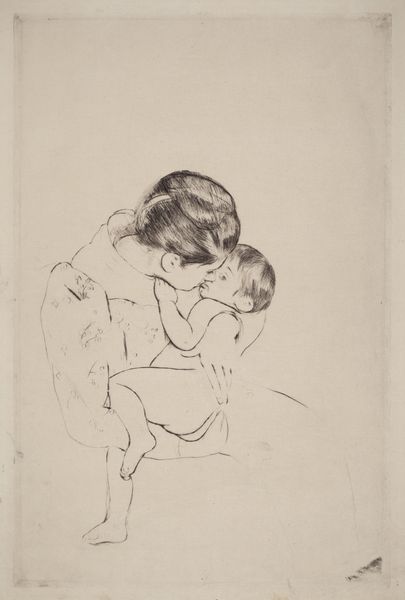
De liefkozing

Mary Cassatt
1844 - 1926Location
RijksmuseumListen to curator's interpretation
Curatorial notes
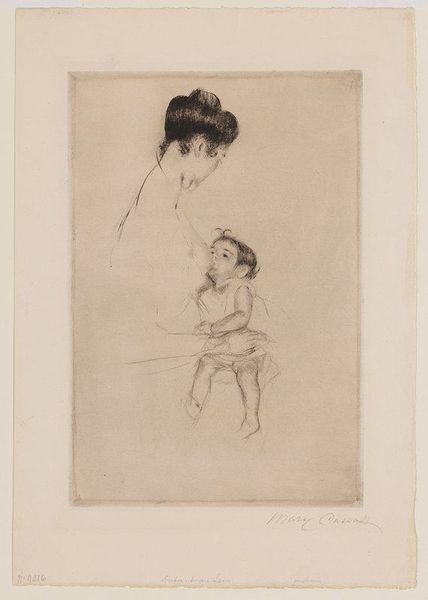
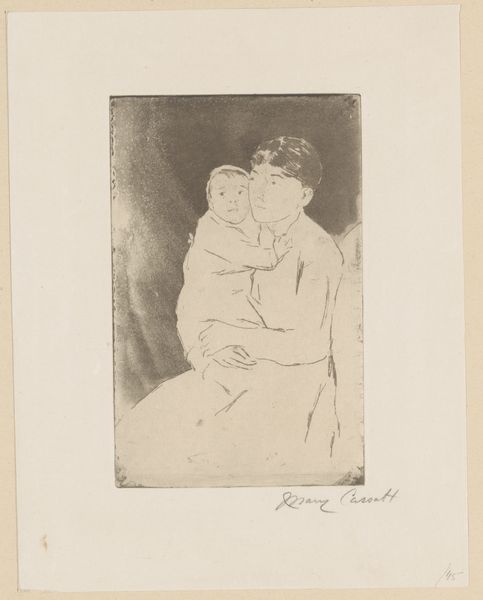
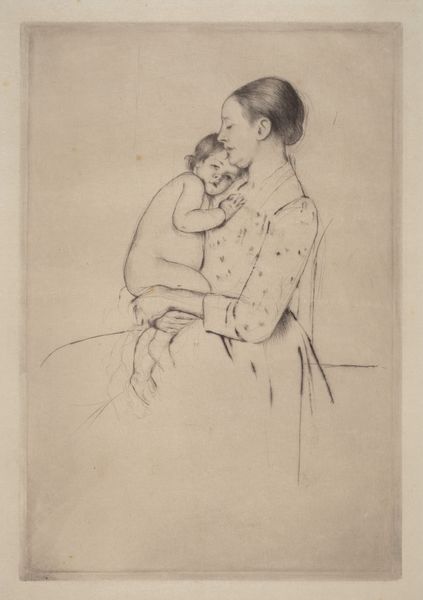
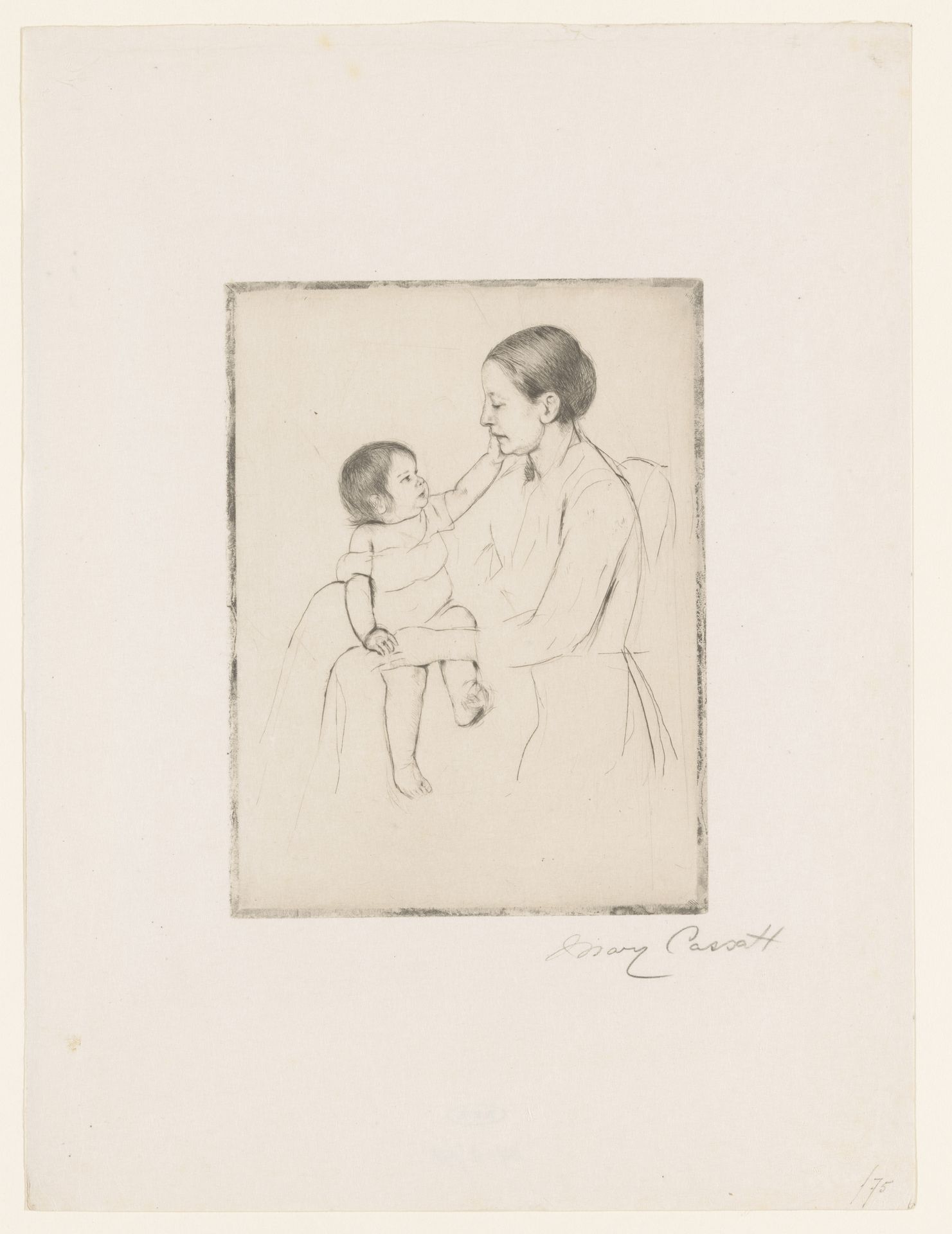
Curator: My goodness, it has the fleeting beauty of a half-remembered dream. I find it melancholic and soothing all at once. Editor: Today we’re observing "De Liefkozing," or "The Caress" created around 1891 by the American Impressionist, Mary Cassatt. It's a pencil drawing housed right here at the Rijksmuseum. Curator: A caress it is! See how lightly the pencil renders the figures? It feels more like an echo of a moment rather than a fixed pose. This makes the embrace seem incredibly tender and alive. Editor: Absolutely. Note the visual language in the way the mother's gaze directs the viewer's focus toward the child's touch. Cassatt used the universal language of mother-child affection to create something enduring and instantly accessible, transcending time and place. Curator: It almost suggests a Madonna-and-Child motif, but stripped of religious dogma. The mother-child bond as a sacred, intimate moment. Perhaps tapping into humanity’s inherent understanding of safety and love. The simple act of touch, rendered with such delicate lines, elevates the mundane to something truly special. Editor: Do you find that Cassatt's impressionistic style challenges conventional portrayals of motherhood? The pencil lines almost seem to tremble; they mirror the fragile, fleeting moments that compose the mother-child experience. Curator: Definitely! Rather than idealized figures, they're depicted with a raw intimacy. The impressionistic strokes convey the fleeting touch and the subtle emotional landscape connecting them. It avoids sentimentality, yet expresses a deeply felt bond. Editor: True. I see this as a potent image about nurturing and affection that is universally understood across various cultures. It evokes, in a way, that innate feeling. Curator: I agree; and with this work we return to primal ideas, as they take centre stage in visual expression, through simplicity. It allows us to access the collective unconscious. Editor: Precisely, it is one drawing that transcends artistry and delves into raw emotion. Thank you for lending your insightful perspectives.