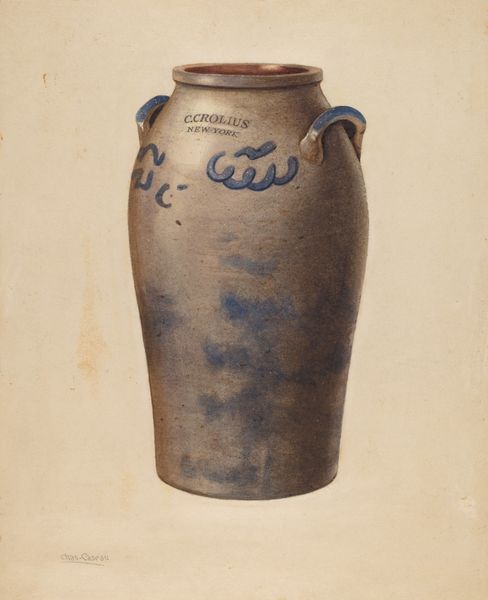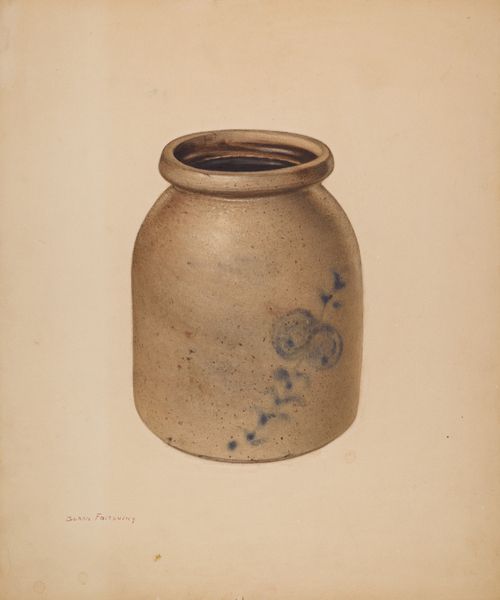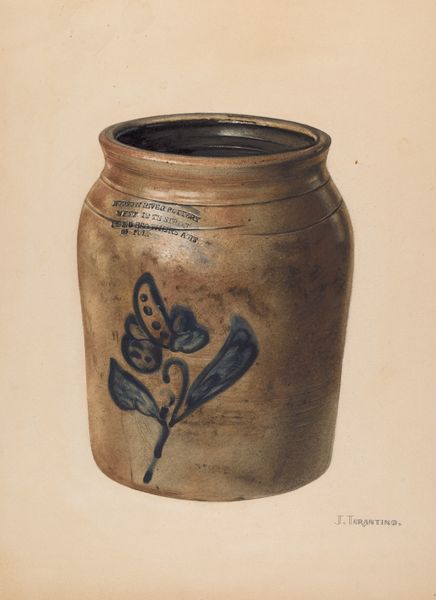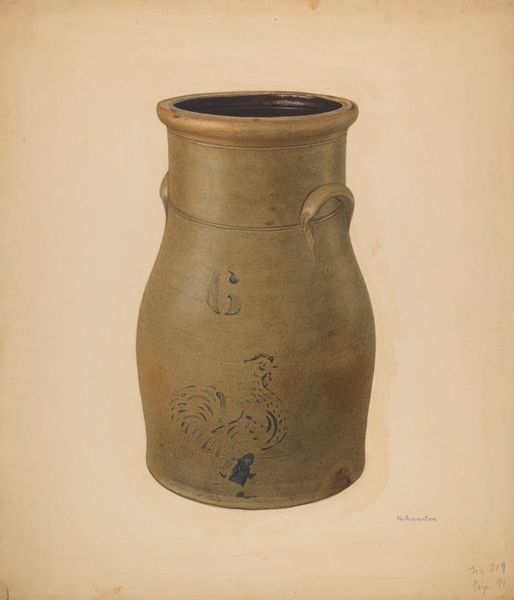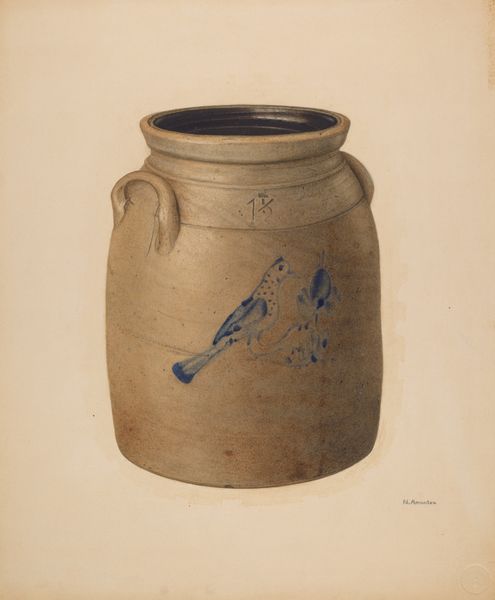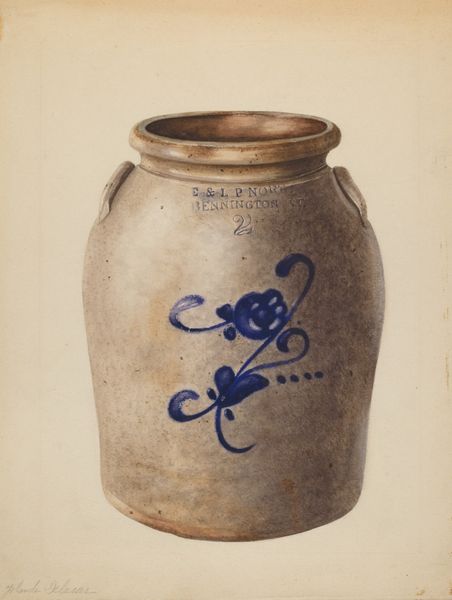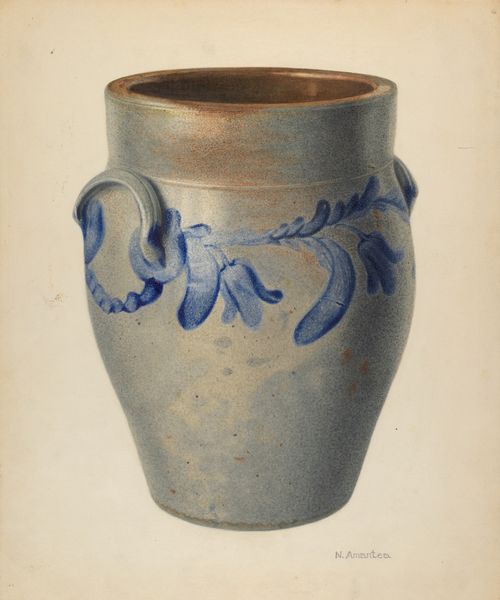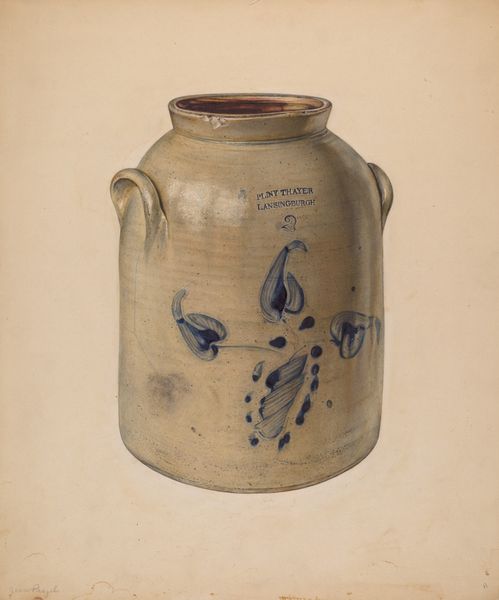
c. 1938
Crock


Listen to curator's interpretation
Curatorial notes
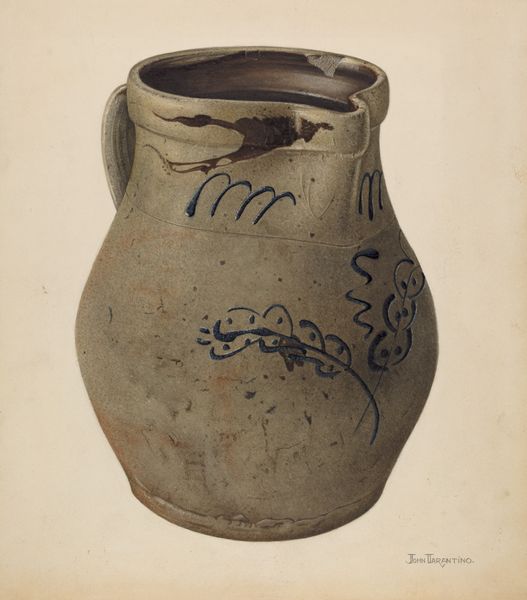
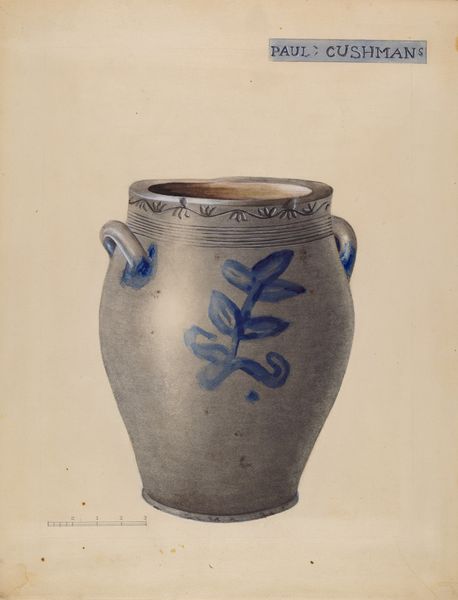
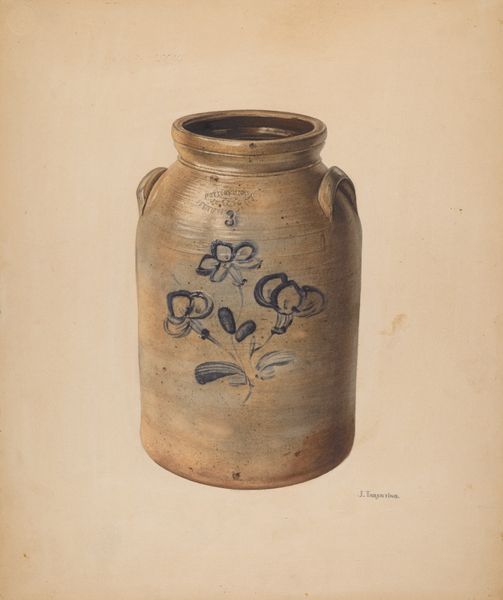
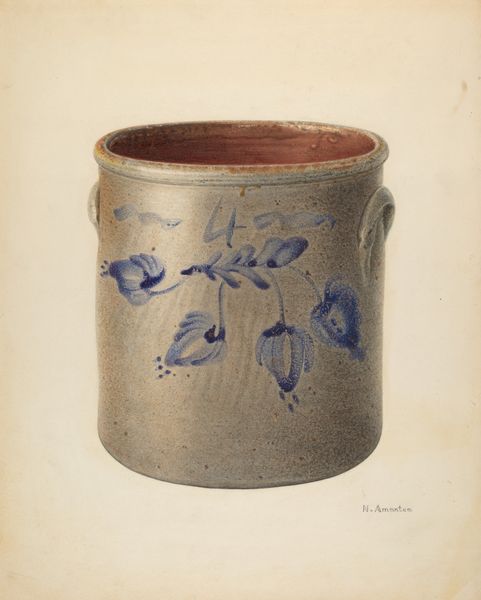
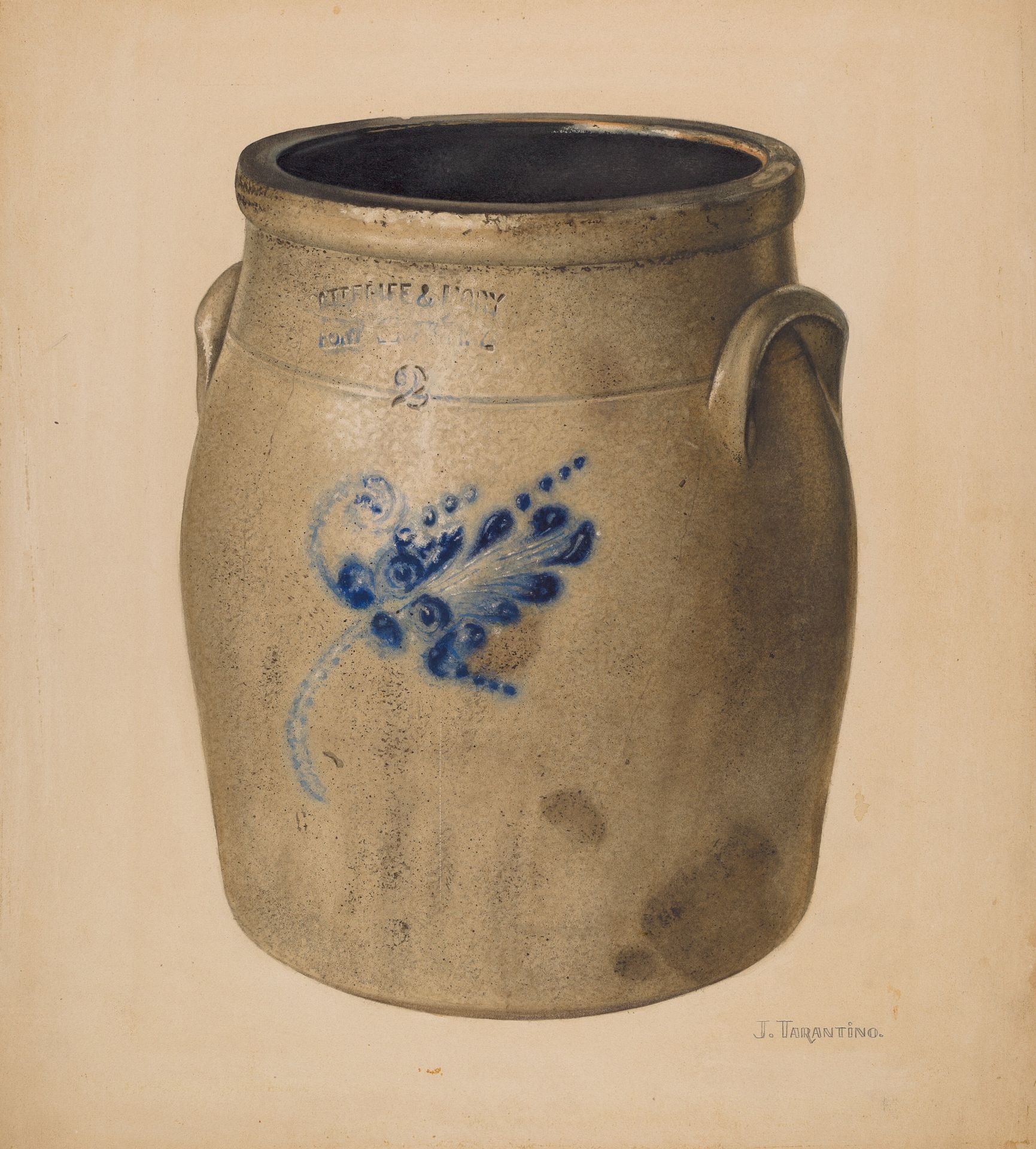
Curator: The image we're looking at is a watercolor and pencil painting entitled "Crock" by John Tarantino, created around 1938. Editor: Immediately, I'm struck by its rustic quality. There’s something so solid and comforting about the rendering of this humble stoneware pot. It evokes a real sense of materiality. Curator: Right, and it’s fascinating to consider why Tarantino chose to depict such an everyday object. What was the artist trying to convey by isolating it like this, almost elevating it? Editor: Perhaps it speaks to the dignity of labor. These crocks were essential for food preservation, part of a whole system of production and domestic work largely done by women. Curator: That’s an excellent point. Looking at this image through the lens of feminist theory, the painting transforms from a still life into a portrait of a specific time and place. The simple design might connect us to histories and intersectional narratives of women in domestic spaces. Editor: And thinking about the production process itself, these crocks would have been made by artisans. We see the ghostly manufacturer's mark up top -- "Stetson & How." Consider the clay, the firing, the salt glazing; all those steps. Tarantino, as a painter, is engaging in a very different form of labor. Curator: Indeed, placing these two methods of creation together offers insight into artistic hierarchy and labor within different spheres, particularly how some are often valued less. I'd be curious about Tarantino's socio-economic background. Did this inform his interest in representing the object itself, or perhaps he found interest in the symbolism behind utility and beauty existing in the same form? Editor: The cobalt blue floral decoration is a beautiful touch, elevating the functionality. Also note the dark inky pit inside; the painting gestures toward utility even as it captures the essence of something more. Curator: Reflecting on this work, I see the artist opening dialogue surrounding access, utility, and visibility in the face of historical context. Editor: And for me, I'm left thinking about the countless unseen hands that went into producing objects that, even now, remain quietly indispensable to our lives.