

1700 - 1800
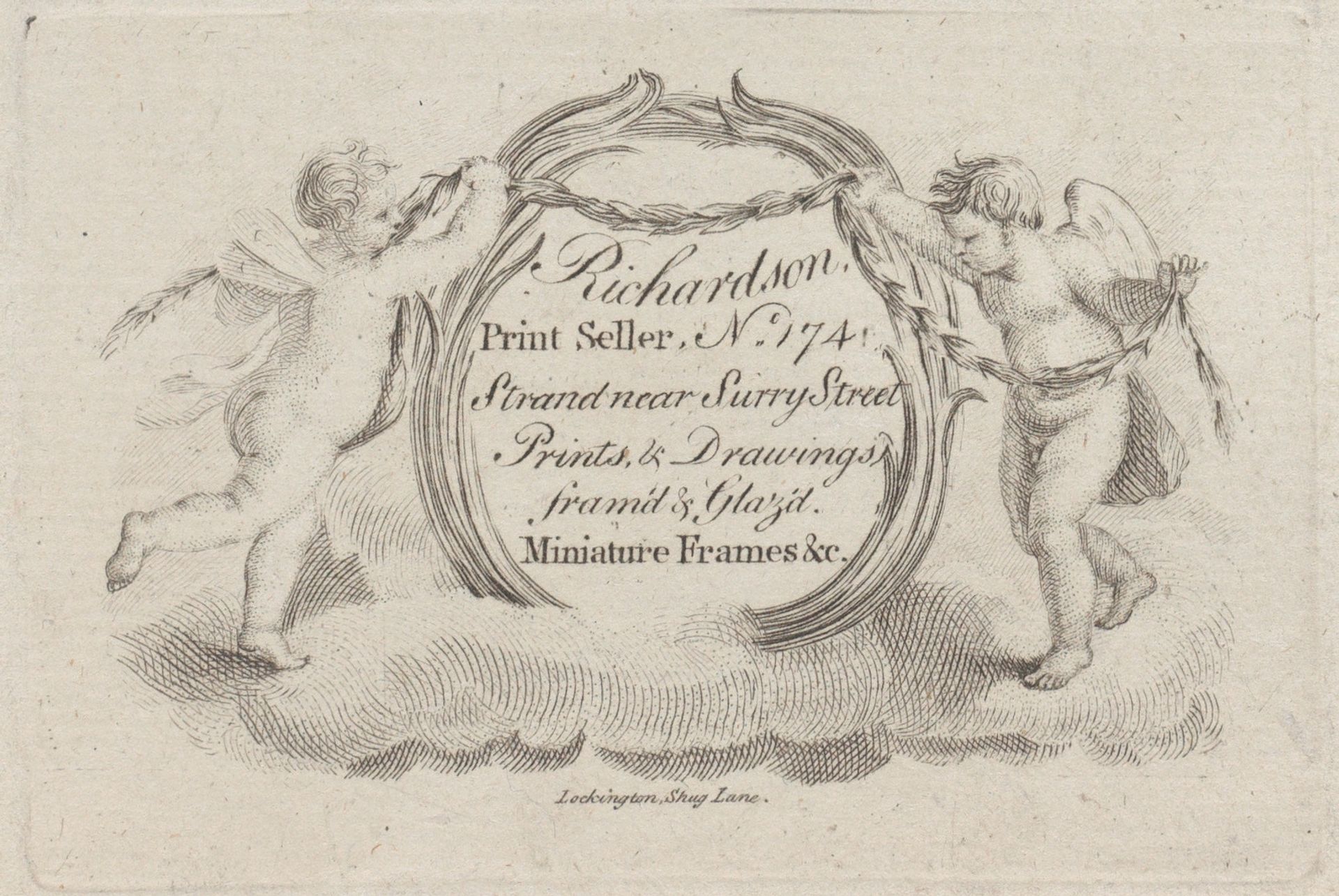
Trade Card for William Richardson, Print Seller

Listen to curator's interpretation
Curatorial notes
Curator: Oh, what a delightful discovery. This is a trade card for William Richardson, a print seller, dating back to sometime in the 18th century. It’s an etching and engraving on paper, now residing at the Metropolitan Museum of Art. Editor: Immediately, I get this sense of whimsy. Those chubby cherubs look like they’re barely holding up that oval frame! It’s kind of precarious but charming. What strikes you about this piece? Curator: The immediate functionality interests me. Trade cards such as this offer insight into the commercial landscape of the period and demonstrate the intersection of art and enterprise. The placement of Richardson’s name, the address "Strand near Surry Street" all this detail acted as a miniature advertisement. Editor: Definitely. And it’s selling a vibe too, not just information. Prints and drawings, yes, but "Framed and Glazed," and "Miniature Frames." They’re hinting at artistry and taste. It makes me wonder, what was Richardson like? Was he a flamboyant character to go with his dramatic Baroque styled advertisements? Curator: Perhaps! The cherubs framing the text certainly lend it a grand air. These sort of visual cues were particularly crucial as literacy rates and visual recognition played significant roles in navigating urban life. Also, location mattered! Occupying a location near the Strand signaled prestige and easy access. Editor: Location, location, location, right? Even back then. And notice how delicately detailed everything is; the hatching on the clouds, the flowing ribbons...It's intricate! Almost like Richardson himself was promising an equally meticulous attention to detail in his wares. What sort of person felt like the correct one to be visiting William Richardson in those times, do you think? Curator: Someone embedded within the social world. Someone familiar with commissioning prints. It suggests a level of access to fashionable society of that era, certainly not for all. So, a trade card acted not only to guide but also signal certain clientele. Editor: I’m left imagining these cards fluttering around 18th-century London, little pieces of affordable art inviting people into Richardson’s world, making accessible fine things to enjoy on paper in a city ever moving into new innovations and ever wanting to celebrate the old traditions. A beautiful blend of form and function, I'd say. Curator: Precisely. They act as windows into an era, illustrating commerce, social stratifications, and the ever-evolving world of visual culture, offering so many questions that let us delve further into it!