1665
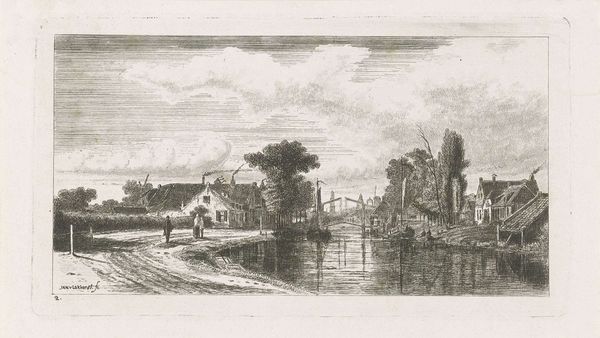
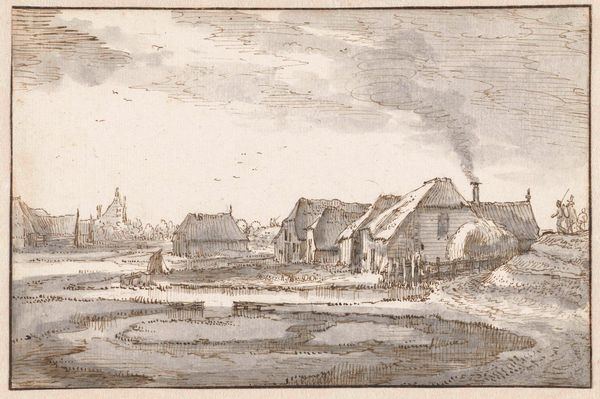
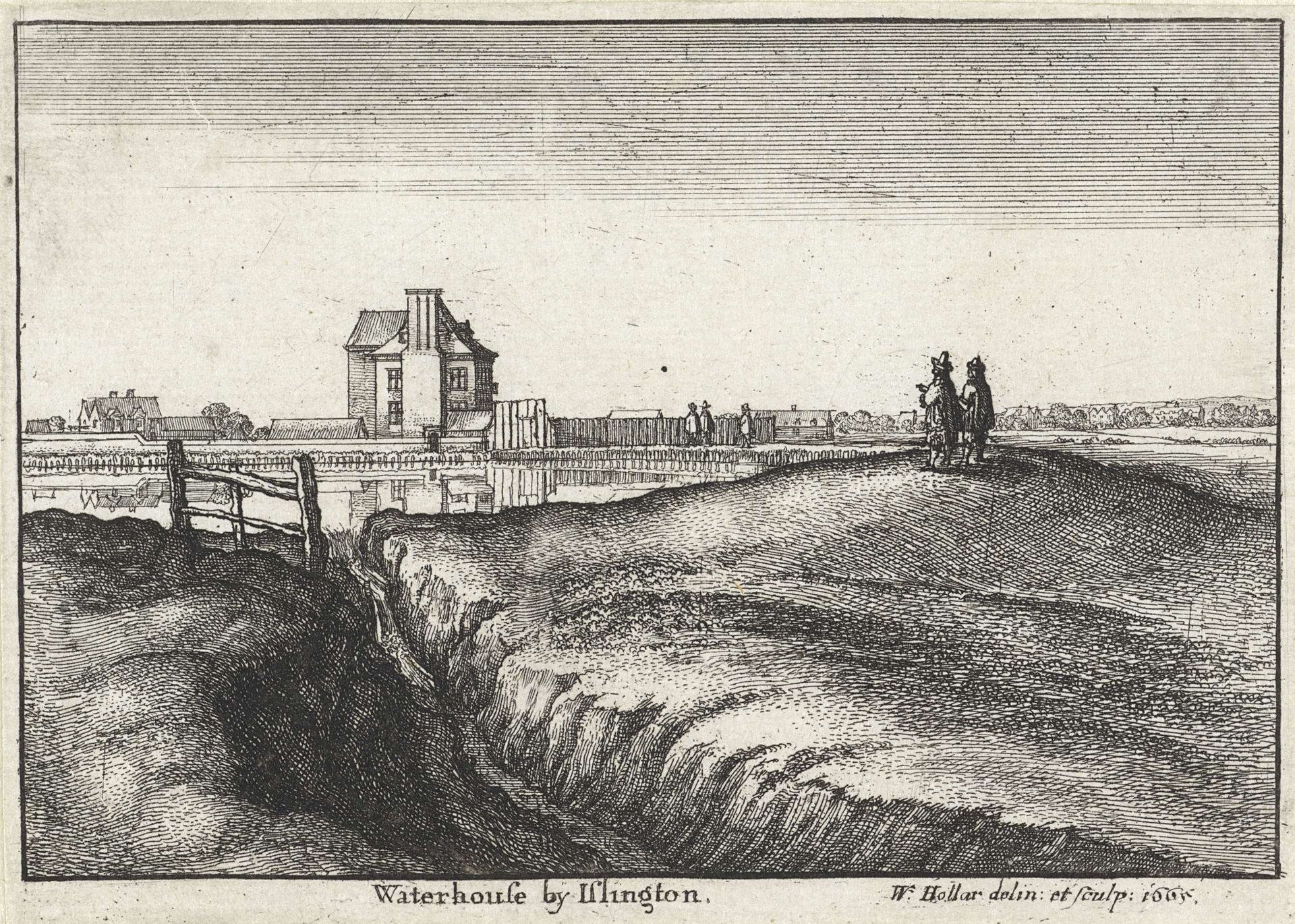
Gezicht op het Waterhouse van Islington (Londen)

Wenceslaus Hollar
1607 - 1677Location
RijksmuseumListen to curator's interpretation
Curatorial notes
This is Wenceslaus Hollar’s etching, depicting the Waterhouse of Islington in London. The serene body of water reflecting the building and the figures standing idly by the fence give a sense of everyday life and the slow passage of time. Here, water serves as a mirror, an age-old symbol of introspection. Consider Narcissus, who became so obsessed with his reflection that he drowned; or Ophelia, whose reflection precedes her demise. Water's reflective quality invites contemplation, but also suggests a dangerous self-absorption. The water’s edge, a point of contact and division, recurs in art across epochs and cultures. Such a motif speaks to our subconscious. Are we on the edge of change, a psychological turning point, or a precipice of the unknown? The motif, with its complex symbolism, remains cyclical, echoing through art history, evolving, yet forever rooted in the depths of our collective psyche.