photography
#
portrait
#
pictorialism
#
charcoal drawing
#
photography
#
orientalism
#
cityscape
Copyright: Public domain
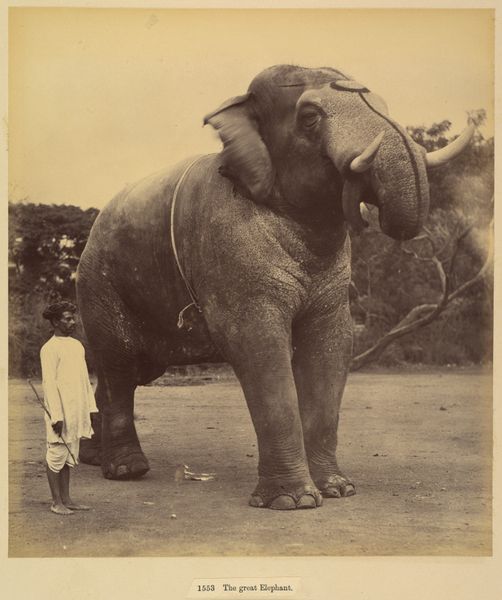
Editor: Here we have Pierre Dubreuil's "Elephantasy" from 1908, a photograph that kind of looks like a charcoal drawing. The image features an elephant statue with the Eiffel Tower hazily in the background. What do you make of this combination? Curator: This piece compels me to consider the very act of photographic image-making at the turn of the century. Dubreuil's manipulation of the photographic process, aiming for a pictorialist aesthetic, highlights a departure from simply capturing reality. Notice the toning and soft focus. How do these choices influence your perception of the depicted scene? Editor: I see how it makes the photograph less about documenting something real and more about creating a mood, maybe like a dream or a memory. Curator: Exactly! He’s manipulating the materiality of the photograph, pushing its limits to emulate other "higher" art forms like painting or drawing. Also, consider the orientalist lens. The choice of an elephant against the backdrop of European modernity suggests a deliberate contrast. What social commentaries might Dubreuil be engaging with through this juxtaposition? Editor: Maybe it's a comment on colonialism, placing an exotic animal alongside a symbol of Western progress? Or maybe he's playing with notions of exoticism for a European audience? Curator: Precisely! It reveals a complex network of cultural consumption and representation. The photograph isn’t merely a window to the world, but a carefully constructed object imbued with social and historical weight, made possible through distinct chemical and labor practices. Editor: So, understanding the materials and techniques used helps reveal the deeper social and cultural ideas in the artwork. Curator: Indeed! We can appreciate how the artist challenged our preconceptions about photography and its potential. Editor: I'll definitely look at other Pictorialist photographs through this lens!
Comments
No comments
Be the first to comment and join the conversation on the ultimate creative platform.
 Collect
 React
React Comment
More like this