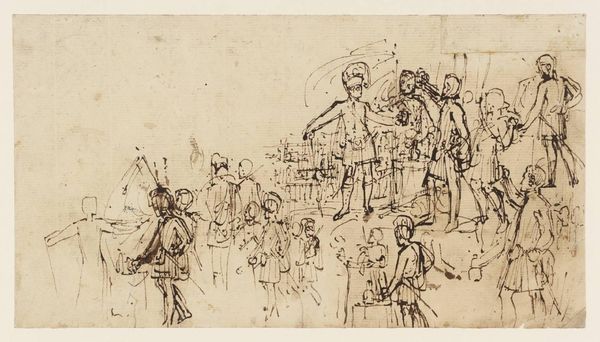
Sketch for Illustration to Bowyer’s ‘History of England’: Oliver Cromwell Dissolving the Long Parliament 1805
0:00
0:00


Dimensions: support: 115 x 185 mm
Copyright: CC-BY-NC-ND 4.0 DEED, Photo: Tate
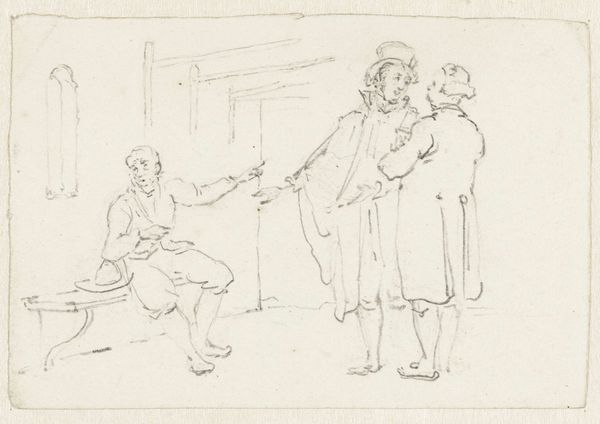
Editor: This is Thomas Stothard’s sketch for ‘Oliver Cromwell Dissolving the Long Parliament,’ made as an illustration for Bowyer’s ‘History of England.’ It's quite small and feels very immediate. What do you see in this piece? Curator: I see a potent visualization of power and its disruption. Stothard's sketch captures a pivotal moment in English history, but it also speaks to broader themes of revolution, authority, and the fragility of democratic institutions. How does Stothard’s composition reflect the power dynamics at play? Editor: Well, Cromwell dominates the scene, both in size and through his posture. He seems to be actively pushing against a group of people. Curator: Exactly. Consider, too, the historical context: Cromwell’s actions were seen by some as necessary to establish a more just society, while others viewed them as a tyrannical overreach. Stothard prompts us to consider the complexities of revolutionary action and its impact on concepts of liberty and governance. What does the sketch suggest about the lasting relevance of this historical event to current political debates? Editor: I guess it shows how easily power can be seized and how history continues to inform our present. Curator: Precisely. And that's the enduring power of art, isn’t it? It's not just about the past; it's about how we understand ourselves today.


 Collect
More like this