1930 - 1948
Dependent


Listen to curator's interpretation
Curatorial notes
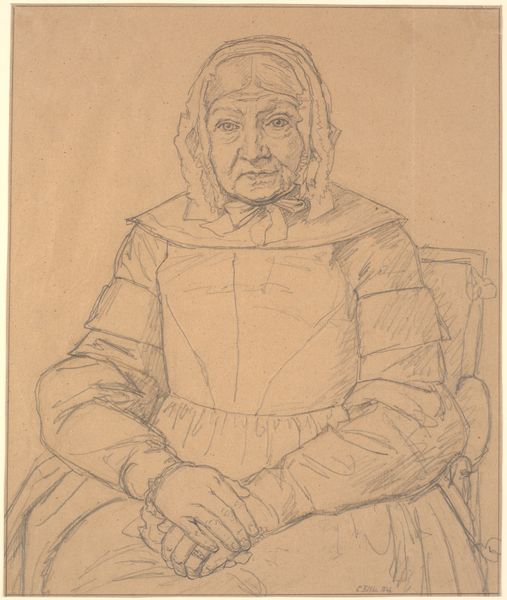
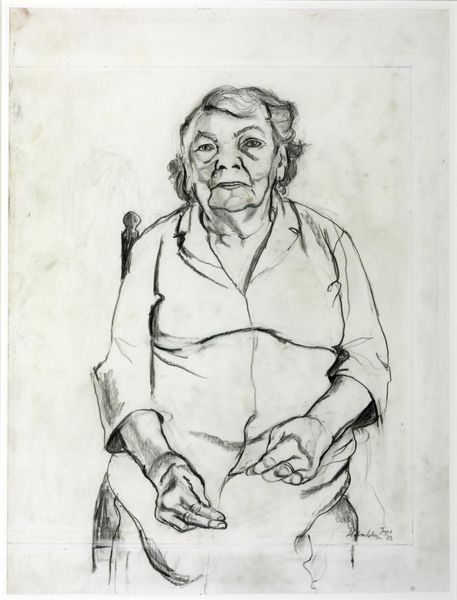
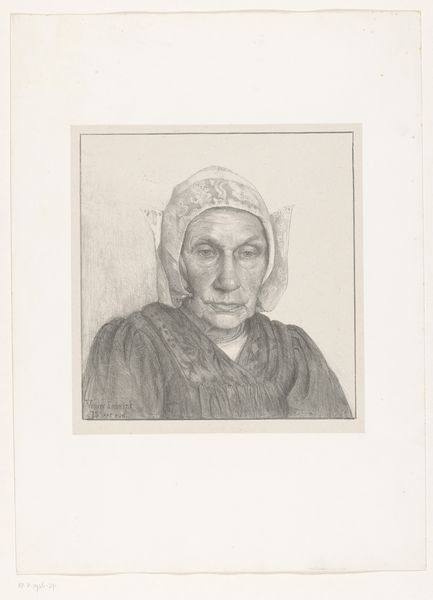
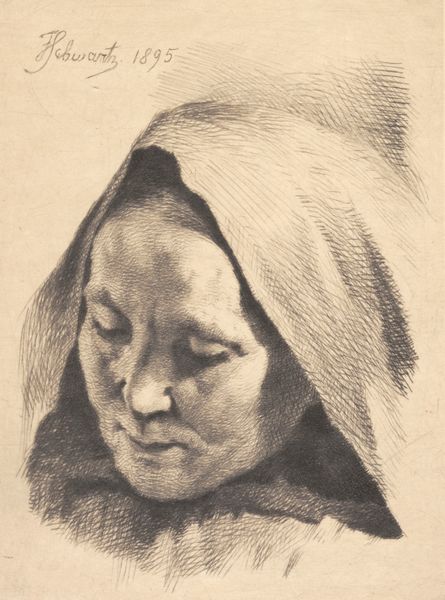
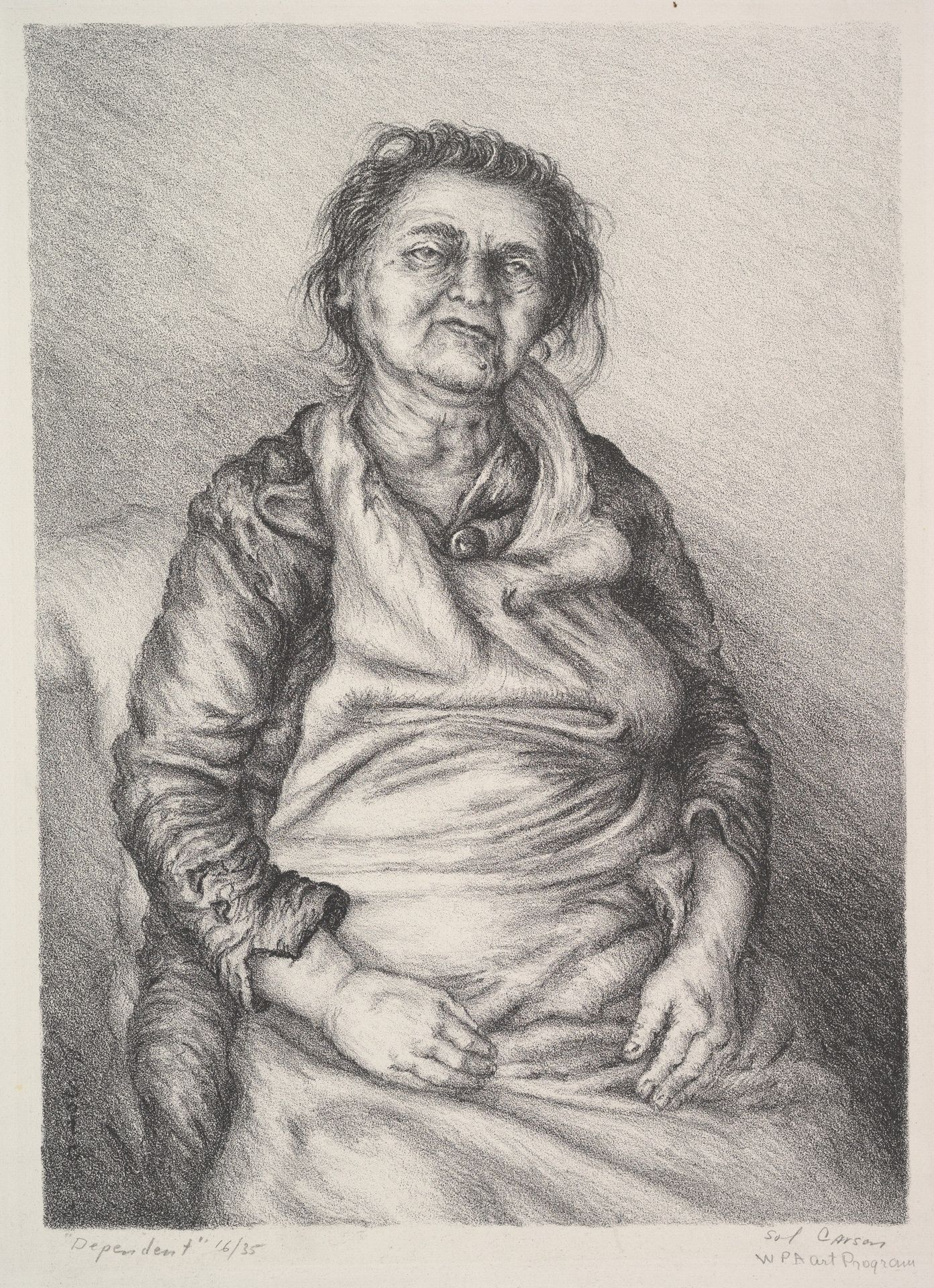
Curator: I find this image intensely moving; there's a depth of emotion in it. Editor: This is "Dependent," a drawing by Sol Carson, completed sometime between 1930 and 1948. It’s currently part of the collection here at the Metropolitan Museum of Art. The work uses pencil, and I believe it exists as both drawing and print form. Curator: The woman’s face…there's such vulnerability. I can almost feel the weight of her lived experiences, of a life perhaps etched with hardship. There’s also a dignity that radiates through the lines, however, no? Editor: Absolutely. What strikes me is the very explicit commentary on the situation of women and aging, a time in life when they are so often deprived of agency. She has no real role in public discourse; her entire selfhood seems diminished, yet, in some way, defiant. Curator: Considering its creation mid-century, I'm prompted to think of the historical context. The drawing likely reflects a societal reckoning in the USA after both world wars, with rapidly shifting economic structures and evolving perceptions around societal expectations of roles such as those of mothers or wives. Editor: And within those structures, who is deemed disposable? "Dependent," the very title is pointed; consider the language. We understand now the pressures on elderly, poor, or other vulnerable members of society. Who holds power over whom? Curator: Carson's handling of the medium is exquisite. The softness in the rendering contrasts with the hard reality the subject is experiencing. He has a keen eye for detail and sensitivity, but also a rather uncompromising eye to look unflinchingly at lives that are socially ignored or devalued. Editor: I also notice her hands; so detailed, showing time and work. These details bring home this feeling of dependency – reliance, almost begging - that's ingrained into gendered societal structures. Is the title more about her "dependency" as a woman, rather than simple financial needs? Curator: An interesting, important, challenge to pose. This drawing presents the portrait as a stage for political statements. "Dependent" allows us space to think about these figures differently and reevaluate both historical and present conditions. Editor: Indeed. "Dependent," it's more than just a portrait, isn't it? It is a powerful meditation of our place in society, the intersectionality of lived existence and an era that's simultaneously long gone, yet lingering right at our fingertips.