About this artwork
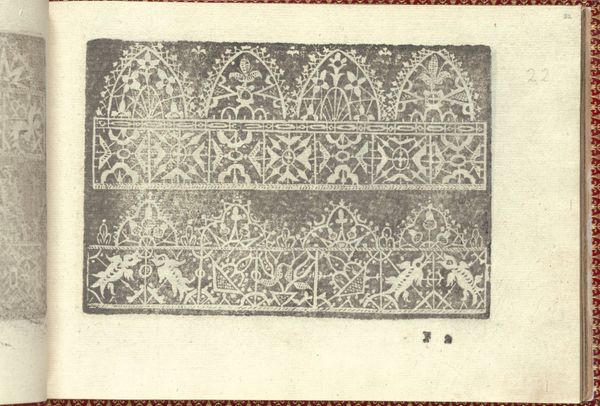
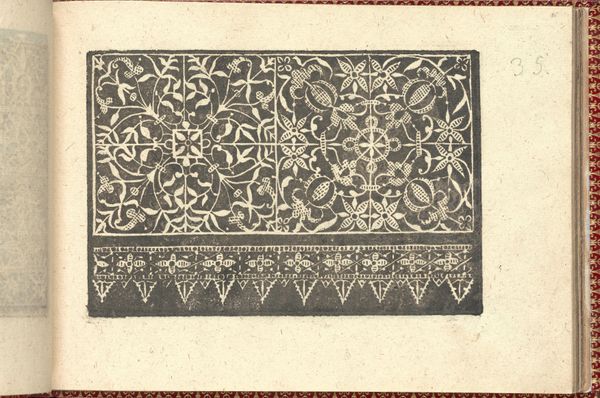
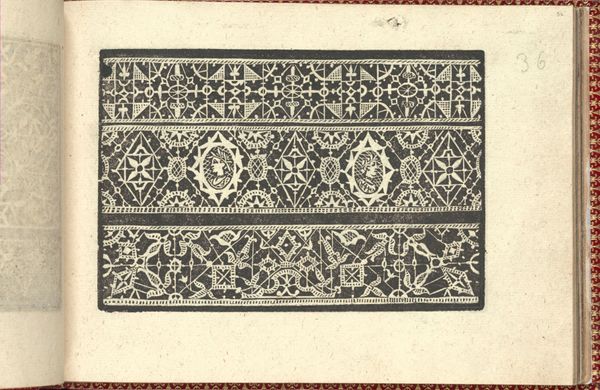
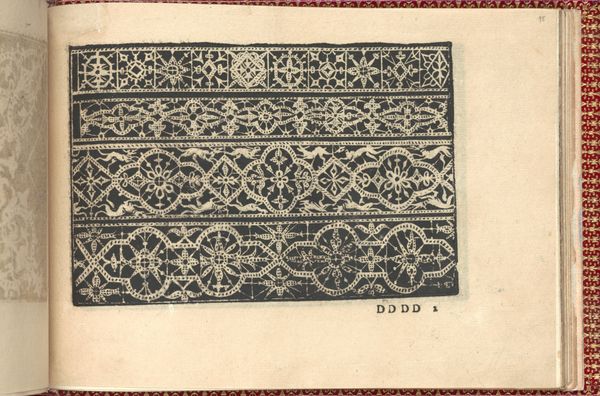
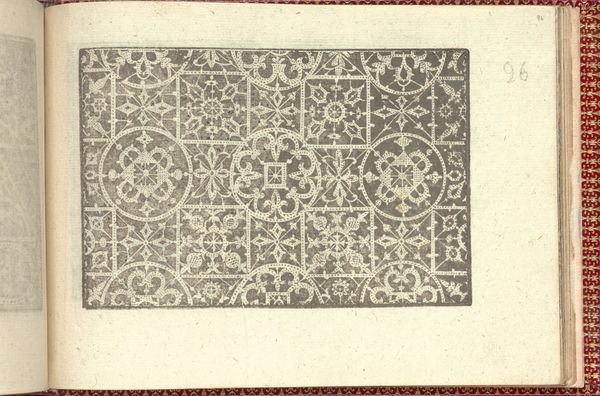
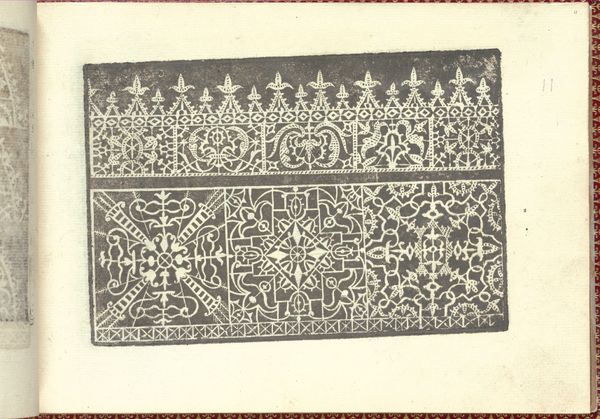
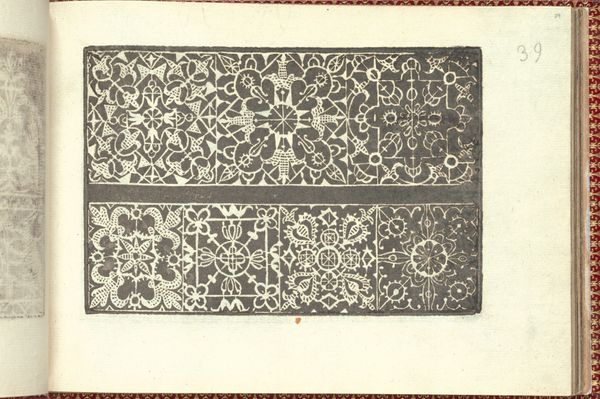
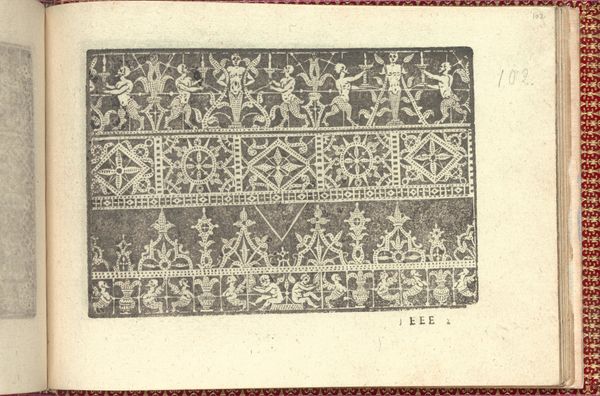
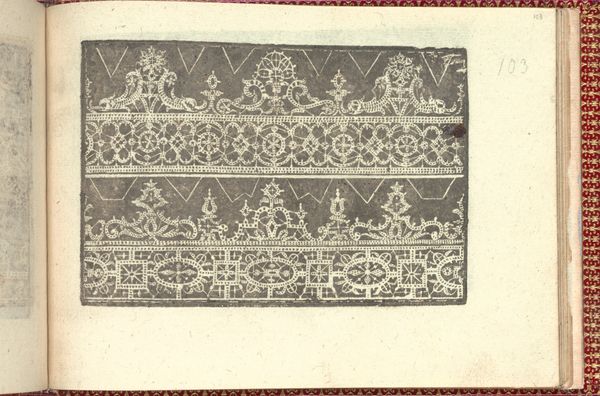
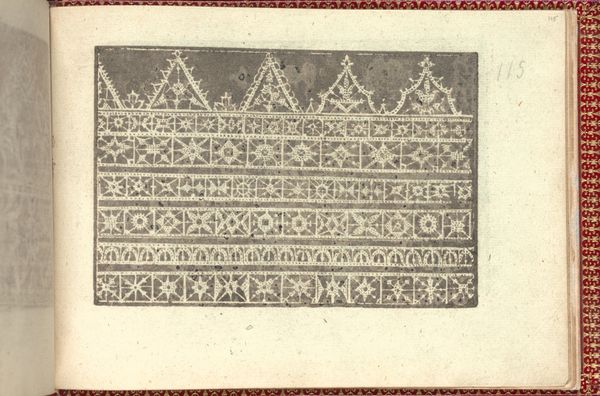
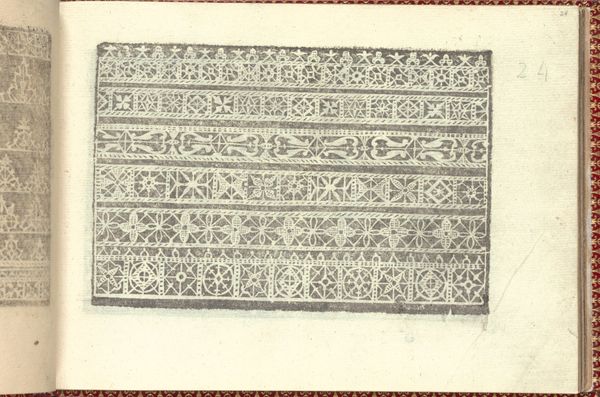
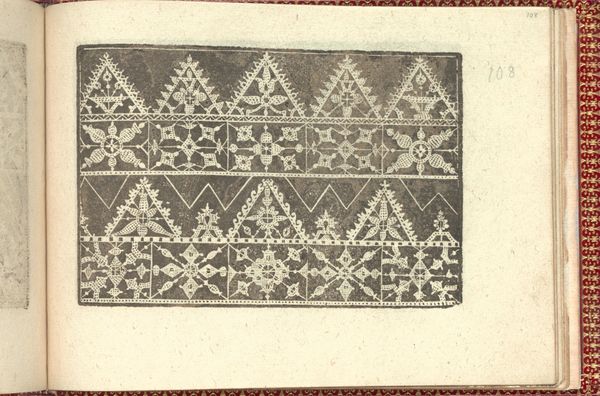
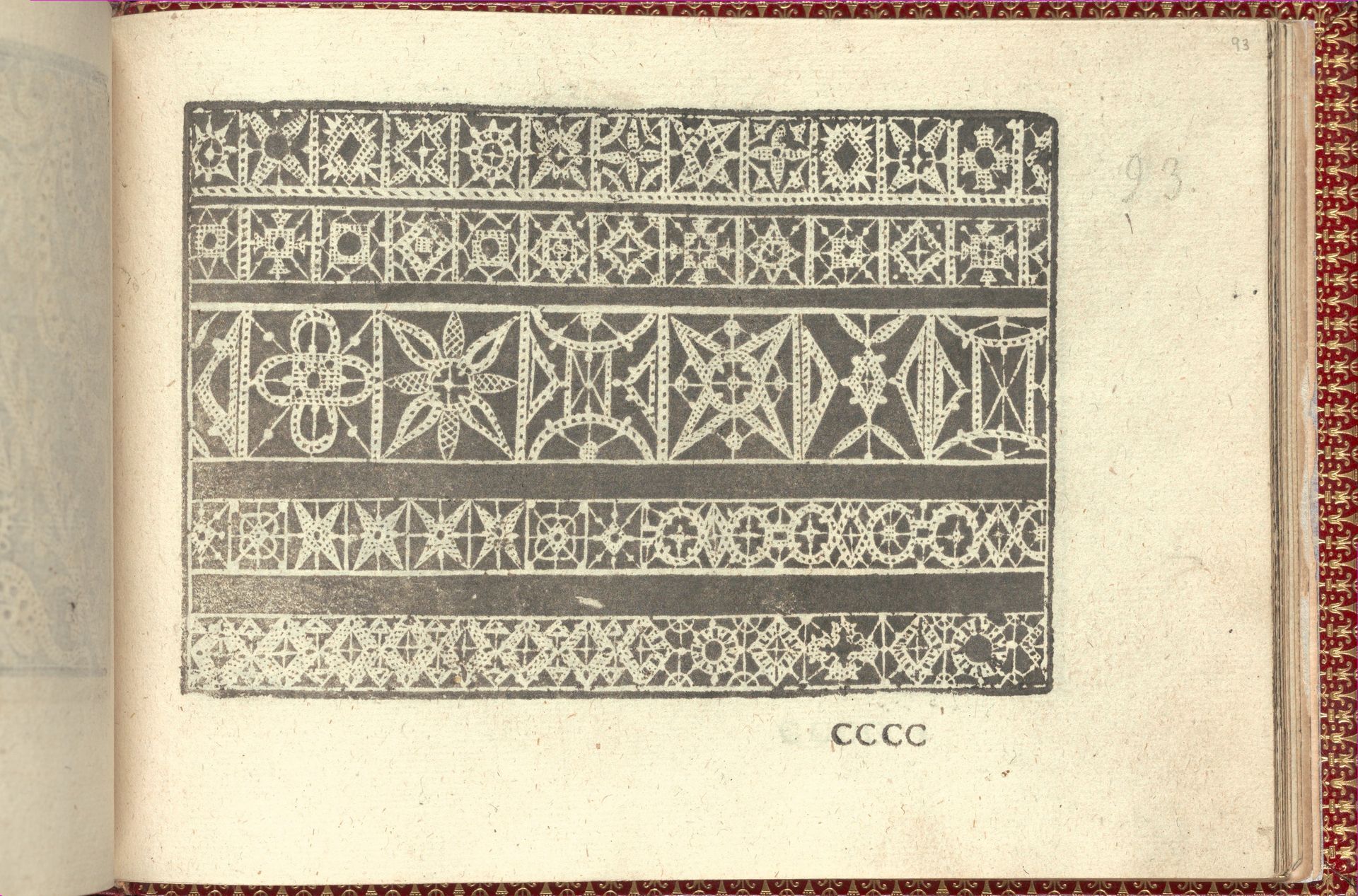
This is page 93 from Cesare Vecellio's "Corona delle Nobili et Virtuose Donne," a book created without a specific date using ink on paper. Notice the stark contrast of dark ink against the light page creates a striking visual pattern. Vecellio presents us with a series of bands, each filled with intricate geometric and floral motifs. These patterns, rendered with precision, evoke a sense of both order and delicate complexity. The repetition of shapes—squares, circles, stars—establishes a rhythm across the composition, yet each band offers its own distinct variation, challenging any sense of monotony. This careful arrangement speaks to a broader cultural interest in design and ornamentation during the Renaissance. The patterns function almost as a semiotic system, a visual language reflecting the values of elegance and refinement associated with noblewomen. But there is also a destabilization of fixed meanings here; the patterns, while decorative, hint at the underlying structures that organize our perception. Ultimately, the appeal of this page lies in its precise execution and the way it invites us to decode its visual language. The patterns offer not just aesthetic pleasure but also a glimpse into the cultural codes of the time.
Corona delle Nobili et Virtuose Donne: Libro I-IV, page 93 (recto)
1601


Artwork details
- Medium
- drawing, graphic-art, ornament, print
- Dimensions
- Overall: 5 1/2 x 7 11/16 in. (14 x 19.5 cm)
- Location
- Metropolitan Museum of Art, New York, NY
- Copyright
- Public Domain
Tags
Comments
Share your thoughts
About this artwork
This is page 93 from Cesare Vecellio's "Corona delle Nobili et Virtuose Donne," a book created without a specific date using ink on paper. Notice the stark contrast of dark ink against the light page creates a striking visual pattern. Vecellio presents us with a series of bands, each filled with intricate geometric and floral motifs. These patterns, rendered with precision, evoke a sense of both order and delicate complexity. The repetition of shapes—squares, circles, stars—establishes a rhythm across the composition, yet each band offers its own distinct variation, challenging any sense of monotony. This careful arrangement speaks to a broader cultural interest in design and ornamentation during the Renaissance. The patterns function almost as a semiotic system, a visual language reflecting the values of elegance and refinement associated with noblewomen. But there is also a destabilization of fixed meanings here; the patterns, while decorative, hint at the underlying structures that organize our perception. Ultimately, the appeal of this page lies in its precise execution and the way it invites us to decode its visual language. The patterns offer not just aesthetic pleasure but also a glimpse into the cultural codes of the time.
Comments
Share your thoughts