daguerreotype, photography
#
portrait
#
daguerreotype
#
photography
#
realism
Dimensions: height 101 mm, width 62 mm
Copyright: Rijks Museum: Open Domain
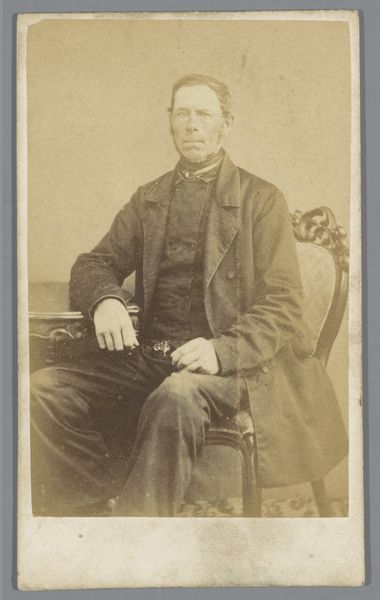
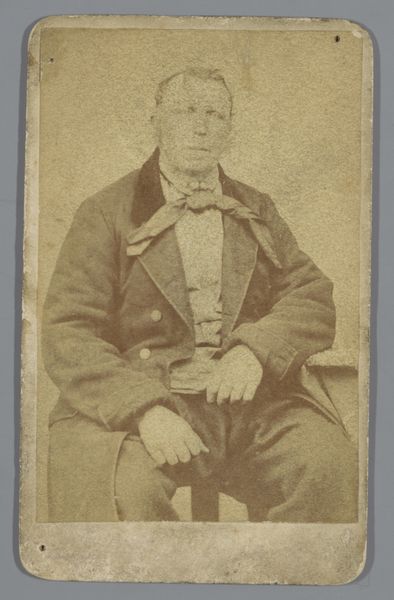
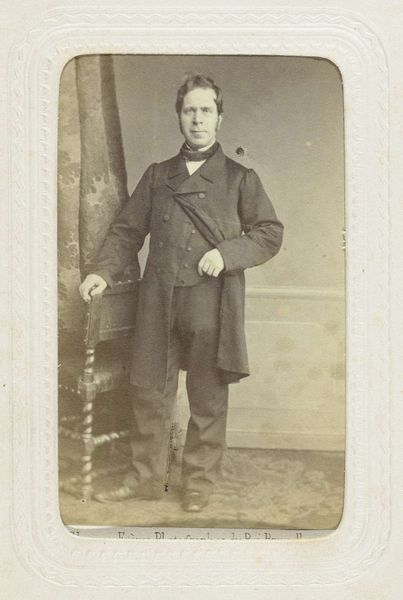
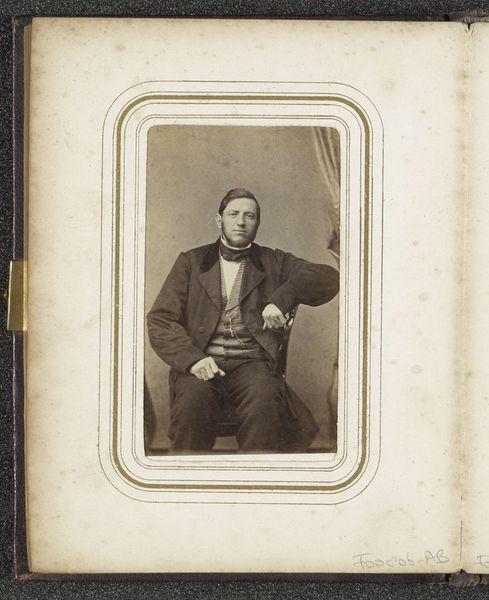
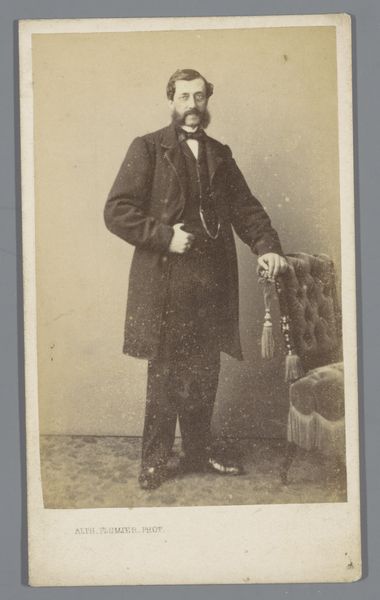
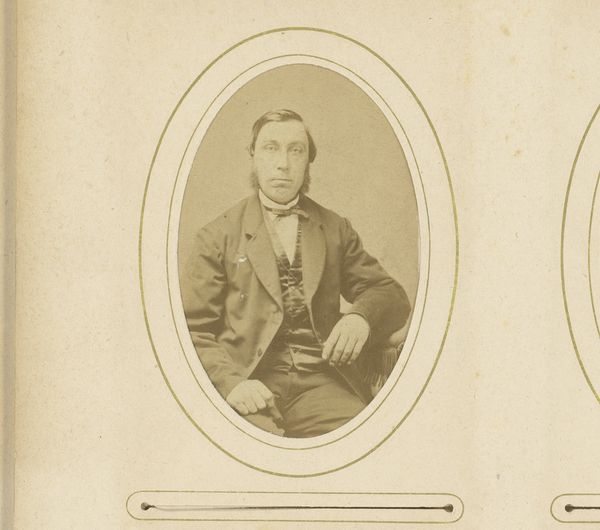
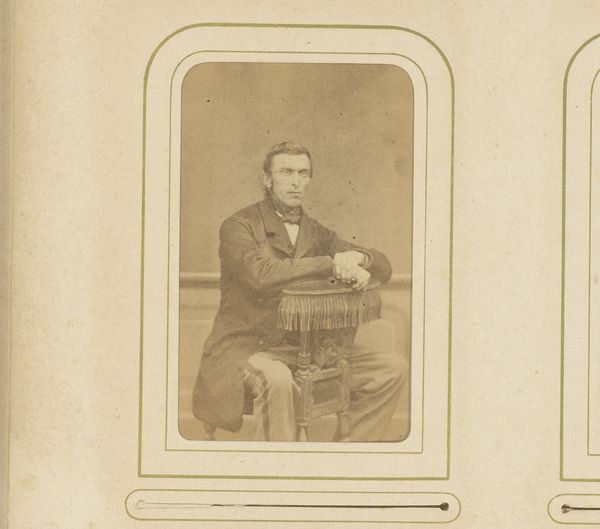
Curator: Before us is "Portret van een zittende man met een jas," or "Portrait of a Seated Man with a Coat" created by Tresling & Comp. between 1859 and 1869. It's a rather striking example of a daguerreotype, now residing here at the Rijksmuseum. What are your initial thoughts? Editor: Austere. There’s a palpable sense of unease emanating from the subject. The pose, the somber expression—it feels less like a celebratory portrait and more like a document of a particular socio-economic constraint, no? Curator: Indeed. Consider the tonal range; the stark contrast amplifies the rigid formality of the subject's attire. Observe the light as it rakes across his face, emphasizing the lines and contours, constructing a geometry of character. The photograph itself is quite interesting from a purely formal perspective: the angle of his arm, mirrored by the leg position... Editor: I find it difficult to divorce this stark visual language from its social context. Daguerreotypes were primarily commissioned by the emerging middle class— a relatively new social phenomenon at this point. The stiffness and somber tone often speak to anxieties around class performativity and projecting a certain kind of upward mobility during a period of enormous social change. What stories is this man hiding or wanting to project? Curator: An intriguing reading! I tend to appreciate how the photographers work with textures: look at the velvet-like quality of his jacket and the subtle sheen on the polished table to his side, then back to his skin. Editor: Agreed. It speaks volumes. The materiality—the table, his expensive coat—signifies status and perhaps suggests an attempt to solidify belonging, against a backdrop of societal stratification. To have your likeness captured at this point signifies having some access, even a tenuous foothold within burgeoning capitalist structures. The formal constraints, and what that may or may not communicate, is revealing. Curator: I find your sociological perspective particularly illuminating; you push beyond surface level observation, into broader power dynamics. Perhaps it is indeed in his reserve that a deeper story emerges. Editor: Precisely. Thank you. Perhaps it’s time for me to more greatly appreciate the sheer visual artistry within that very stiffness!
Comments
No comments
Be the first to comment and join the conversation on the ultimate creative platform.
 Collect
 React
React Comment
More like this