1885
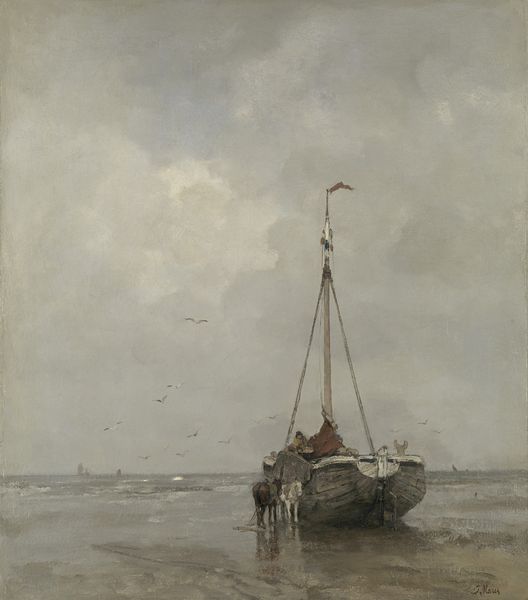
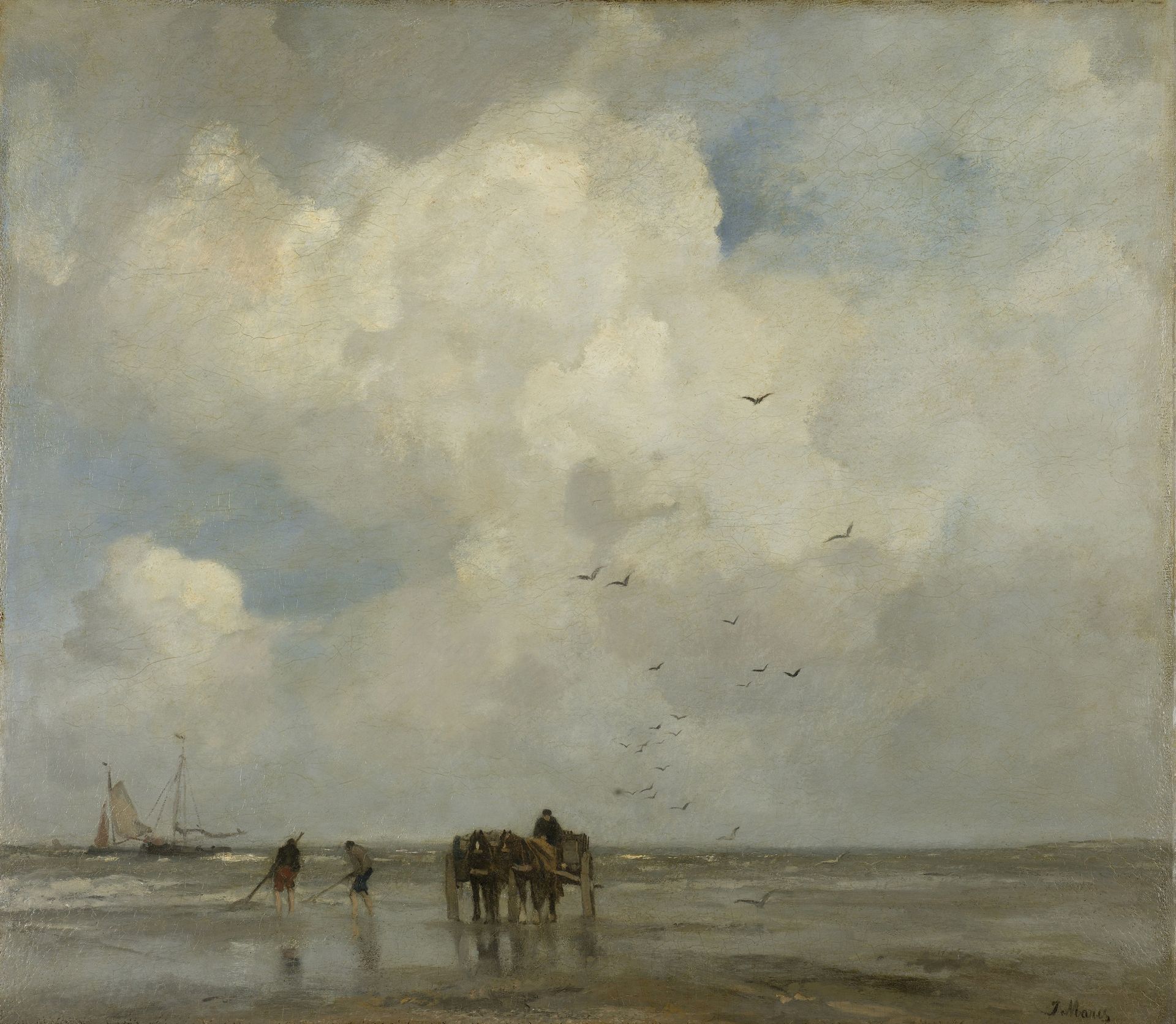
Schelpenvissen

Jacob Maris
1837 - 1899Location
RijksmuseumListen to curator's interpretation
Curatorial notes
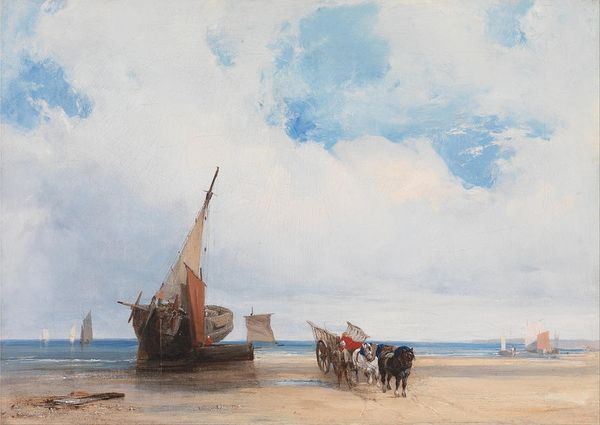
Jacob Maris painted "Schelpenvissen" using oil on canvas, a slice of life along the Dutch coast, sometime in the mid-19th century. This was a period of intense social and economic change in the Netherlands, where many people depended on the sea for their livelihoods. Maris captures a seemingly simple scene: two figures rake the shallows for shellfish, while a horse-drawn cart waits nearby. But the painting also hints at the labor, the elements, and the relationship between humans and nature. It invites us to consider the lives of these anonymous figures, their daily routines, and the precarity of their existence. The muted palette evokes the somber skies and the often harsh conditions of coastal life, reminding us of the emotional weight of such labor. Maris was known for his ability to capture the atmosphere of the Dutch landscape. His work often reflects a deep empathy for the working class. "Schelpenvissen" presents a narrative about resilience, labor, and the intimate connection between people and their environment.