c. 1940
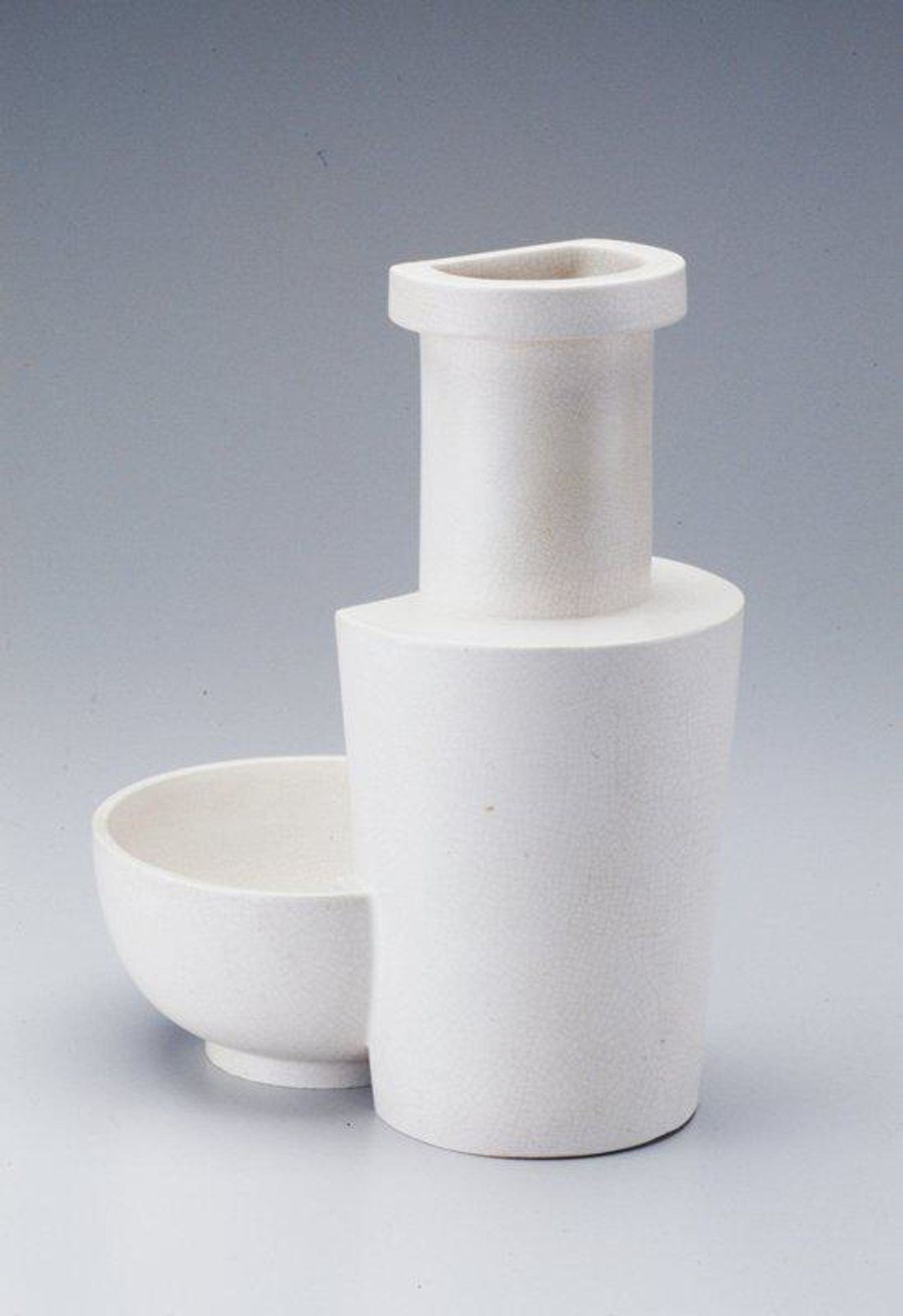
Vase-bowl


Listen to curator's interpretation
Curatorial notes
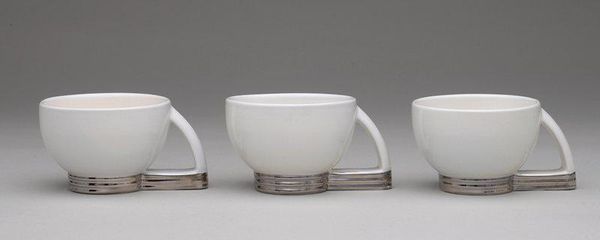
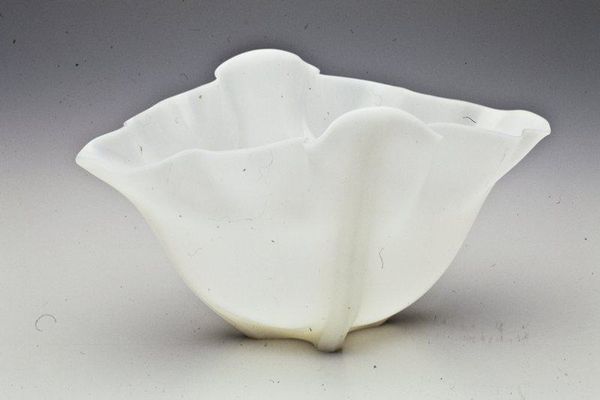
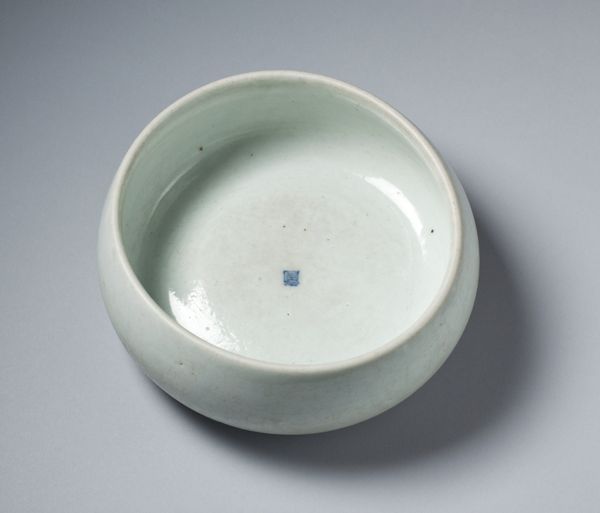
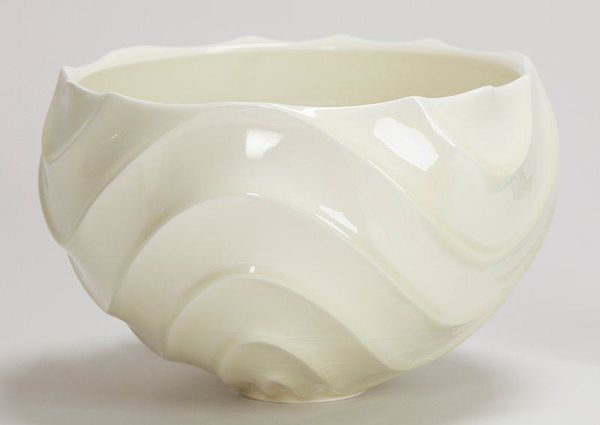
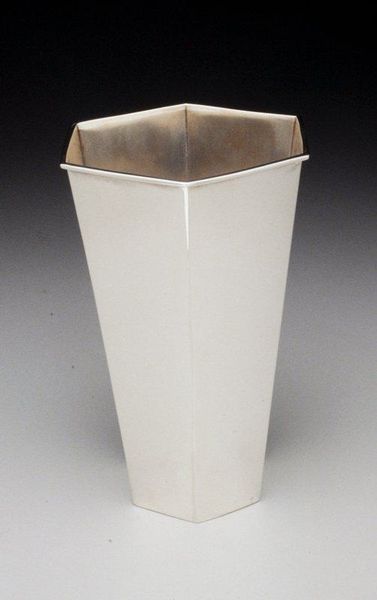
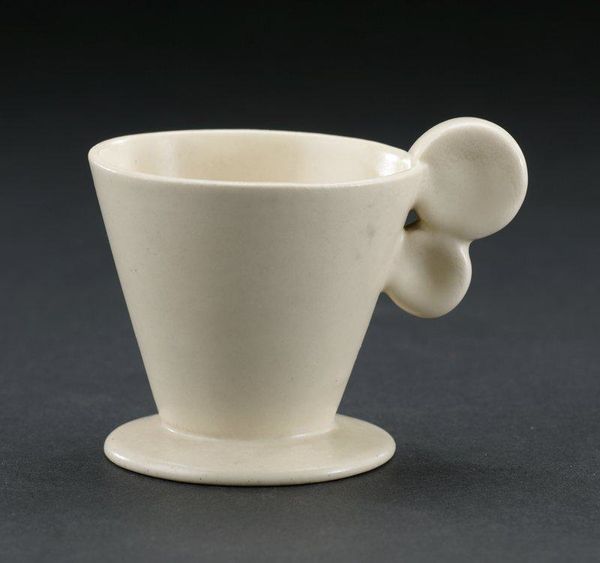
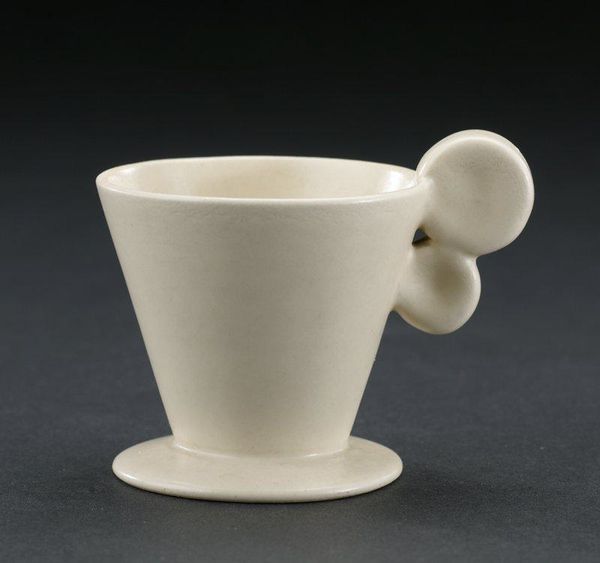
Editor: This striking stoneware piece, a "Vase-bowl" by Wilhelm Kåge, was created around 1940. It's got a certain starkness, doesn't it? What’s most compelling is the juxtaposition of these simple geometric forms; the bowl seems almost an afterthought. What strikes you about it? Curator: For me, it's about the relationship between industrial processes and handcrafted traditions. Kåge was deeply engaged with the social implications of design. Is this piece mass-produced, or is it unique? That distinction affects how we understand its purpose, doesn't it? Editor: I see what you mean. It looks quite uniform, almost as if it could be replicated easily, but I'd assume this to be a unique, hand-crafted product given the time period. Do you think Kåge was deliberately playing with this tension? Curator: Absolutely. Kåge was fascinated by the intersection of art, industry, and the everyday. Stoneware, as a material, lends itself to both utilitarian objects and high art. He elevates this through the stark geometry. He uses familiar objects such as a bowl and vase, which democratizes it while also subverting expectations with it's simplified abstraction. Who would buy this in 1940 and why? What does this artwork tell us about labor and manufacturing during this period? Editor: It makes me think about functional design and the role of craft in a modern world. I hadn't considered the socioeconomic aspect so closely before. Curator: Exactly! Seeing art this way highlights how deeply embedded material production is within social structures and our daily life, transforming our perceptions. Editor: It’s interesting to view a beautiful object not just for its aesthetic qualities, but through its production and consumption too. Curator: It makes art so much richer, right?