1629
Crossing of the Red Sea


Listen to curator's interpretation
Curatorial notes
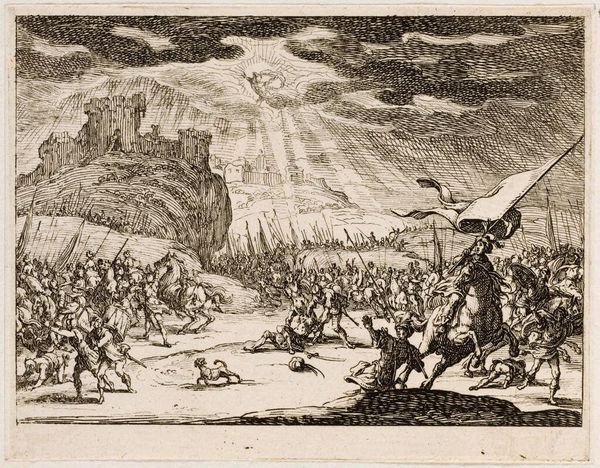
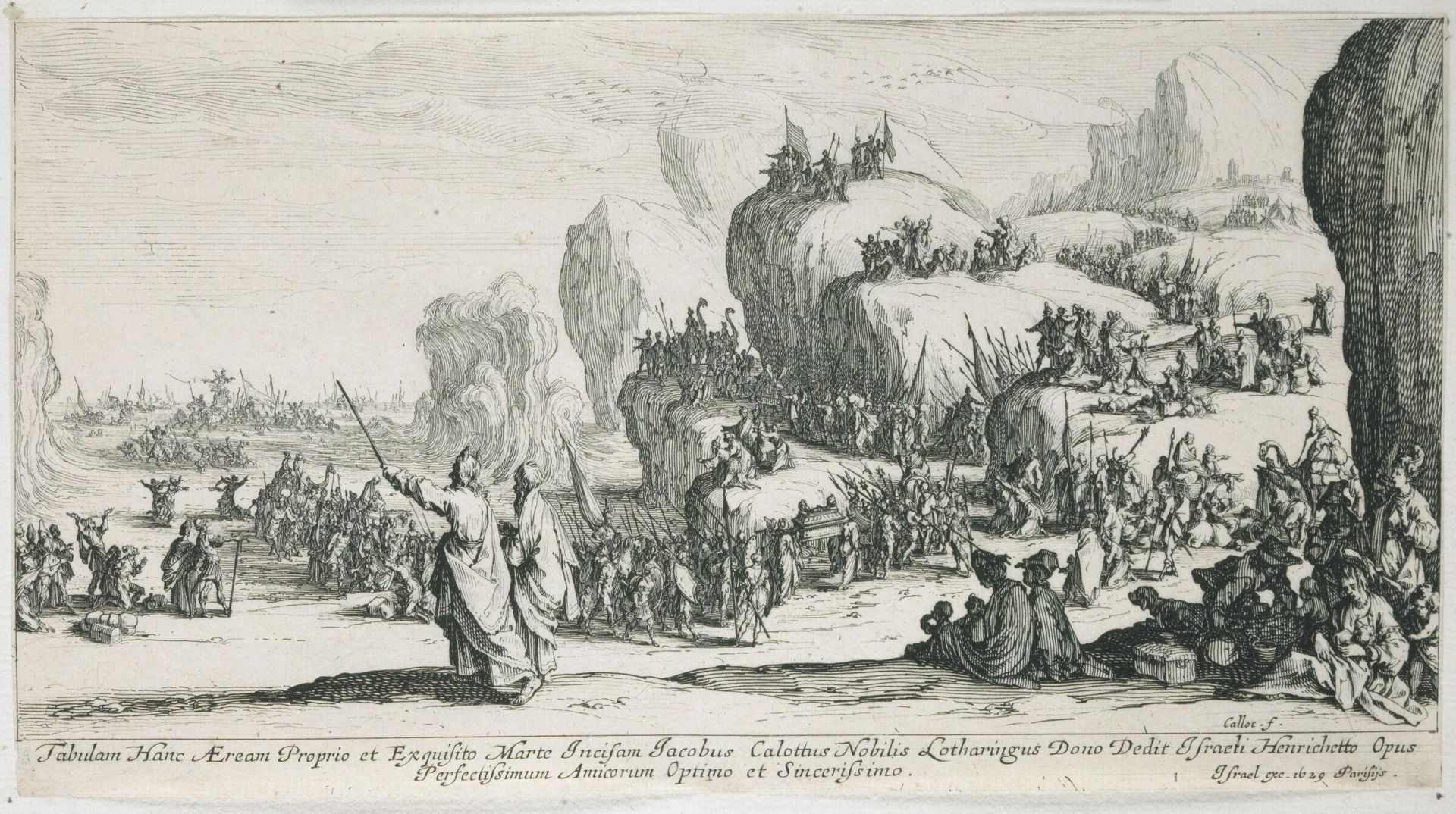
Curator: This intricate etching is Jacques Callot's "Crossing of the Red Sea," housed at the Harvard Art Museums. It depicts the biblical narrative with a remarkable level of detail considering its small scale. Editor: My initial thought is, wow, this feels like a vast epic shrunk down! It's almost like holding a whole world in your hand. The chaos and drama are palpable, aren't they? Curator: Absolutely. Callot's technique, using a burin on a copper plate, allowed for incredibly fine lines, enabling him to create a sense of depth and a multitude of figures. It speaks to the skill involved in printmaking at the time. Editor: I'm drawn to how Callot manages to capture the sheer panic and awe of the moment. It's not just about the technical skill, but about conveying the emotional weight of a miracle. Curator: His prints were widely circulated, making such scenes accessible to a broad audience. The act of reproduction itself is vital to consider. Editor: Ultimately, it's a testament to how art can transform a story into an enduring visual experience. Curator: Indeed, Callot's work continues to offer insight into both the biblical narrative and the artistic practices of the 17th century.