1772 - 1779
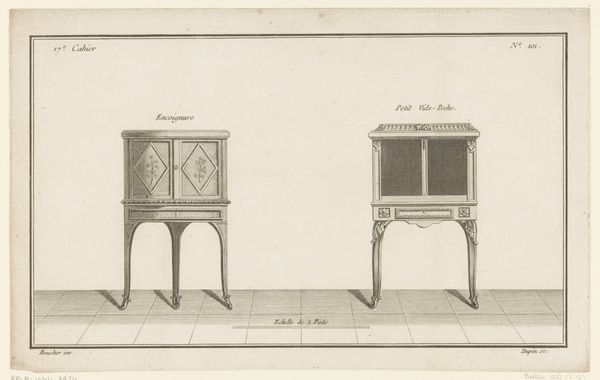
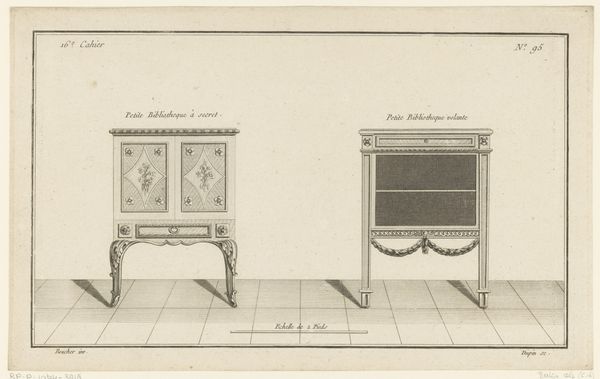
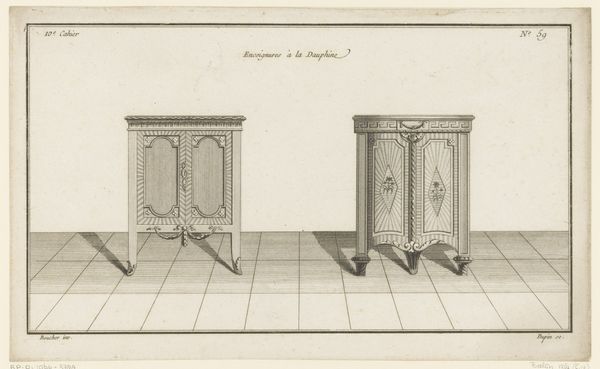
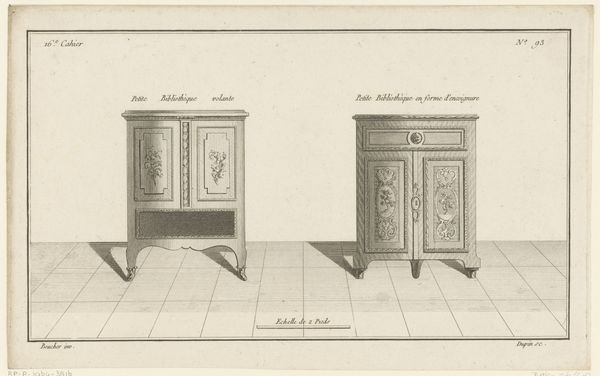
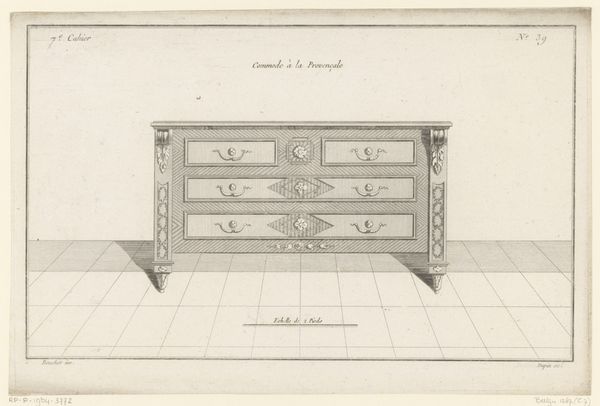
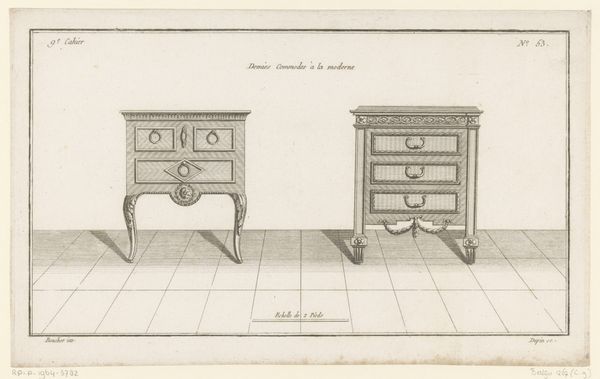
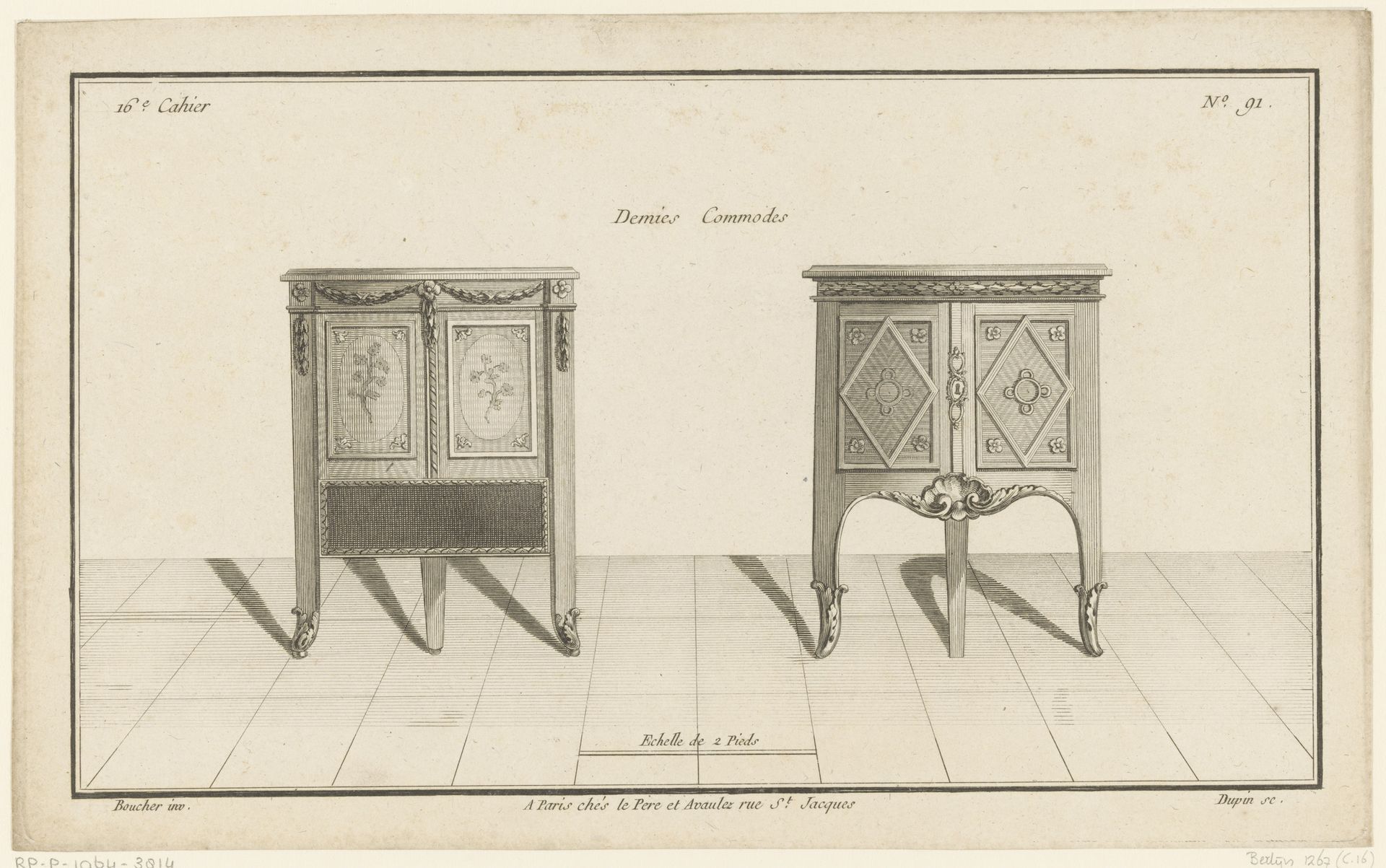
Twee commodes

Nicolas Dupin
1753 - 1789Location
RijksmuseumListen to curator's interpretation
Curatorial notes
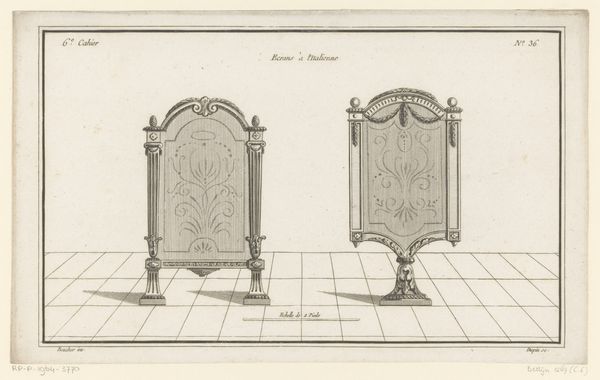
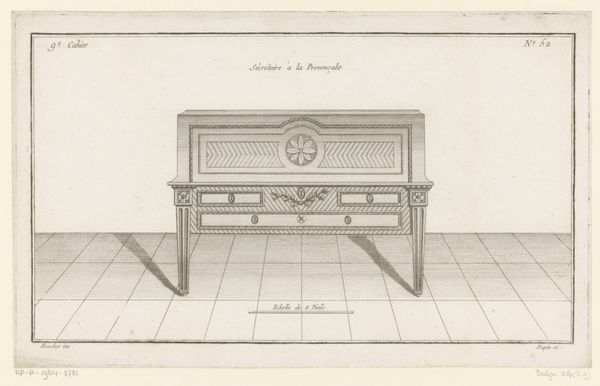
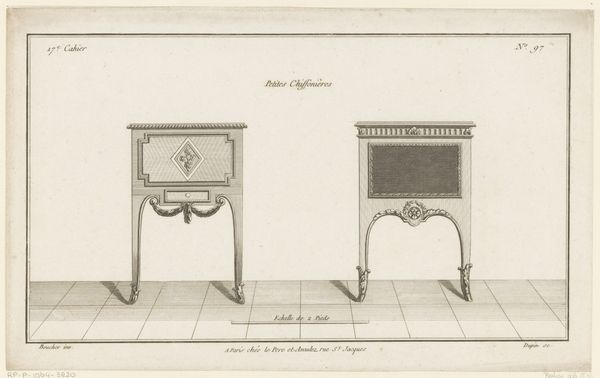
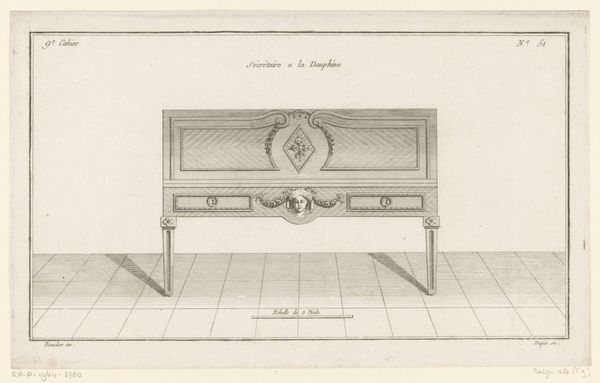
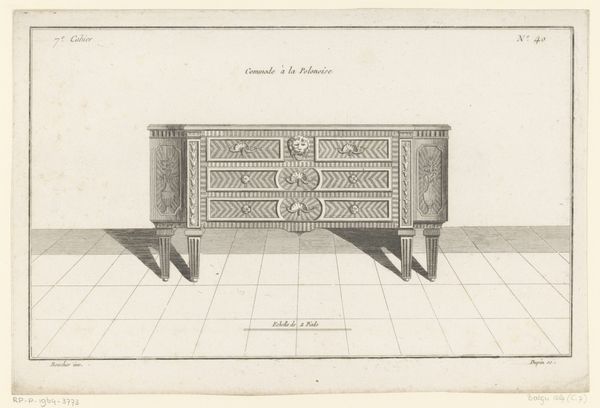
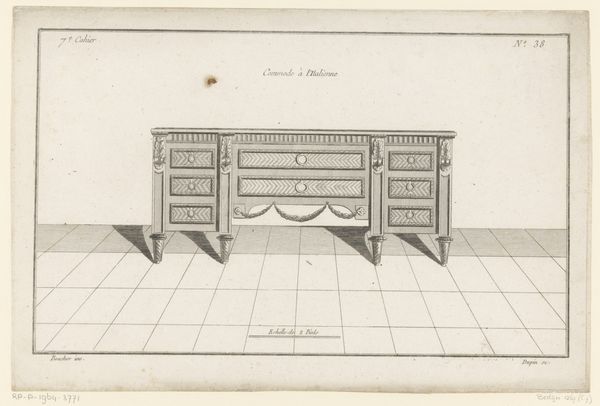
This delicate print, “Twee Commodes,” was made by Nicolas Dupin in 18th-century France, a period of immense social change and artistic innovation. Dupin worked during the reign of Louis XVI when French society was highly stratified, with wealth and privilege concentrated among the aristocracy. This work offers insight into the decorative tastes of the French elite, with its detailed rendering of ornate furniture, status symbols within aristocratic households. These commodes weren’t just functional objects; they were statements of identity, reflecting the owners' refined sensibilities and adherence to cultural norms. They were pieces that upheld the gendered and classed distinctions of the time. The labor of artisans and the resources extracted from colonies underpinned the creation of such luxurious items. Dupin’s work allows us to consider the relationship between art, identity, and power in 18th-century France. It reminds us to consider who has access to beauty and luxury, and at what cost.