
Curatorial notes
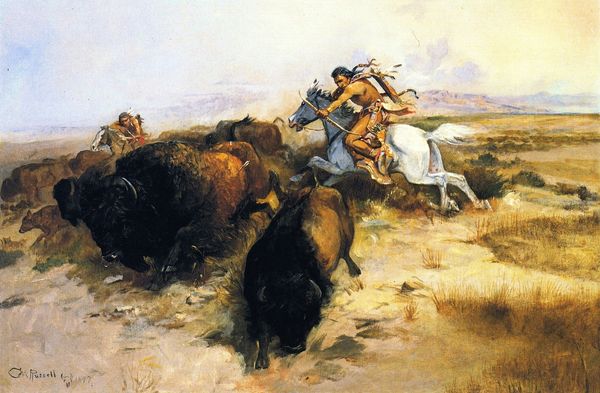
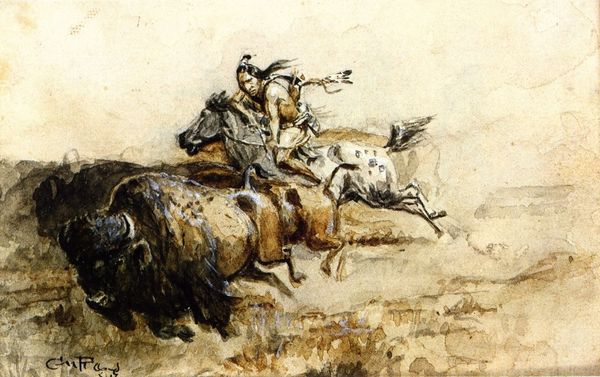
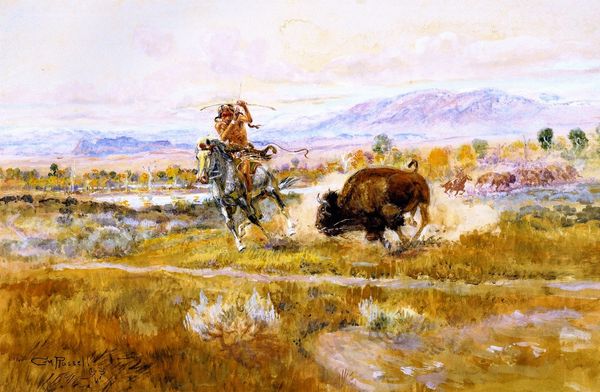
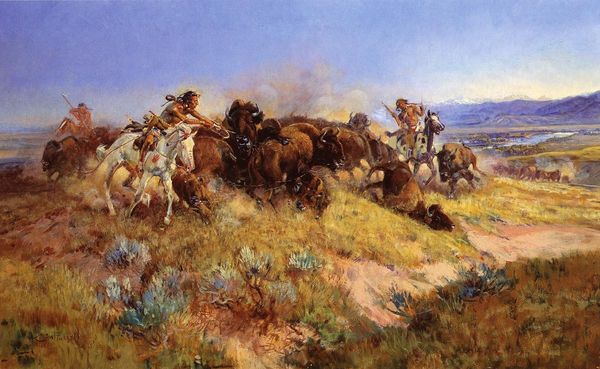
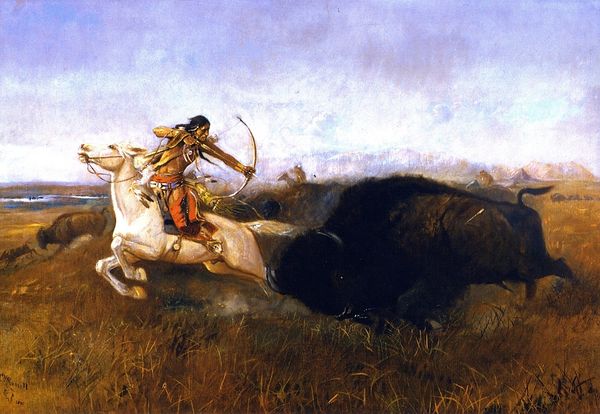
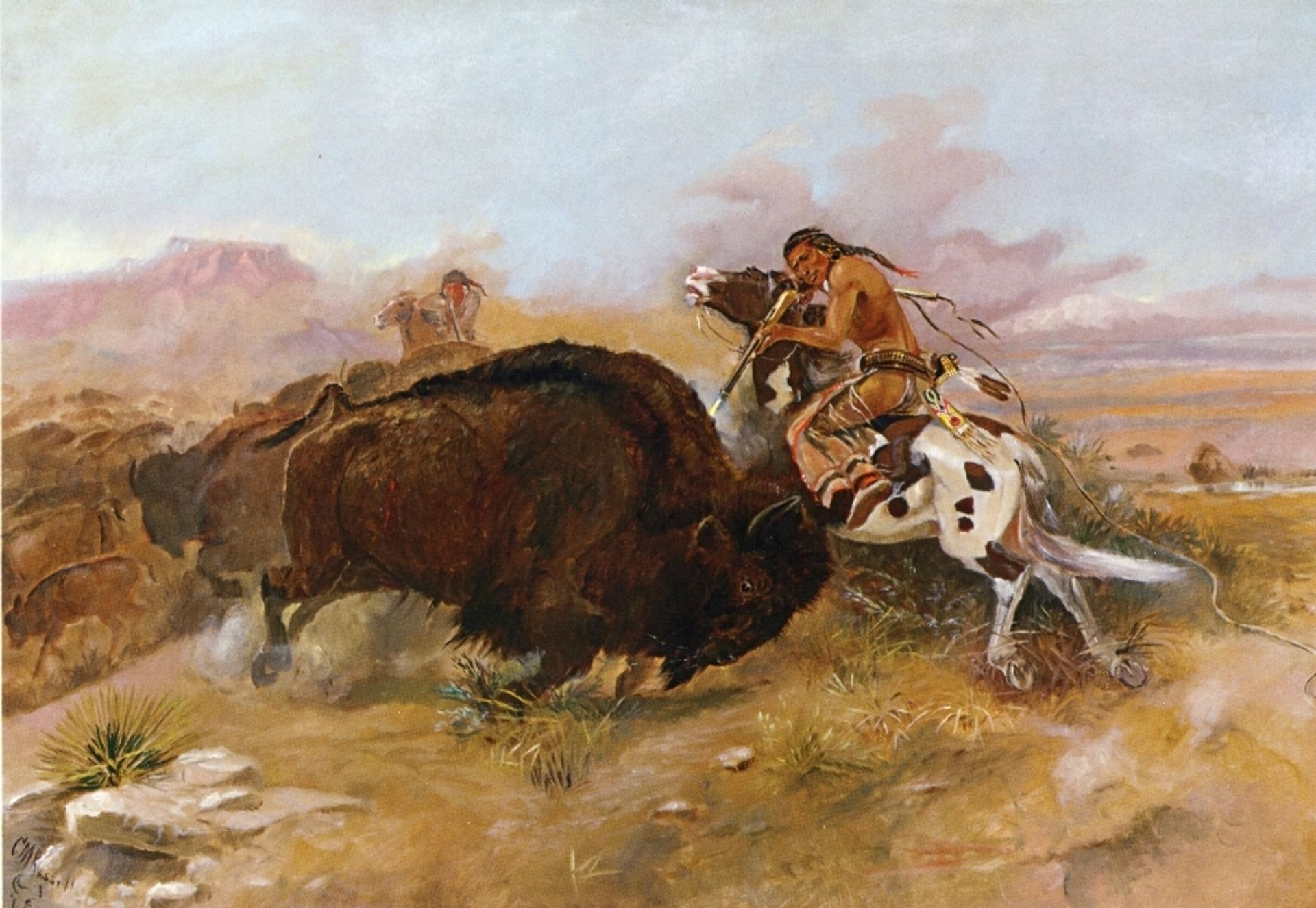
Curator: Immediately striking. A dust-filled, ochre scene infused with tension and movement. Editor: That's an apt description. This is "Meat for the Tribe," painted by Charles M. Russell in 1891 using oil paint. It presents a bison hunt on the American frontier. Curator: The dynamism is remarkable. Notice the lines of the bison’s bodies – powerful and charging. And the rendering of the Native American figure atop the horse, spear in hand, almost as a single unit of force. The interplay of curves and sharp angles drives the action forward. Editor: Absolutely. Russell’s work frequently mythologized the West, presenting romanticized and arguably simplified accounts of historical events and Indigenous cultures. How does that visual storytelling sit with you in this context? Curator: Aesthetically, the brushwork in the background suggests vast space, crucial for understanding how the painter frames his narrative. I am thinking about the interplay between foreground and background: this is not merely documentary painting; it's a narrative orchestrated through careful arrangement of forms and colors. Editor: Indeed. This artwork romanticizes conquest and subsistence. Consider the title: it subtly diminishes the inherent violence of the hunt by focusing on survival. The tribe remains unseen, rendered passive, dependent on the active male hunter, a very stereotypical reading of indigenous people as always in need. Curator: The earth-toned palette evokes the rugged landscape, undeniably. And if we focus solely on composition, the positioning of the hunter figure, slightly off-center, generates visual interest, pushing your eye deeper into the unfolding action. The tension arises from these choices, this juxtaposition. Editor: But it's also a constructed gaze, placing the viewer as a detached observer of a way of life vanishing due to colonial pressures. It speaks volumes about the popular representation of the American West in the late 19th century. Curator: Perhaps. Nonetheless, viewing it now invites a deeper investigation into not just what is shown but also the visual language Russell employed to tell this story. The lines, tones, the visual elements become incredibly vital lenses. Editor: Agreed. Its historical context demands reflection on representation, agency, and the legacies we continue to grapple with even now.