drawing, print, etching
#
drawing
#
toned paper
#
dutch-golden-age
# print
#
etching
#
pencil sketch
#
landscape
#
form
#
11_renaissance
#
line
#
cityscape
#
realism
Dimensions: height 100 mm, width 133 mm
Copyright: Rijks Museum: Open Domain
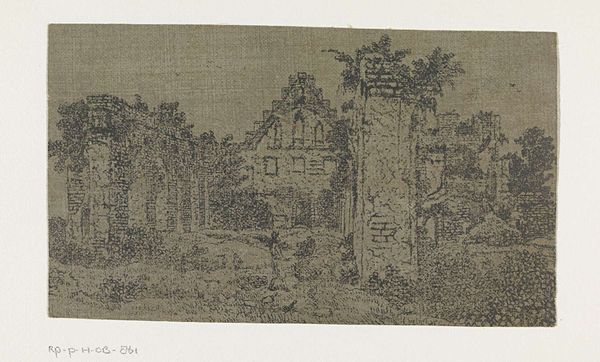
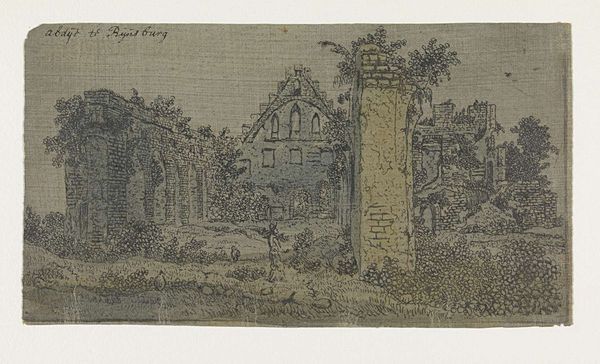
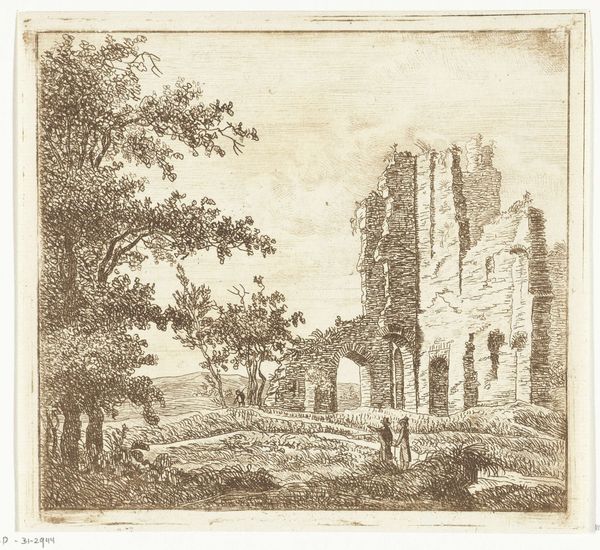
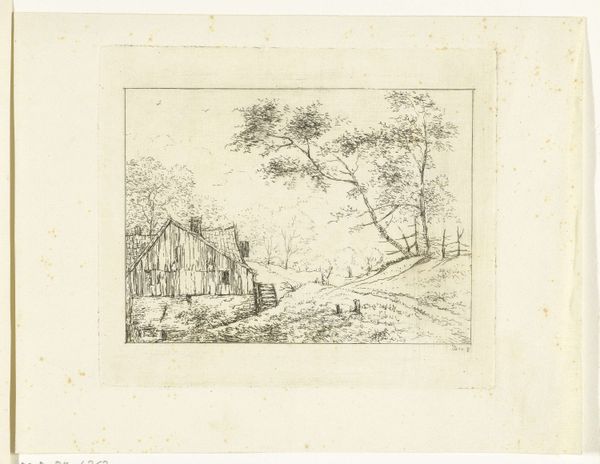
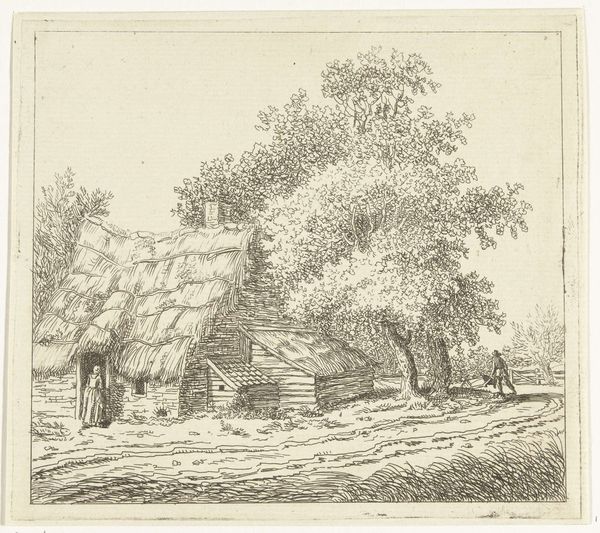
Hercules Segers made this etching of the Ruins of Brederode Castle in the 17th century, a period of significant political and social upheaval in the Netherlands, then embroiled in the Eighty Years' War. Segers' choice to depict ruins during this time speaks volumes about themes of decay and the transient nature of power. The crumbling castle can be read as a metaphor for the fading feudal order, replaced by emerging merchantile powers. Segers, who lived a modest life and was known for his experimental printmaking, may have been drawn to ruins as symbols of lost grandeur. Segers' prints often evoke feelings of melancholy and introspection. The desolate landscape and decaying architecture can provoke thoughts about the passage of time and the impermanence of human achievements. Segers' innovative approach to printmaking, including his unusual color choices and textured surfaces, mirrors the unconventional nature of his subject matter. This etching invites us to reflect on the ruins of our own lives and societies.
Comments

rijksmuseum over 2 years ago
⋮
Brederode Castle, northwest of Haarlem, was founded in the 13th century. It suffered serious damage in the Eighty Years’ War. No other Dutch ruins were depicted as often by artists in the 17th century as this castle. Here Segers drew every wall and individual brick.


Join the conversation
Join millions of artists and users on Artera today and experience the ultimate creative platform.
 Collect
More like this