About this artwork
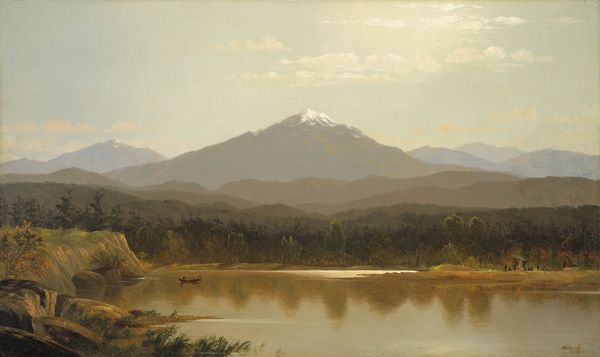
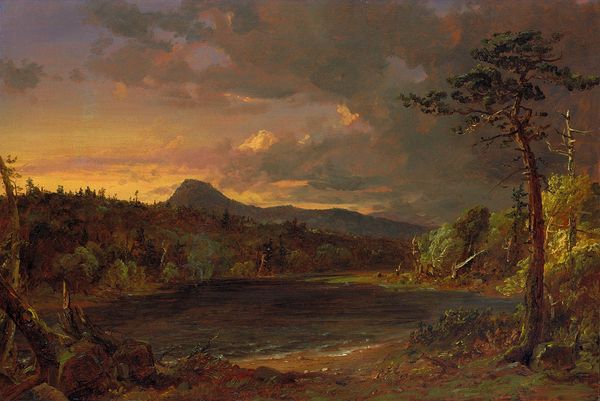
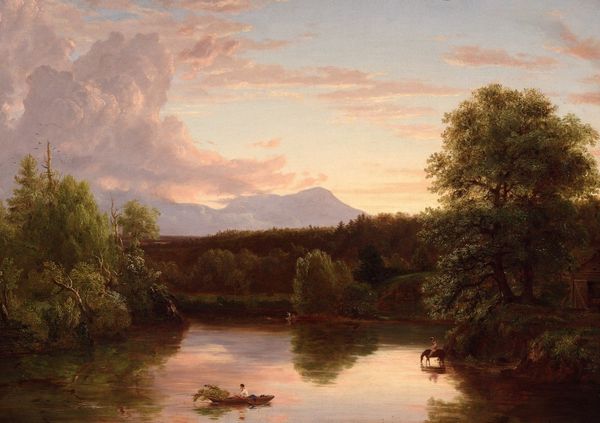
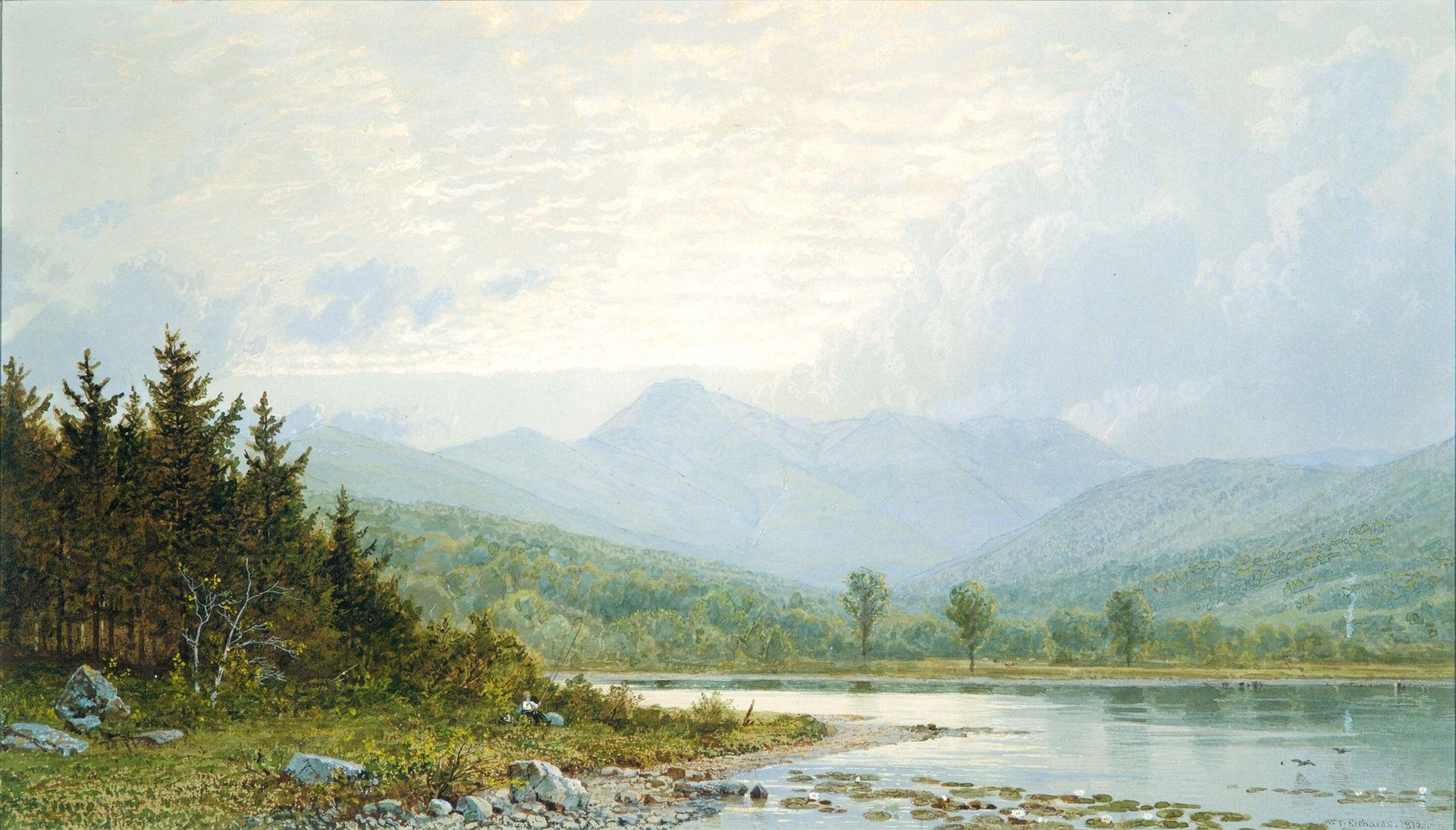
William Trost Richards created this oil on paper painting, ‘Sunset on Mount Chocorua, New Hampshire,’ sometime during his career. It's a serene scene, typical of the White Mountains School of painting, which flourished in the mid-19th century. This artistic movement emerged alongside growing interest in landscape as a marker of national identity. As more Americans moved to cities, the wilderness became an idealized space, a repository of values seen as fading in urban life. Artists like Richards captured these scenes, feeding a public appetite for images of untouched nature. Mount Chocorua itself had become a popular tourist destination, accessible via the expanding railway lines. So, while the painting presents a seemingly pristine wilderness, it's also a product of increasing industrialization and tourism. To understand the painting fully, one might consult travel guides and period writings to get a sense of how the public perceived these landscapes. We see that the meaning of art is always changing, shaped by the institutions and social contexts in which it circulates.
Sunset on Mount Chocorua, New Hampshire
1872

William Trost Richards
1833 - 1905
The Metropolitan Museum of Art
Metropolitan Museum of Art, New York, NYArtwork details
- Dimensions
- 8 1/8 x 14 3/16 in. (20.6 x 36 cm)
- Location
- Metropolitan Museum of Art, New York, NY
- Copyright
- Public Domain
Comments
Be the first to share your thoughts about this work.
About this artwork
William Trost Richards created this oil on paper painting, ‘Sunset on Mount Chocorua, New Hampshire,’ sometime during his career. It's a serene scene, typical of the White Mountains School of painting, which flourished in the mid-19th century. This artistic movement emerged alongside growing interest in landscape as a marker of national identity. As more Americans moved to cities, the wilderness became an idealized space, a repository of values seen as fading in urban life. Artists like Richards captured these scenes, feeding a public appetite for images of untouched nature. Mount Chocorua itself had become a popular tourist destination, accessible via the expanding railway lines. So, while the painting presents a seemingly pristine wilderness, it's also a product of increasing industrialization and tourism. To understand the painting fully, one might consult travel guides and period writings to get a sense of how the public perceived these landscapes. We see that the meaning of art is always changing, shaped by the institutions and social contexts in which it circulates.
Comments
Be the first to share your thoughts about this work.