About this artwork
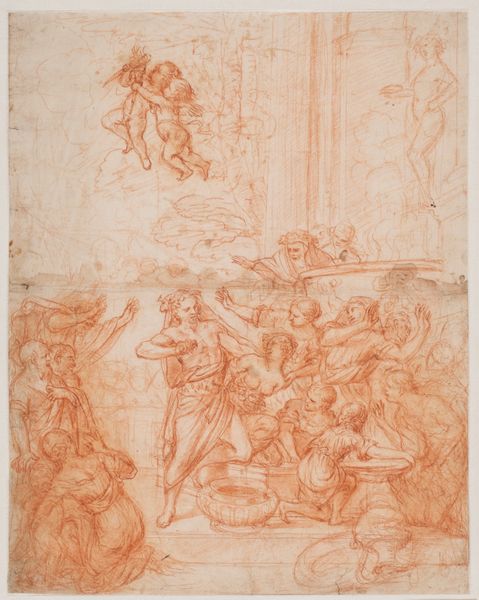
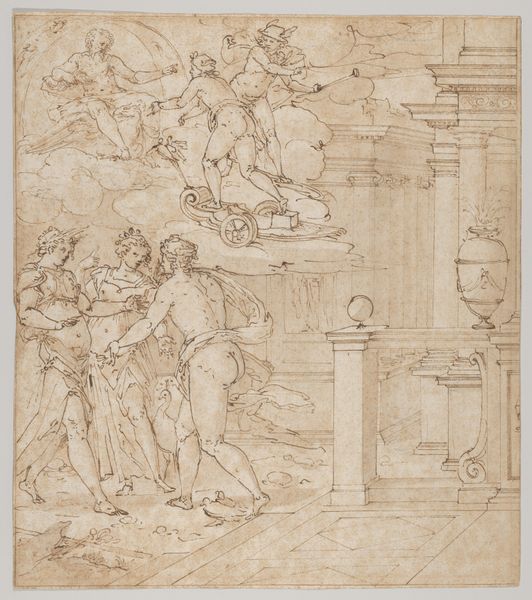
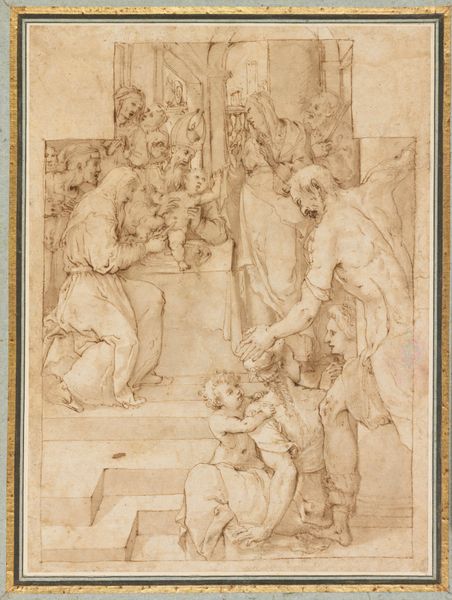
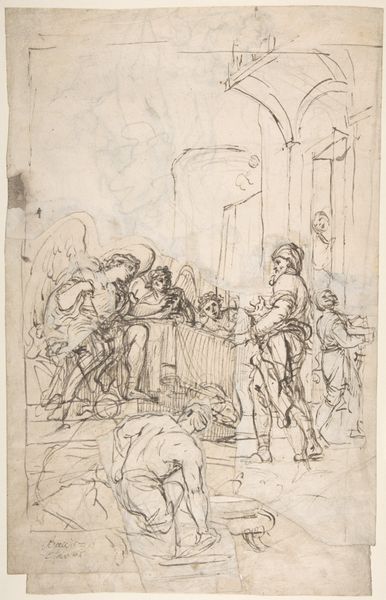
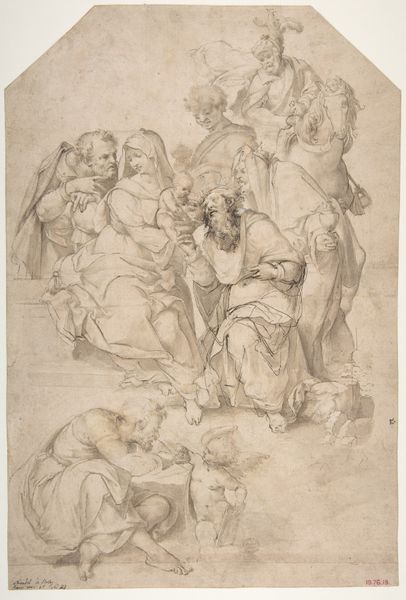
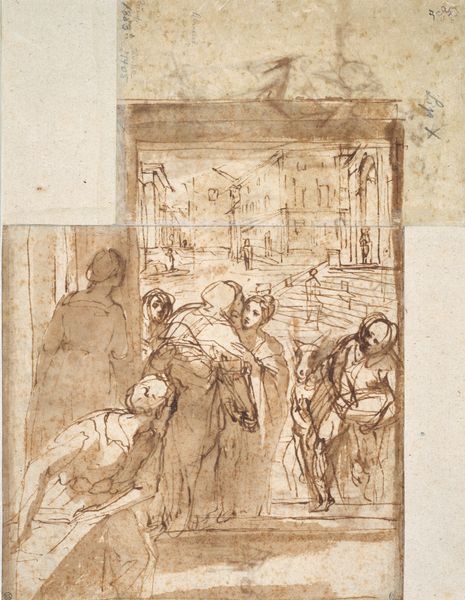
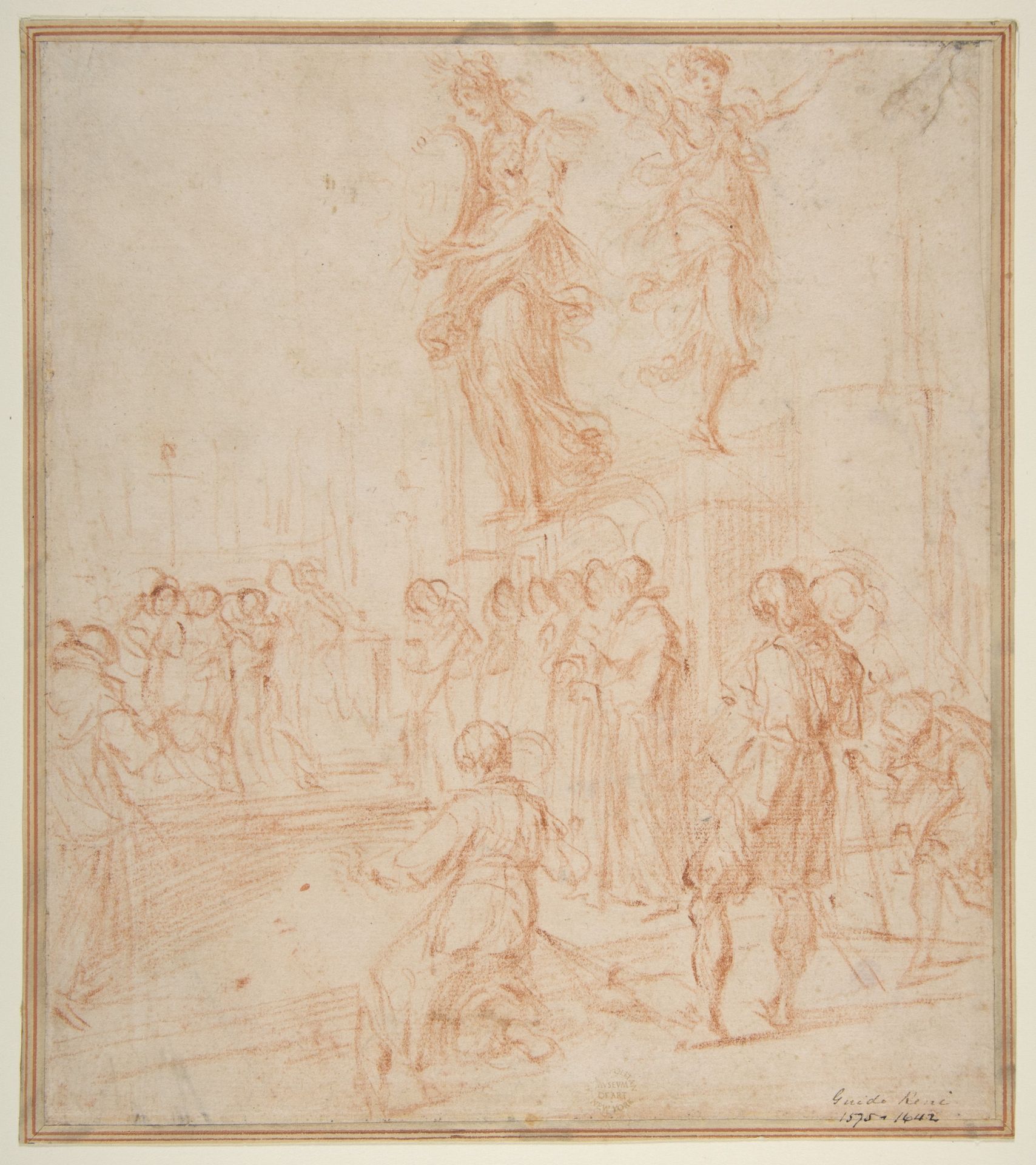
Bernardino Poccetti created this drawing, "Figure Studies," using pen and red ink in Italy in the late 16th or early 17th century. Poccetti lived in Florence during a period of intense religious and social change. The sketch presents us with three studies. We see a woman holding a shield, a dancing female, and a priest being supported at an altar before a group of onlookers. Note how the priest in the throes of religious ecstasy seems to be supported by the crowd. The sketch suggests a world where traditional religion is very much a communal activity. It may also highlight the role of women and their relationships to religious ritual. They stand with shields raised, dancing in an act of devotion. Poccetti’s drawing invites us to consider the intertwined roles of religion, gender, and community during the tumultuous Renaissance. It reminds us of the emotional intensity of religious experience and the ways in which faith can be both a personal and collective phenomenon.
Figure Studies: Woman holding a Shield, a Dancing Female, and a Priest Supported at an Altar before a Group of Onlookers 1612

Bernardino Poccetti
1548 - 1612
The Metropolitan Museum of Art
Metropolitan Museum of Art, New York, NYArtwork details
- Medium
- drawing, print, pencil
- Dimensions
- 9 1/16 x 8in. (23 x 20.3cm)
- Location
- Metropolitan Museum of Art, New York, NY
- Copyright
- Public Domain
Tags
drawing
ink painting
charcoal drawing
figuration
11_renaissance
pencil
history-painting
italian-renaissance
Comments
No comments
About this artwork
Bernardino Poccetti created this drawing, "Figure Studies," using pen and red ink in Italy in the late 16th or early 17th century. Poccetti lived in Florence during a period of intense religious and social change. The sketch presents us with three studies. We see a woman holding a shield, a dancing female, and a priest being supported at an altar before a group of onlookers. Note how the priest in the throes of religious ecstasy seems to be supported by the crowd. The sketch suggests a world where traditional religion is very much a communal activity. It may also highlight the role of women and their relationships to religious ritual. They stand with shields raised, dancing in an act of devotion. Poccetti’s drawing invites us to consider the intertwined roles of religion, gender, and community during the tumultuous Renaissance. It reminds us of the emotional intensity of religious experience and the ways in which faith can be both a personal and collective phenomenon.
Comments
No comments