About this artwork
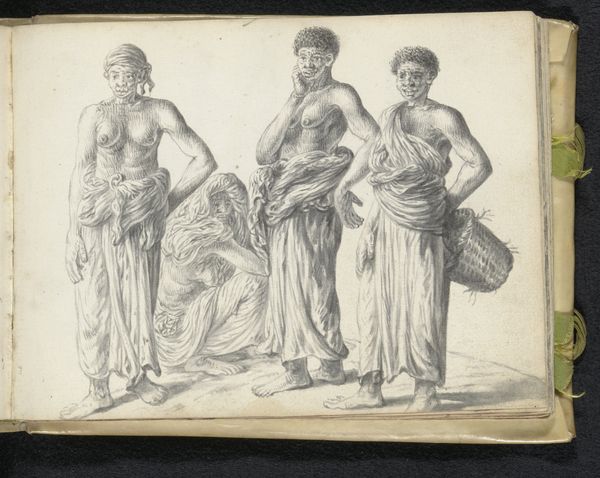
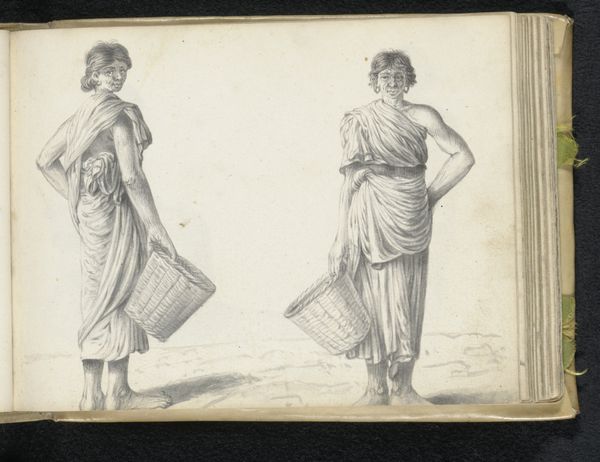
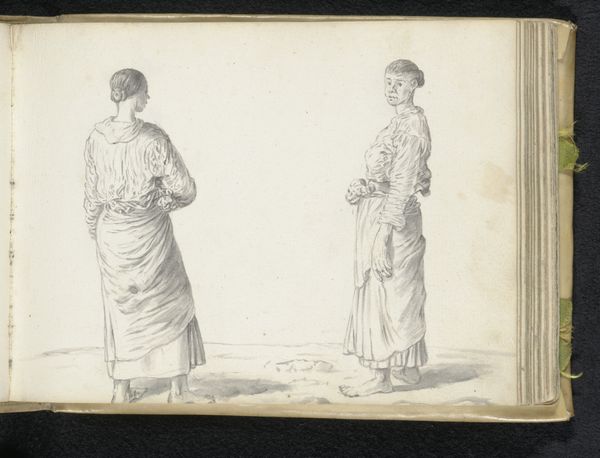
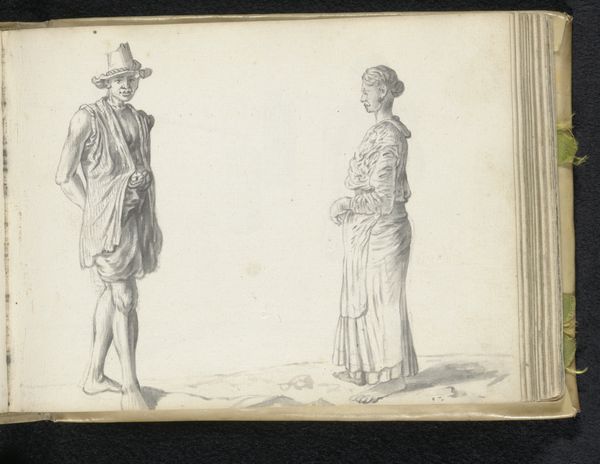
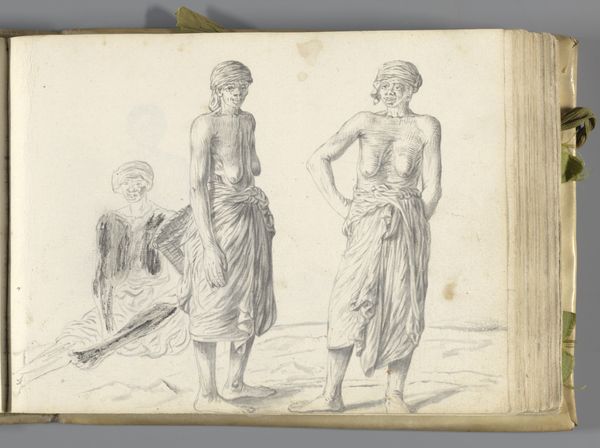
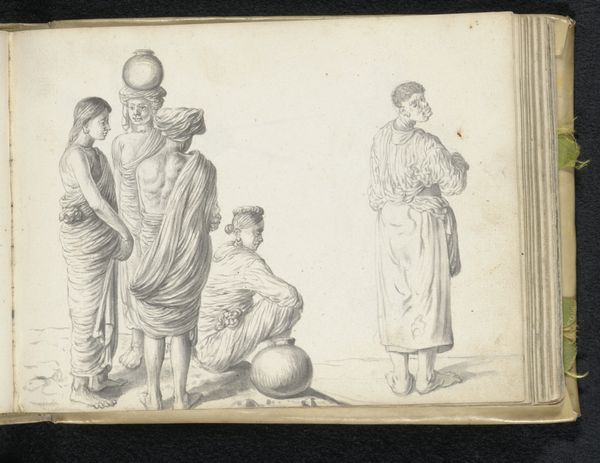
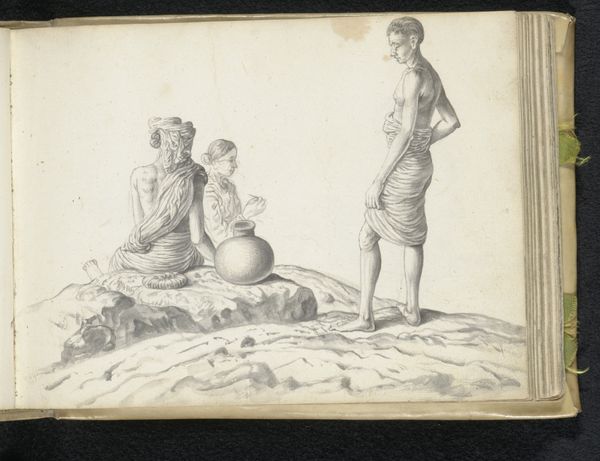
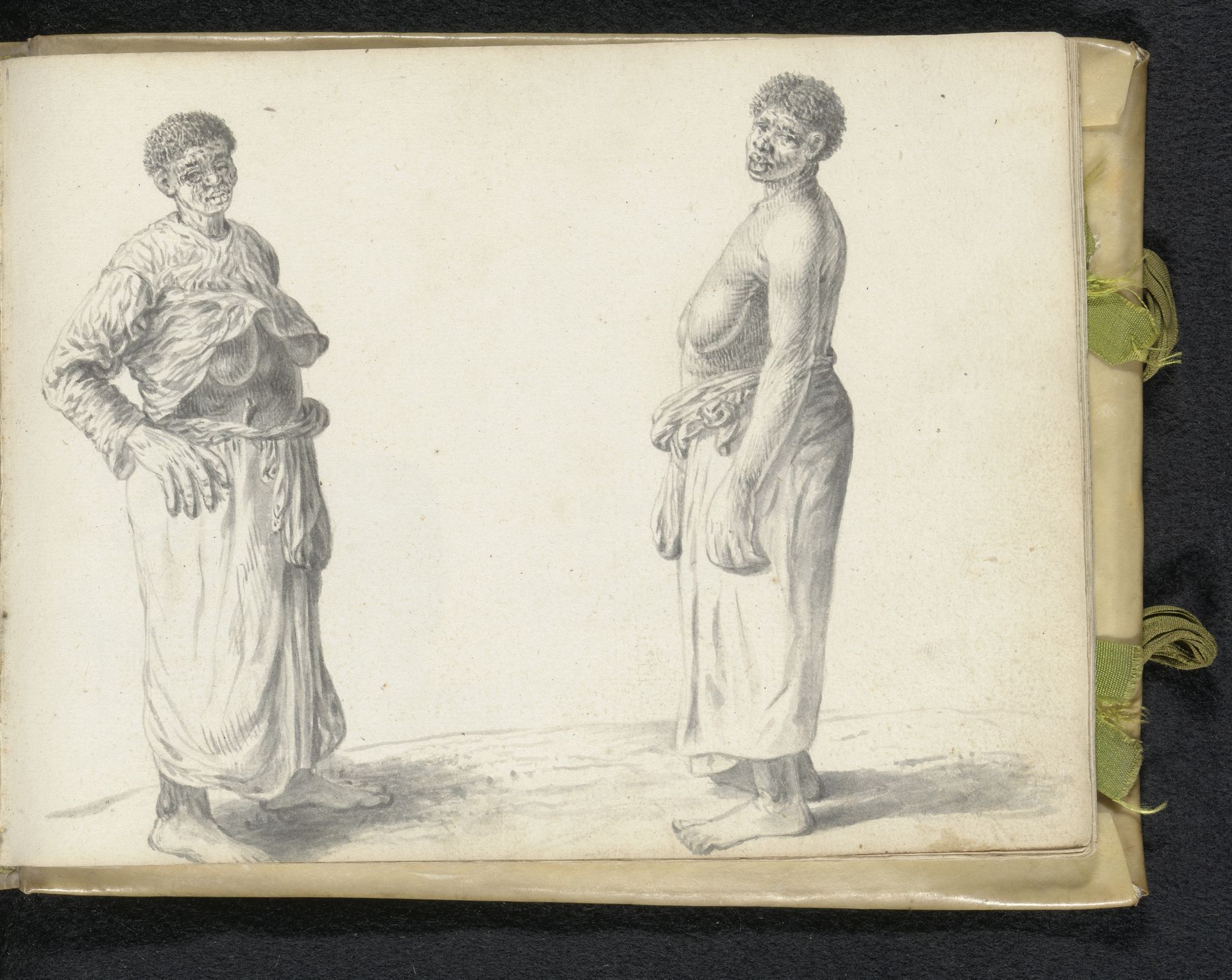
Esaias Boursse’s delicate graphite drawing presents two standing wet nurses with directness. The figures are rendered with a tonal subtlety that models their forms with light and shadow against a pale ground. Notice how each shape has a distinct contour and internal modelling, emphasizing their individual presence. Boursse’s drawing employs a semiotic system, where each stroke and shadow acts as a signifier. For instance, the careful rendering of fabric and skin texture conveys material and bodily realities. The composition also relies on a binary structure, where each woman offers a different pose and stance. One stares directly at us while the other avoids our gaze. This might reflect a broader interest in how identity and representation intersect with socio-economic roles. The aesthetic restraint in the artwork belies a complex interplay of observation and cultural interpretation. It compels us to examine how seemingly simple artistic choices contribute to deeper considerations about social status and representation.

Artwork details
- Medium
- drawing, pencil
- Dimensions
- height 148 mm, width 196 mm
- Copyright
- Rijks Museum: Open Domain
Tags
portrait
drawing
dutch-golden-age
figuration
coloured pencil
pencil
genre-painting
realism
Comments
No comments
About this artwork
Esaias Boursse’s delicate graphite drawing presents two standing wet nurses with directness. The figures are rendered with a tonal subtlety that models their forms with light and shadow against a pale ground. Notice how each shape has a distinct contour and internal modelling, emphasizing their individual presence. Boursse’s drawing employs a semiotic system, where each stroke and shadow acts as a signifier. For instance, the careful rendering of fabric and skin texture conveys material and bodily realities. The composition also relies on a binary structure, where each woman offers a different pose and stance. One stares directly at us while the other avoids our gaze. This might reflect a broader interest in how identity and representation intersect with socio-economic roles. The aesthetic restraint in the artwork belies a complex interplay of observation and cultural interpretation. It compels us to examine how seemingly simple artistic choices contribute to deeper considerations about social status and representation.
Comments
No comments