About this artwork
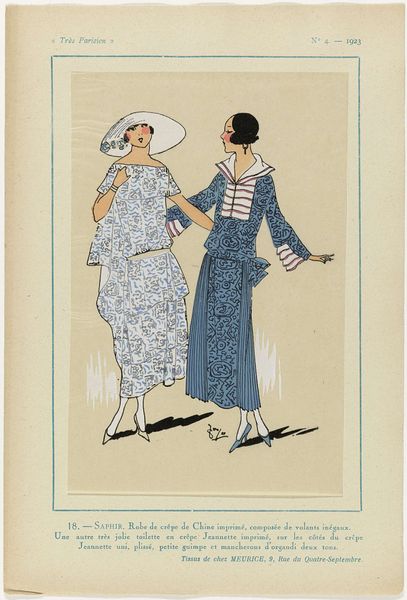
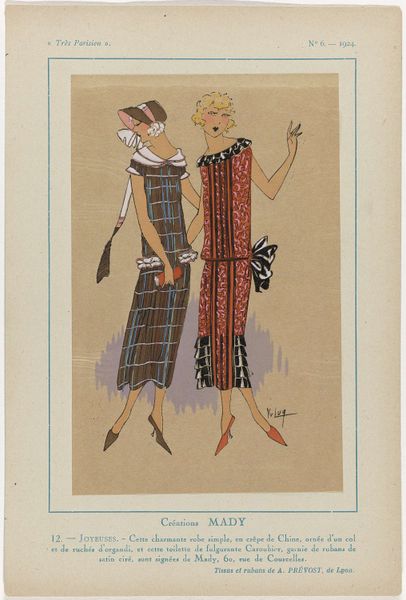
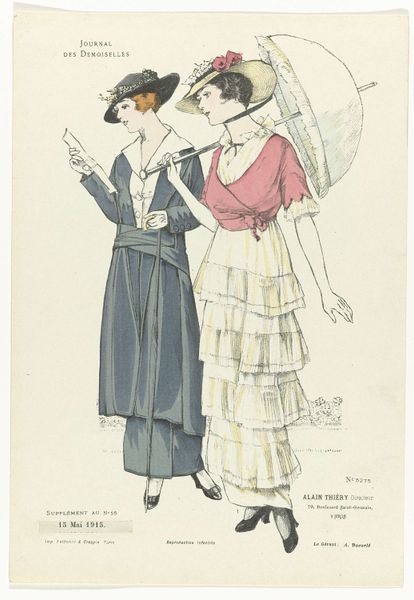
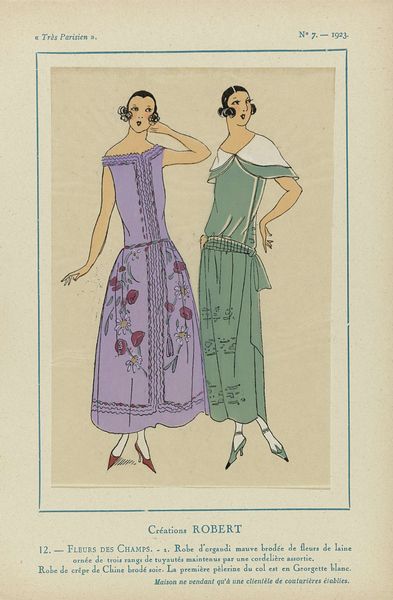
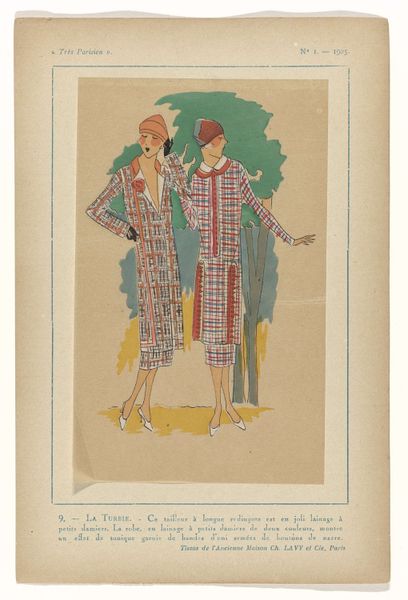
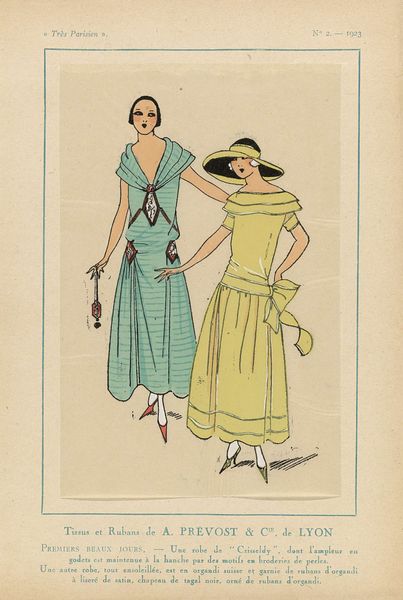
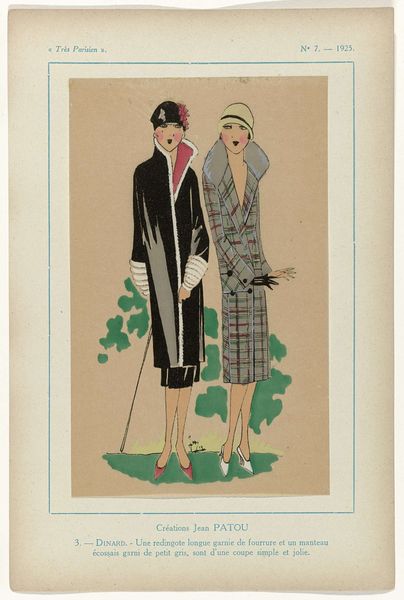
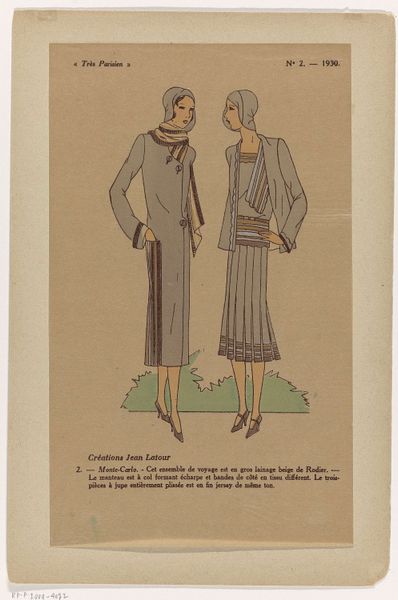
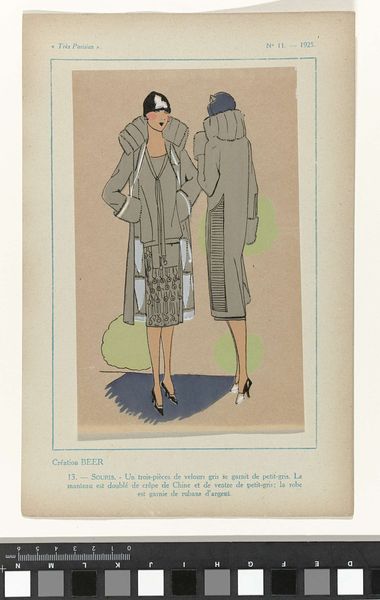
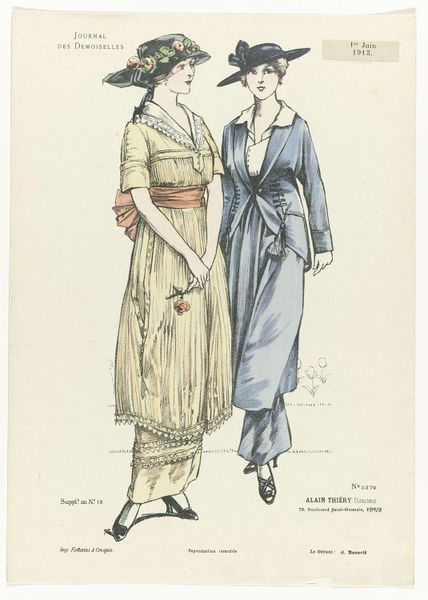
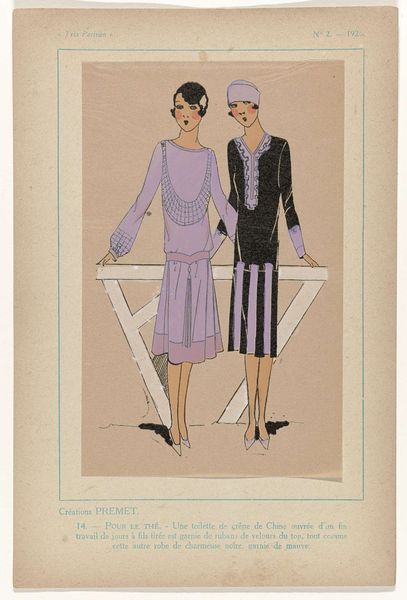
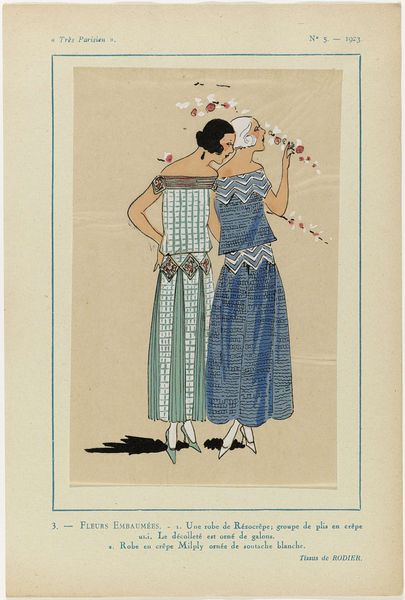
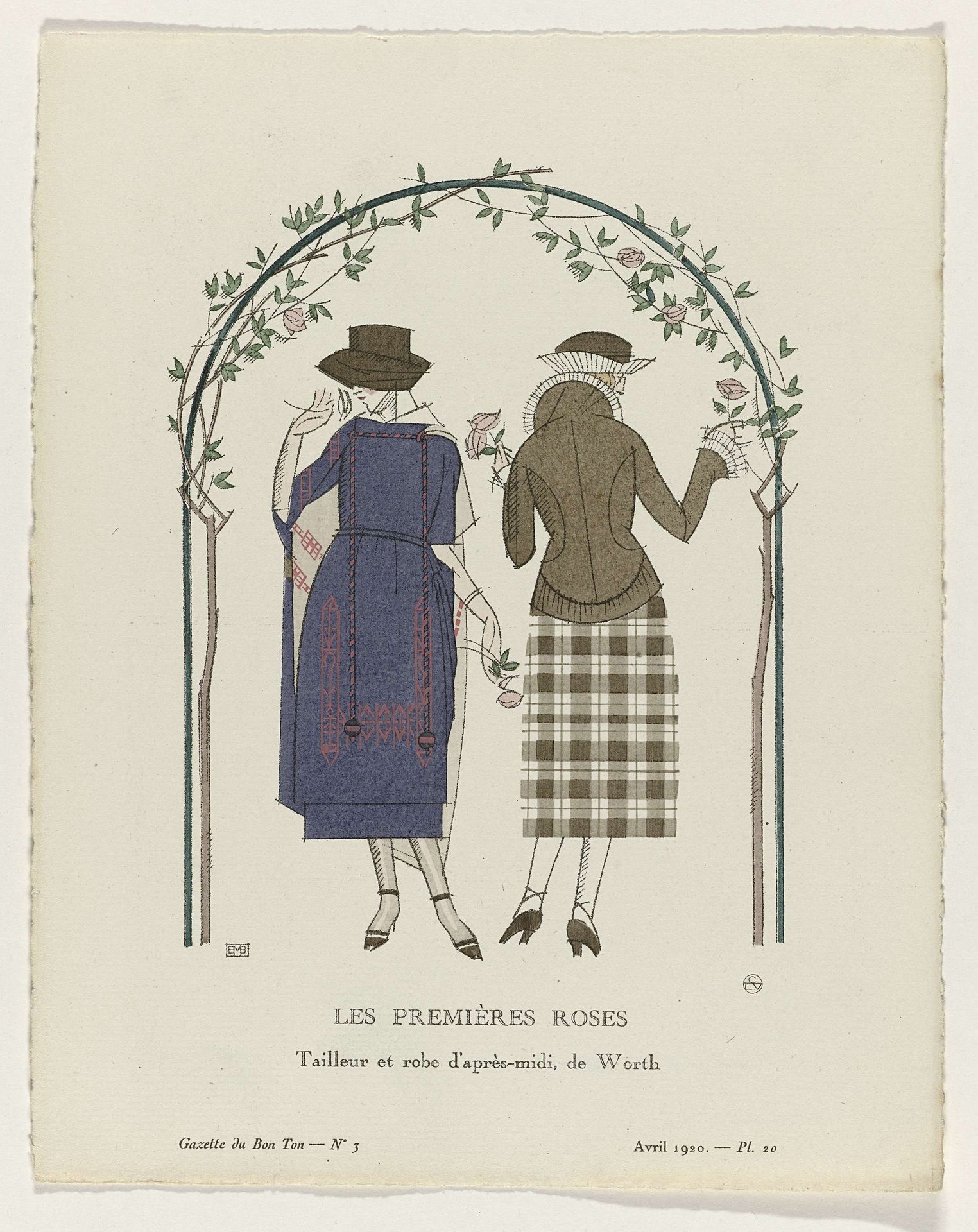
Bernard Boutet de Monvel created this print of the Gazette du Bon Ton, in 1920. It looks like it was probably made using some kind of printmaking technique, like etching or lithography, with a bit of hand-coloring. I like the way the colors are muted and soft, like a faded memory. The lines are delicate and precise, but there's also a kind of looseness, especially in the roses framing the figures. I'm drawn to the plaid skirt, it's so graphic and bold against the muted tones. The flat planes of color and pattern remind me of the work of someone like Bonnard or Vuillard, who were also playing with flatness and decoration at the time. The artist seems to be thinking about how images circulate, and how fashion is a kind of performance. This piece feels like a conversation, a dialogue between art and fashion, between tradition and modernity.
Gazette du Bon Ton, 1920 - No. 3, Pl. 19: Les premières roses / Tailleur et robe d'après-midi, de Worth
1920

Artwork details
- Medium
- print, watercolor
- Dimensions
- height 245 mm, width 192 mm
- Copyright
- Rijks Museum: Open Domain
Tags
Comments
Share your thoughts
About this artwork
Bernard Boutet de Monvel created this print of the Gazette du Bon Ton, in 1920. It looks like it was probably made using some kind of printmaking technique, like etching or lithography, with a bit of hand-coloring. I like the way the colors are muted and soft, like a faded memory. The lines are delicate and precise, but there's also a kind of looseness, especially in the roses framing the figures. I'm drawn to the plaid skirt, it's so graphic and bold against the muted tones. The flat planes of color and pattern remind me of the work of someone like Bonnard or Vuillard, who were also playing with flatness and decoration at the time. The artist seems to be thinking about how images circulate, and how fashion is a kind of performance. This piece feels like a conversation, a dialogue between art and fashion, between tradition and modernity.
Comments
Share your thoughts