1817
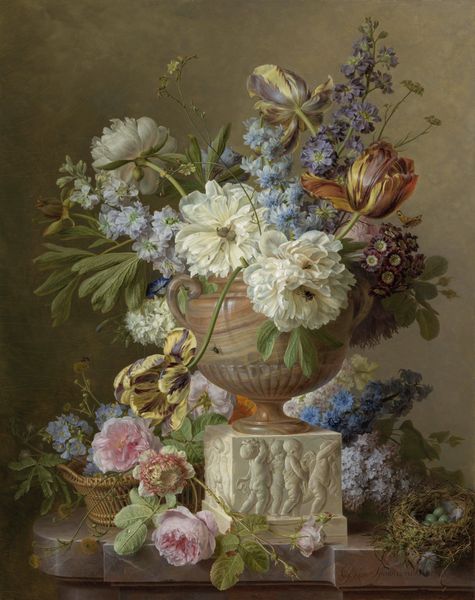
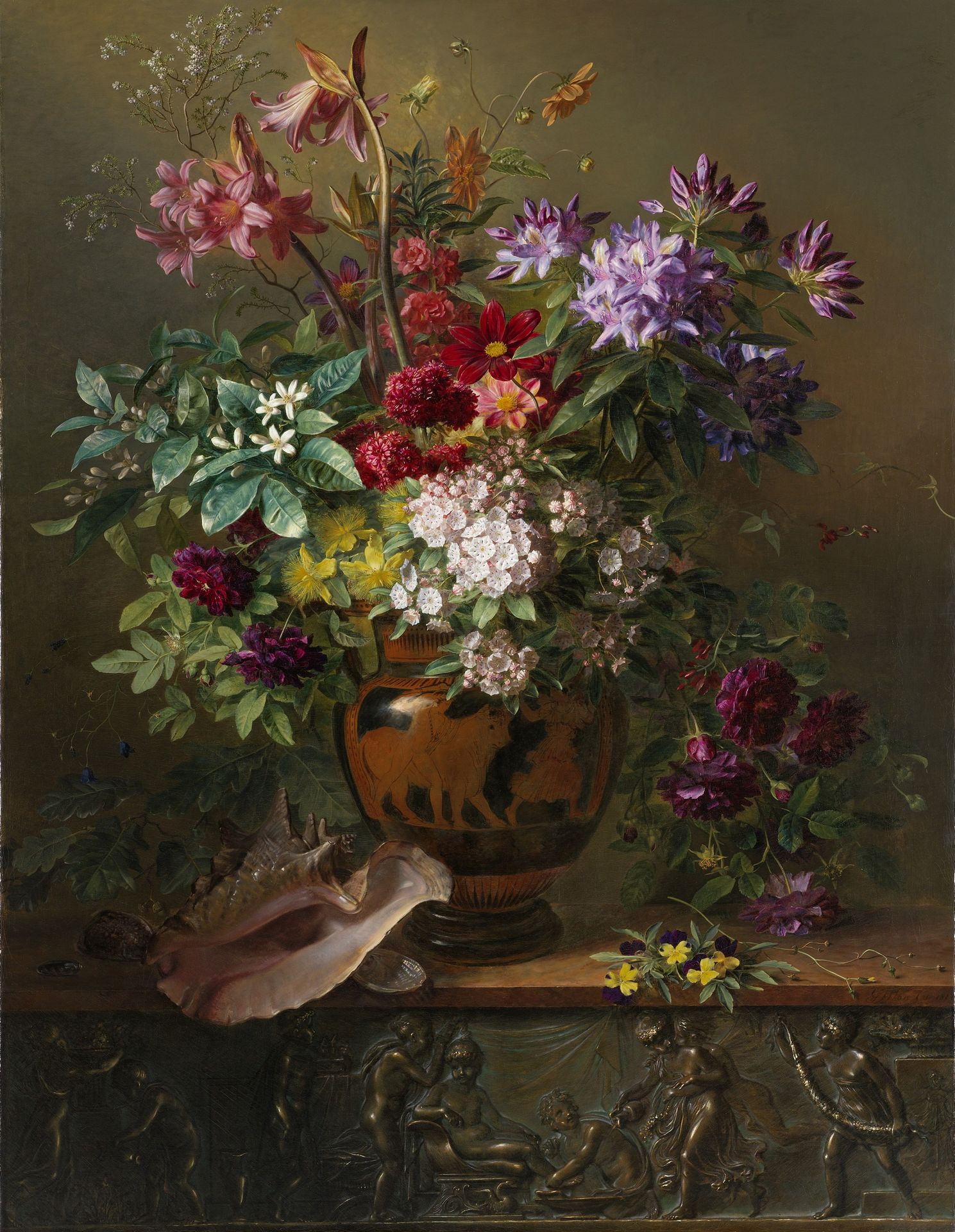
Still Life with Flowers in a Greek Vase: Allegory of Spring

Georgius Jacobus Johannes van Os
1782 - 1861Location
RijksmuseumListen to curator's interpretation
Curatorial notes
Editor: This is "Still Life with Flowers in a Greek Vase: Allegory of Spring" by Georgius Jacobus Johannes van Os, created around 1817 using oil paint and gouache. The composition strikes me as almost overflowing, like the abundance of Spring itself is too much to contain. What catches your eye? Curator: What I find compelling here is not merely the illusion of abundance, but how that illusion is constructed. Van Os, trained in the meticulous tradition of flower painting, is nonetheless working within a market-driven system. The types of pigments he used and the layers applied, those choices were dictated by cost, availability, and perhaps the fleeting demands of the consumer. The Greek vase, that is not simply decoration, it signifies classical refinement. Editor: So, you're saying the vase is more than just a vase? Curator: Exactly! It's a material symbol laden with meaning. Its presence elevates the work, suggests an association with enduring artistic traditions while still making it available to a specific consumer demographic of that time. Do you see how the sculpted relief on the shelf performs a similar function, alluding to grand narratives while simultaneously functioning as mere support for the floral display? This duality exposes the commodity-driven nature of art production. Editor: I see your point. It's easy to get lost in the beauty, but considering the production process and the intended audience changes everything. Curator: Precisely. By focusing on these material aspects and their historical context, we can better understand how artistic value is constructed. What do you take away from our conversation? Editor: That this seemingly simple still life has layers of meaning embedded in its materials and presentation. It is a reflection of not just Spring, but of the society and economy that produced it. Curator: An excellent observation. Considering how raw materials translate to societal commentary makes an artwork come alive.