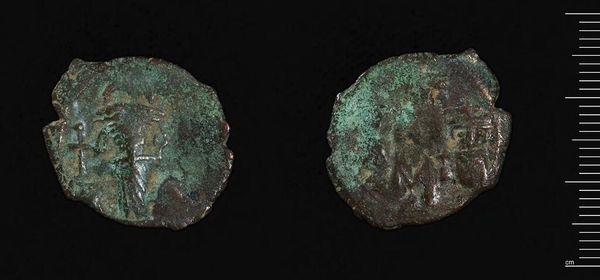
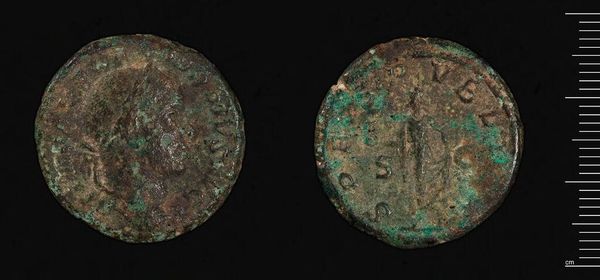
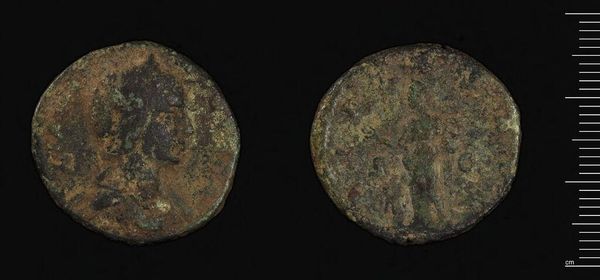
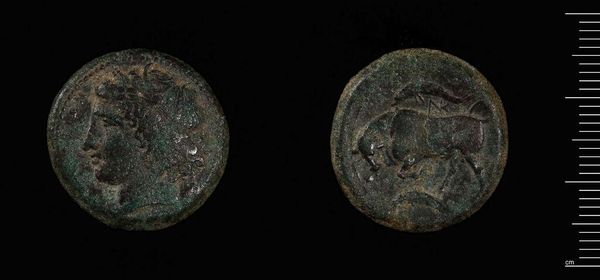
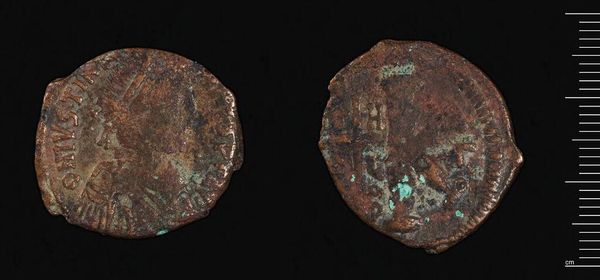
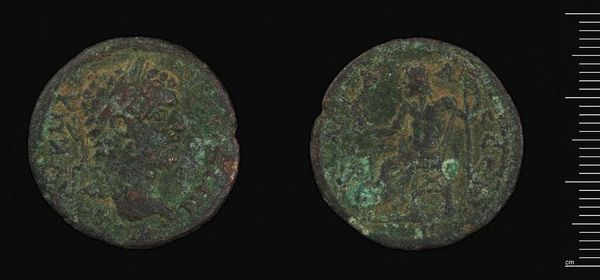
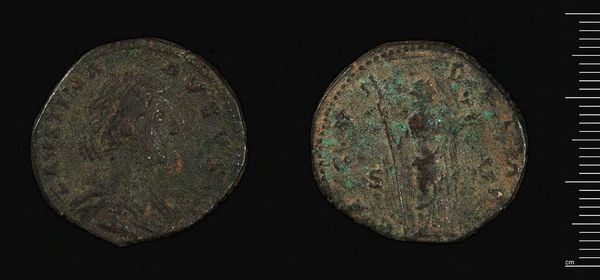
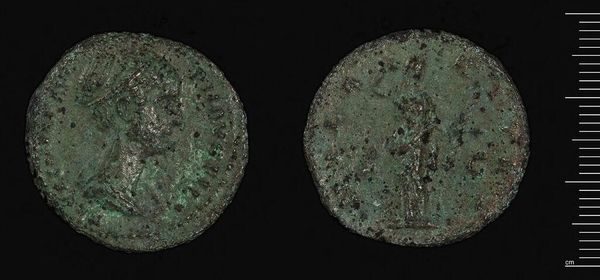
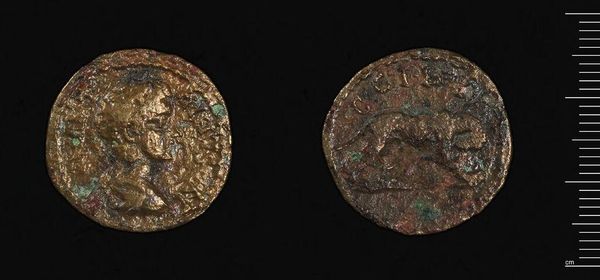
Dimensions: 8.69 g
Copyright: CC0 1.0
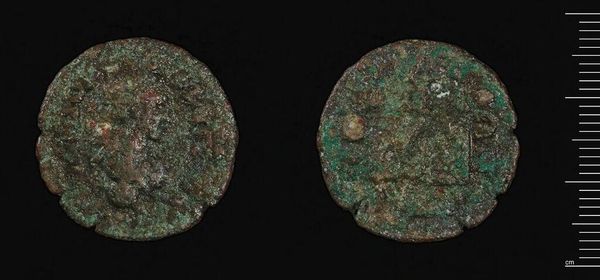
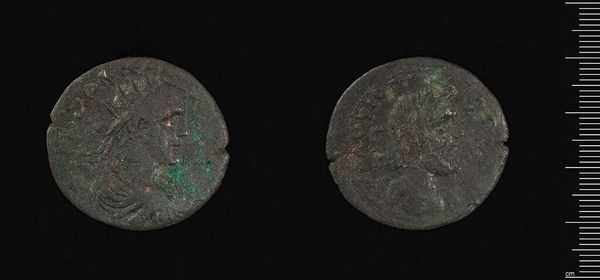
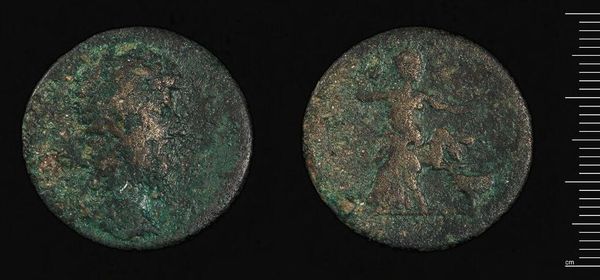
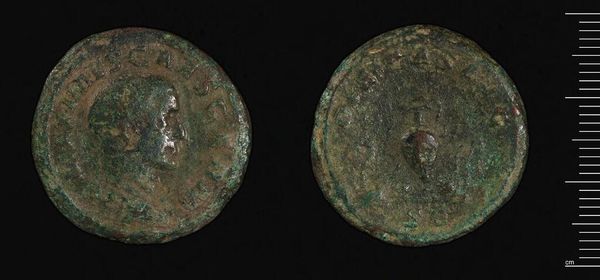
Curator: Just look at this little thing. It's a coin from Amphipolis under Commodus, held at the Harvard Art Museums. Even in its aged state, it feels weighty, doesn't it? Editor: It looks like it's been through a lot! I'm curious about the materials – it seems almost more bronze than gold, and that patina tells such a story of burial and recovery. Curator: Oh, absolutely. Think about the hands it passed through, the transactions, the daily life it witnessed. It's not just metal; it's a vessel filled with forgotten moments. Editor: Precisely! And how the minting process itself speaks to power, control, and the administration of an empire. It's about labor and value, not just emperors. Curator: I like that. It's easy to forget the sheer number of people involved in something that we often just see as an emblem of power. Editor: And thinking of production, consider how its worth changed with time and context, melted for other purposes. It's a potent intersection of cultural value and physical reality. Curator: Yes! It is not just a coin, but the echoes of lives and stories rippling across millennia, encapsulated in a small, weighty disc. Editor: Right. Seeing it, I'm reminded of the constant tension between symbolic representation and the messy, material processes that make it possible.
Comments
No comments
Be the first to comment and join the conversation on the ultimate creative platform.
 Collect
 React
React Comment
More like this