About this artwork
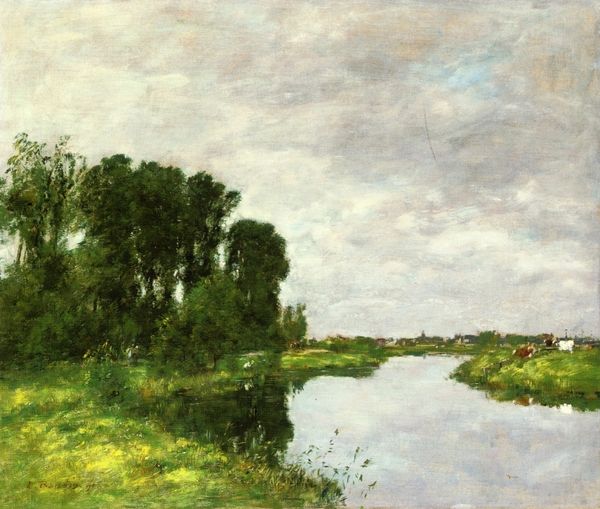
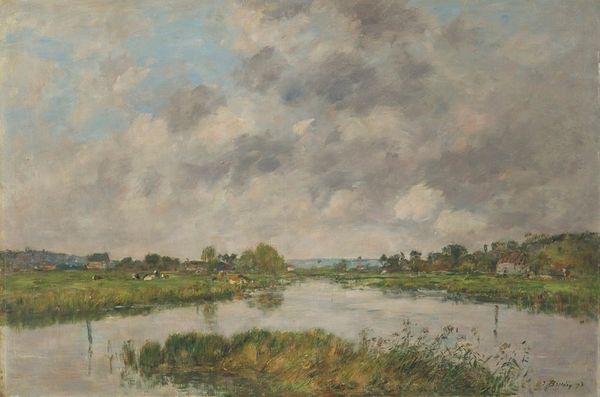
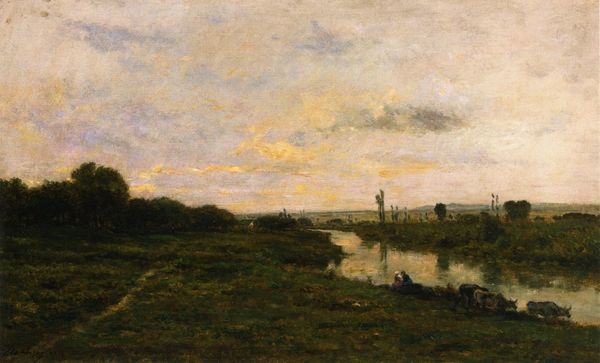
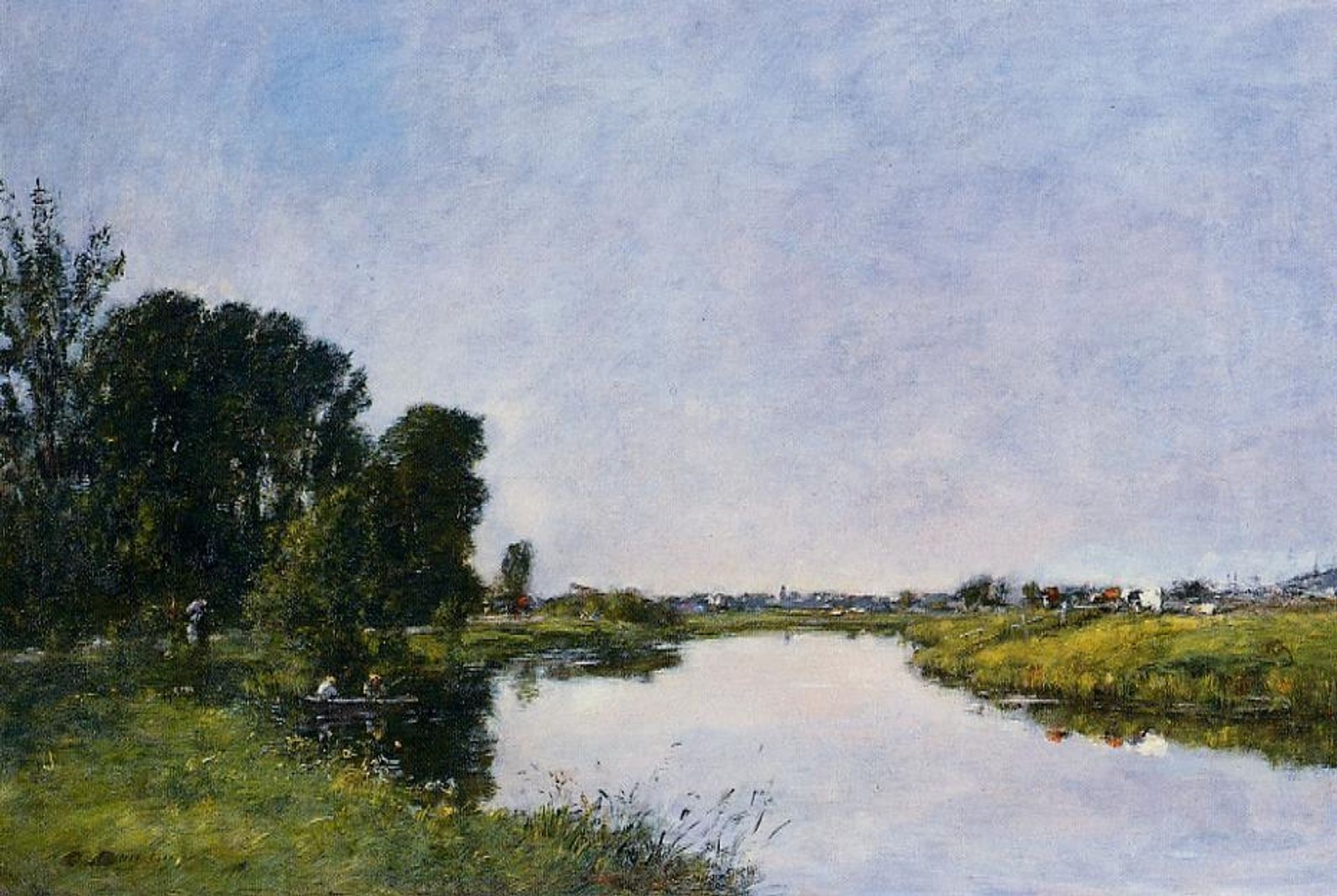
Curator: Eugène Boudin's "The Toques at Saint-Arnoult", painted in 1891, presents a hazy waterscape rendered in oil. What are your first impressions? Editor: Well, I'm immediately drawn to how the light almost vibrates off the surface of the water. There's a tranquility to the scene, but something about the brushstrokes hints at a barely contained energy. Curator: Absolutely. Boudin was a master of capturing atmospheric effects, especially the nuances of light on the Normandy coast. He was known for his plein-air studies, rapidly sketching to capture the essence of the scene directly from nature. It's hard work! Editor: Indeed, that direct engagement with the environment speaks volumes about how paintings such as "The Toques at Saint-Arnoult" challenge conventional academic boundaries. The rapid strokes are evidential of Boudin working efficiently, making on-the-spot decisions based on changing natural conditions. There’s real labor embodied here! Curator: I agree completely. Beyond the physical labour of applying paint, I detect a deeper level of observation that invites one into quiet contemplation. I want to believe there’s real heart within that labour and reflection! Editor: Well said. Speaking of labor, note how the painting flattens our traditional expectations of landscape perspective! While that shimmering horizon draws one in, I am even more intrigued by the painting's emphasis on materiality. How oil paints can become river reflections. It highlights not just natural wonder but human intervention too! Curator: Precisely. So the composition is both open and intimate at once. One element that I find touching is the subtle presence of people along the shoreline and a few houses near the horizon, subtly embedding everyday human life into this vast natural world. Editor: Yes! Through a deep focus on art's conditions of making—the labor, processes, and inherent material character—Boudin reveals our own intricate relationship to art and place. I believe his "The Toques at Saint-Arnoult” embodies an exquisite encounter between matter, skill and vision. Curator: Beautifully put. It's that unique blend of perception and material awareness that stays with you long after you’ve left the painting, doesn't it?

Artwork details
- Location
- Private Collection
- Copyright
- Public domain
Comments
Share your thoughts
About this artwork
Curator: Eugène Boudin's "The Toques at Saint-Arnoult", painted in 1891, presents a hazy waterscape rendered in oil. What are your first impressions? Editor: Well, I'm immediately drawn to how the light almost vibrates off the surface of the water. There's a tranquility to the scene, but something about the brushstrokes hints at a barely contained energy. Curator: Absolutely. Boudin was a master of capturing atmospheric effects, especially the nuances of light on the Normandy coast. He was known for his plein-air studies, rapidly sketching to capture the essence of the scene directly from nature. It's hard work! Editor: Indeed, that direct engagement with the environment speaks volumes about how paintings such as "The Toques at Saint-Arnoult" challenge conventional academic boundaries. The rapid strokes are evidential of Boudin working efficiently, making on-the-spot decisions based on changing natural conditions. There’s real labor embodied here! Curator: I agree completely. Beyond the physical labour of applying paint, I detect a deeper level of observation that invites one into quiet contemplation. I want to believe there’s real heart within that labour and reflection! Editor: Well said. Speaking of labor, note how the painting flattens our traditional expectations of landscape perspective! While that shimmering horizon draws one in, I am even more intrigued by the painting's emphasis on materiality. How oil paints can become river reflections. It highlights not just natural wonder but human intervention too! Curator: Precisely. So the composition is both open and intimate at once. One element that I find touching is the subtle presence of people along the shoreline and a few houses near the horizon, subtly embedding everyday human life into this vast natural world. Editor: Yes! Through a deep focus on art's conditions of making—the labor, processes, and inherent material character—Boudin reveals our own intricate relationship to art and place. I believe his "The Toques at Saint-Arnoult” embodies an exquisite encounter between matter, skill and vision. Curator: Beautifully put. It's that unique blend of perception and material awareness that stays with you long after you’ve left the painting, doesn't it?
Comments
Share your thoughts