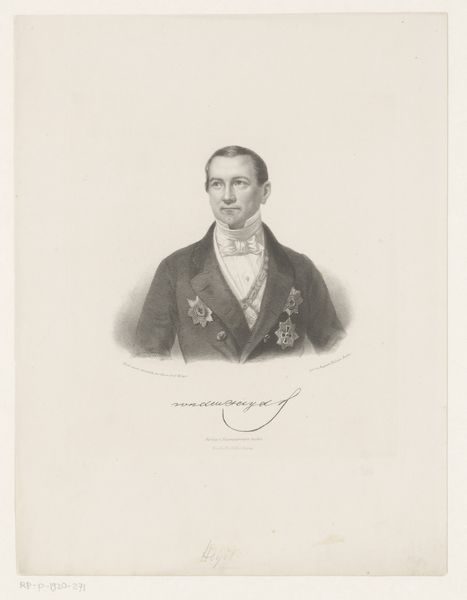
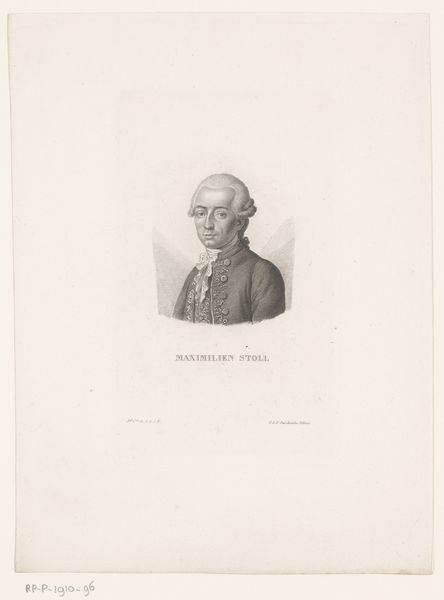
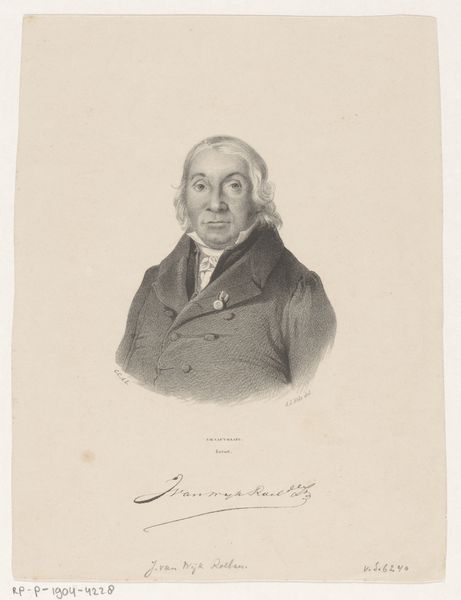
Portret van Willem Hendrik van Westreenen van Tiellandt 1837 - 1840
0:00
0:00

carelchristiaanantonylast
Rijksmuseum
#
pencil drawn
#
light pencil work
#
photo restoration
#
pencil sketch
#
old engraving style
#
portrait reference
#
old-timey
#
yellow element
#
19th century
#
pencil work
Dimensions: height 210 mm, width 135 mm
Copyright: Rijks Museum: Open Domain
Editor: Here we have Carel Christiaan Antony Last's portrait of Willem Hendrik van Westreenen van Tiellandt, made between 1837 and 1840. It appears to be a pencil drawing or perhaps an engraving. It's incredibly detailed, especially the subject's clothing and medals. I am intrigued by the contrast between the stark whiteness of the paper and the dark lines that define the figure. What strikes you about this work? Curator: The apparent simplicity of this "pencil drawing," as you call it, belies the labor involved. Look closely. Note the precision and control evident in the hatching and cross-hatching. It suggests a deeply embedded printmaking tradition being translated through readily available materials. Pencil and paper democratized portraiture to an extent, didn’t they? What do you think the availability of these materials says about the era and the subject’s social status? Editor: It definitely speaks to accessibility. While oil painting remained exclusive, this offered a potentially cheaper alternative, yet still conveyed status through skill and detail, particularly the medals. The artist could be seen as both craftsperson and image-maker. How did this blurring of high art and craft affect artistic hierarchies? Curator: Exactly. Think of the academies clinging to oil paint and monumental sculpture, defining "high art" while workshops produced images like this. These seemingly humble portraits, rapidly produced and disseminated, had a powerful influence on shaping public perception. They document the burgeoning market for images and, critically, the value of individual representation. Notice the inscribed title—what do you think that communicates? Editor: The title emphasizes status and lineage through carefully detailed embellishment. Thank you. I've never really considered the materials as such important signifiers. Curator: Precisely! We often forget that the very *stuff* of art carries its own cultural baggage. And that it impacts consumption and circulation.
Comments
No comments
Be the first to comment and join the conversation on the ultimate creative platform.
 Collect
 React
React Comment
More like this