About this artwork
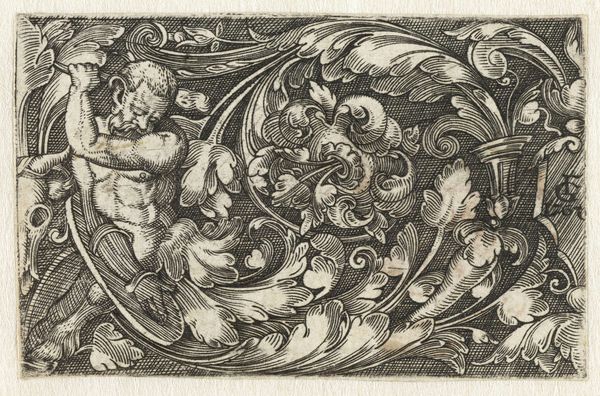
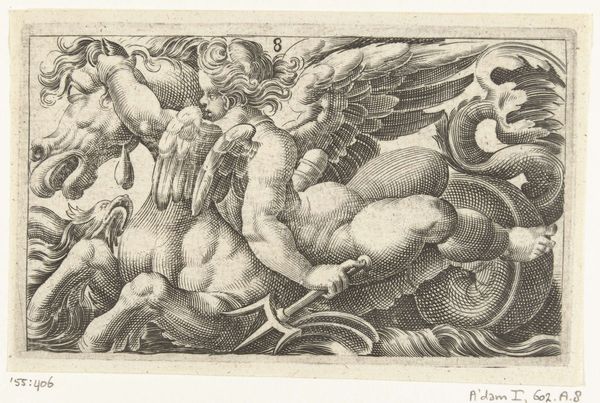
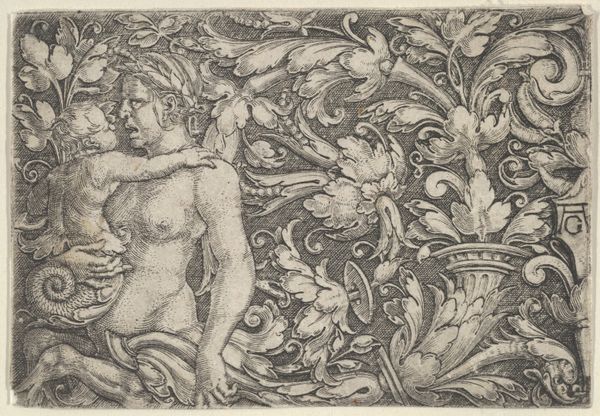
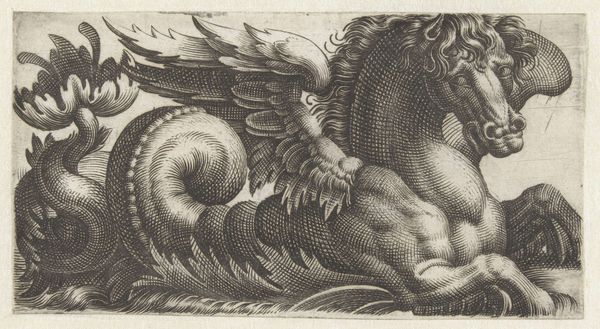
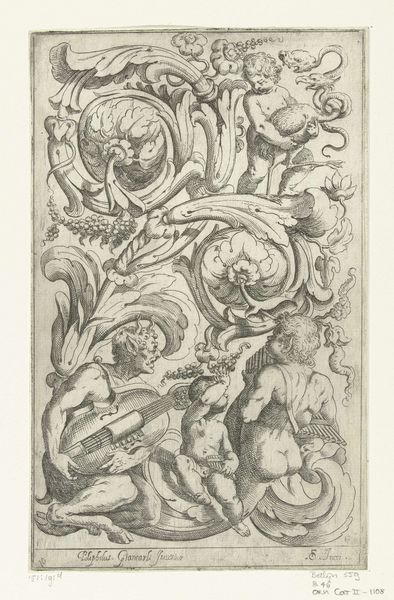
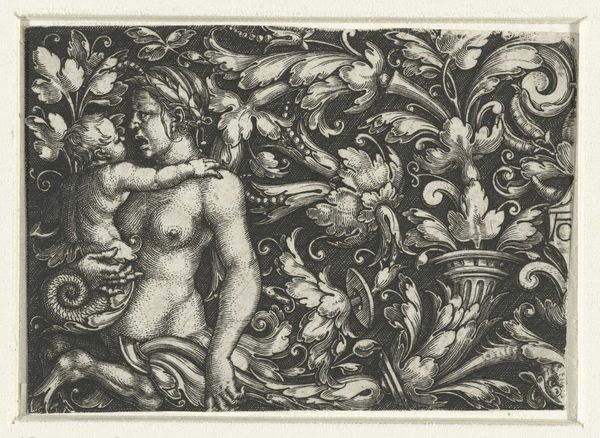
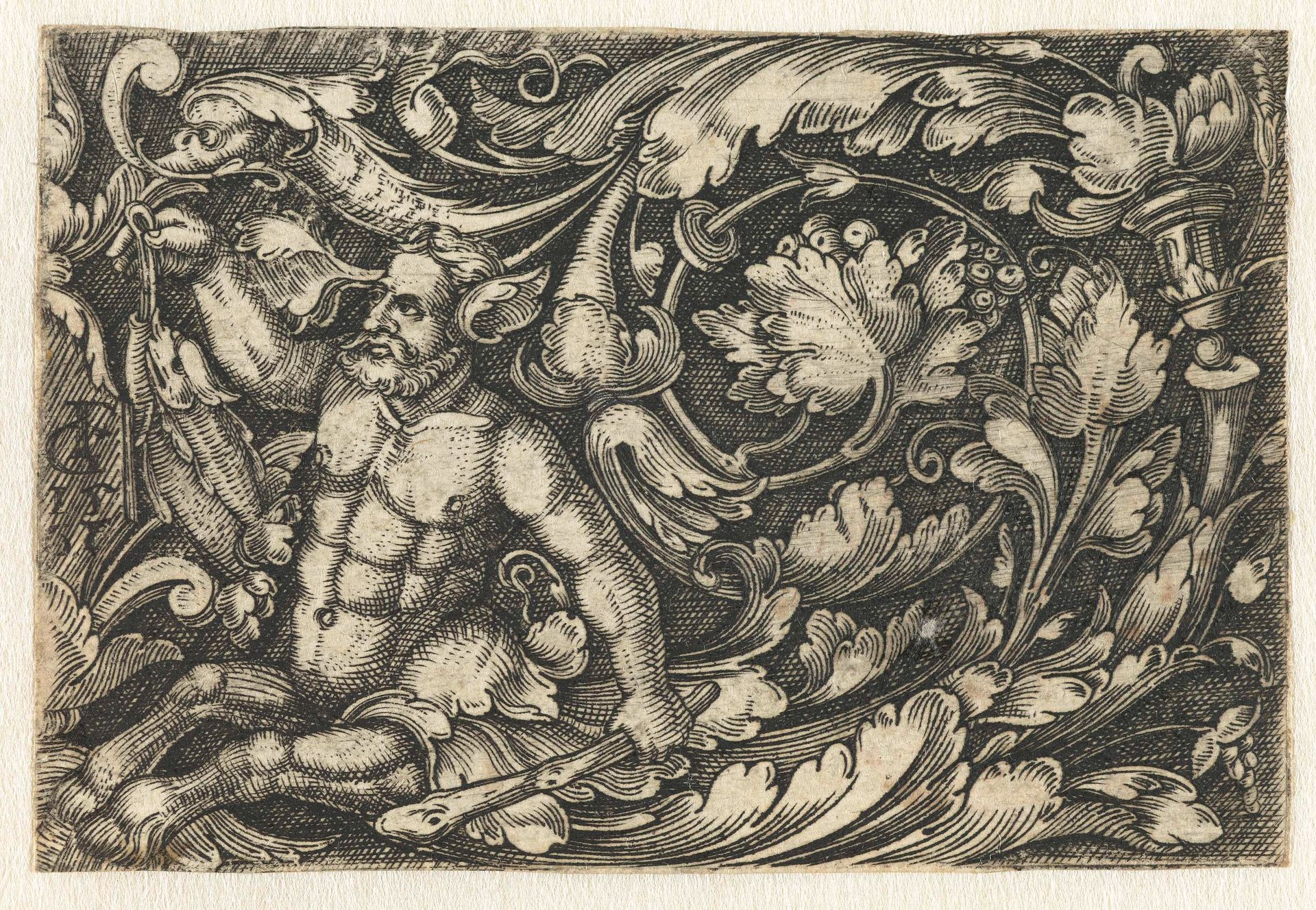
This engraving features a centaur amidst swirling foliage, rendered by the monogrammist FG. Centaurs, beings of human and horse, embody the duality of intellect and instinct. In ancient Greece, they often symbolized untamed nature. This imagery reflects a broader cultural fascination with hybrid creatures that blurs the boundaries between human, animal, and divine. The centaur motif echoes in varied traditions – from the Egyptian sphinx to medieval gargoyles. Each reflects humanity's impulse to visualize the unknown. In psychoanalytic terms, such hybrid forms may reflect subconscious anxieties about identity and control. Notice how the centaur here seems both powerful and constrained by the dense ornamentation. Such ornamental designs, filled with flora and mythical creatures, tap into primal emotions, reminding us of the cyclical nature of symbols, ever-evolving, resurfacing across eras.

Artwork details
- Medium
- ornament, print, woodcut, engraving
- Dimensions
- height 48 mm, width 72 mm
- Copyright
- Rijks Museum: Open Domain
Tags
Comments
Share your thoughts
About this artwork
This engraving features a centaur amidst swirling foliage, rendered by the monogrammist FG. Centaurs, beings of human and horse, embody the duality of intellect and instinct. In ancient Greece, they often symbolized untamed nature. This imagery reflects a broader cultural fascination with hybrid creatures that blurs the boundaries between human, animal, and divine. The centaur motif echoes in varied traditions – from the Egyptian sphinx to medieval gargoyles. Each reflects humanity's impulse to visualize the unknown. In psychoanalytic terms, such hybrid forms may reflect subconscious anxieties about identity and control. Notice how the centaur here seems both powerful and constrained by the dense ornamentation. Such ornamental designs, filled with flora and mythical creatures, tap into primal emotions, reminding us of the cyclical nature of symbols, ever-evolving, resurfacing across eras.
Comments
Share your thoughts