

1740 - 1750
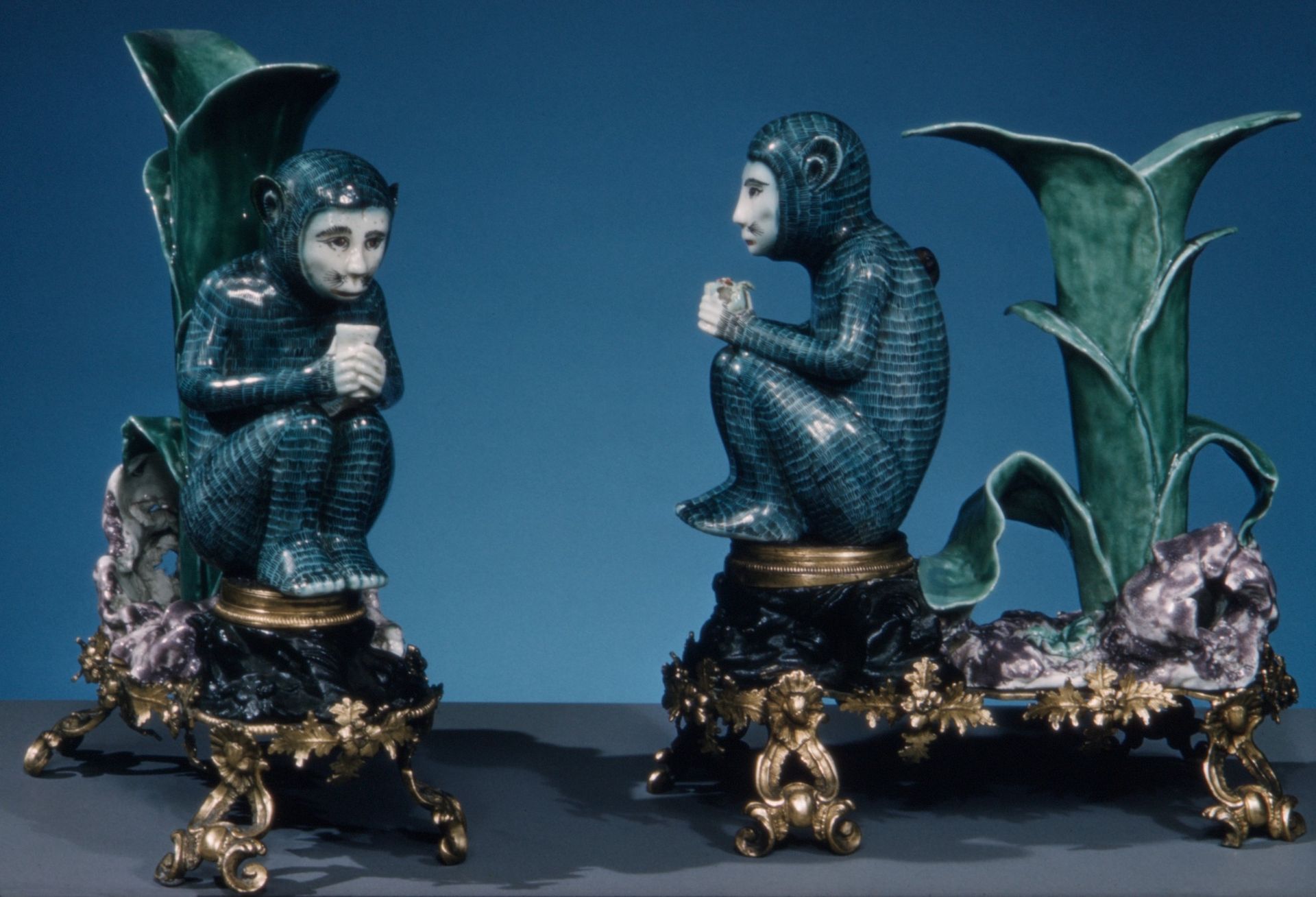
Monkey (one of a pair)

Listen to curator's interpretation
Curatorial notes
Editor: We’re looking at "Monkey (one of a pair)" created by Villeroy between 1740 and 1750. These are porcelain sculptures, and I find the way the light catches the glazed surfaces quite striking. The monkeys have very human-like expressions. What draws your eye when you look at these? Curator: Initially, the surface. Consider the interplay between the matte, unglazed faces of the monkeys and their bodies. The latter exhibits meticulously rendered striations designed to simulate fur, creating a rich textural contrast that enlivens the sculptures. Editor: I see that. It almost feels like they're wearing ribbed clothing. How does this contrast affect our understanding of the piece? Curator: Precisely. It is less about literal representation and more about a game of textures and illusions. Do you observe how the base also functions? Editor: Yes, they look like gilded, ornate rococo designs, with botanical features like leaves. The base and the monkey seem quite distinct in style. Curator: They are, indeed. But look closer; the dynamism of the rococo base supports and enhances the monkeys’ static postures. Note how the green foliage provides a chromatic echo of the figures' cool hue. Do you appreciate how this echoes in the sculpture's various parts? Editor: Now that you mention it, I do. It ties it all together even though the components look so different initially. It makes it feel more cohesive and thought out. Curator: I concur. The brilliance of the composition lies in its unity, even in its divergence of its material forms and chromatic range. Editor: This was very insightful; I never would have noticed the cohesion if you hadn’t pointed it out. Thank you. Curator: My pleasure; formal analysis reveals dimensions beyond immediate aesthetic appreciation.